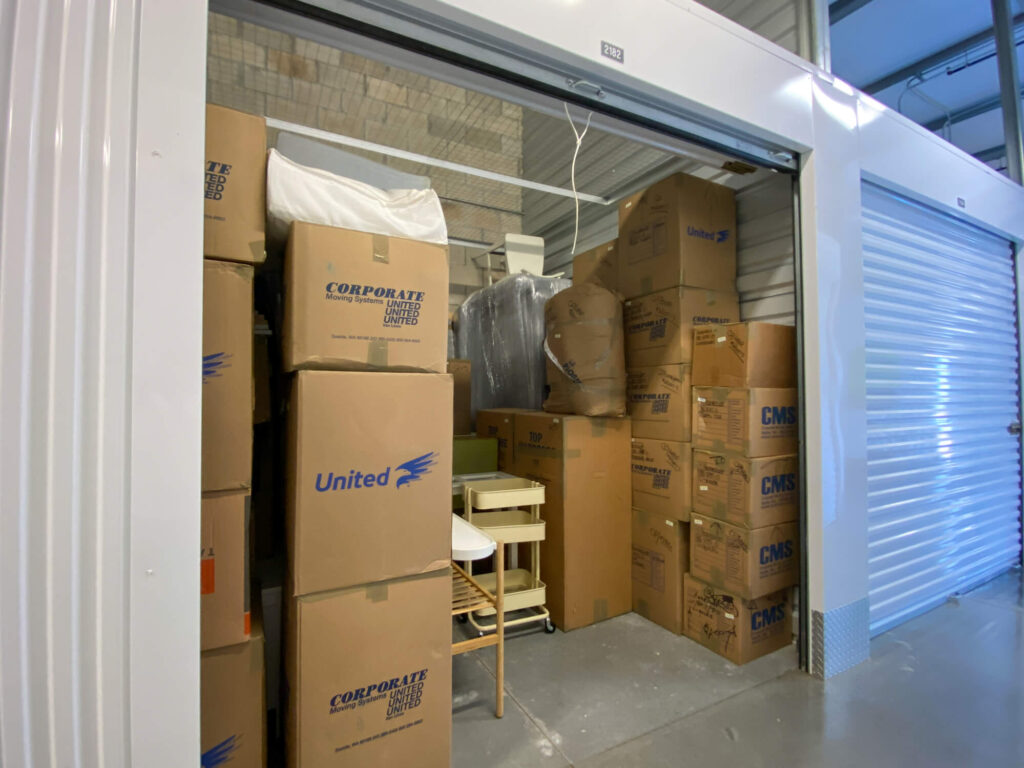
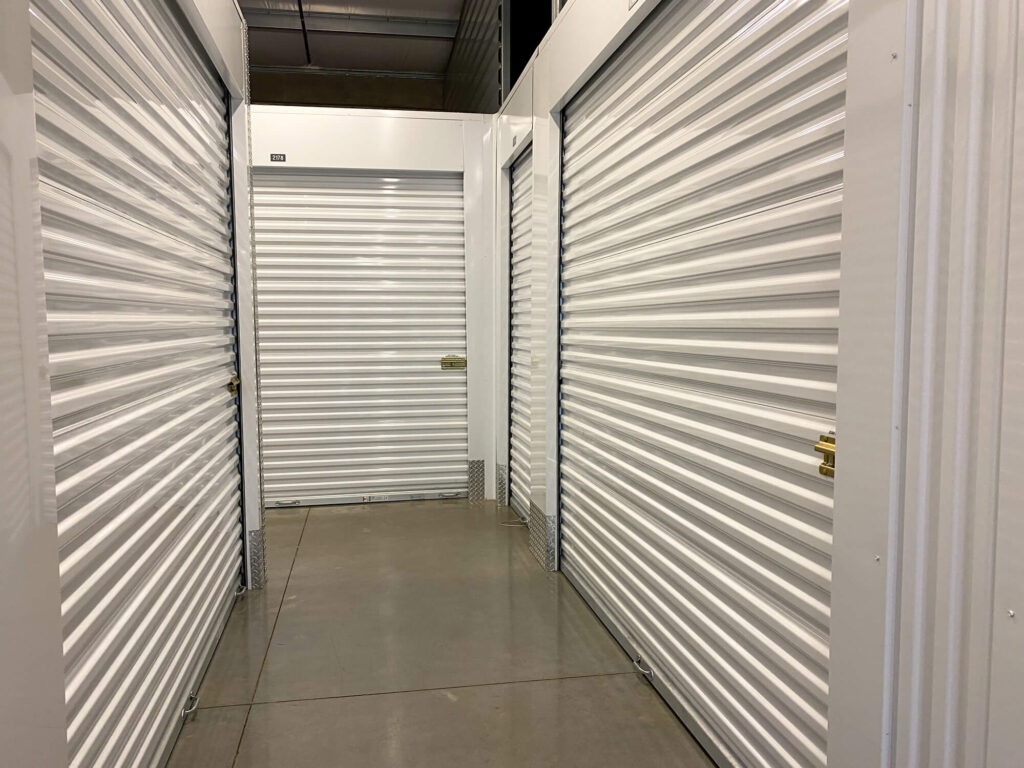
Managing your belongings as a college student while balancing social life, coursework, and tests can be difficult. Self-storage is a practical option whether you’re moving in for the first time, going home for summer storage, or need more room for your belongings. This guide will help you navigate self-storage options and maximize your available space. From packing supplies to pickup and delivery services, we make it easy every step of the way. Whether you’re shipping items, using a U-Haul for transport, or storing dorm room essentials, our locations offer flexible solutions. With the proper packing techniques and storage tips, you’ll keep your belongings safe and organized, giving you more time to focus on your studies and career goals. Whether you’re storing in New York or closer to home, rely on our services to make the process stress-free with the help of friends and the proper storage rights.
Why is Self-Storage Necessary for College Students?
When it comes to storage, college students frequently face particular difficulties. Apartments need more space; dorm rooms are tiny, and storing possessions can be challenging when moving overseas for a summer or a semester. Self-storage offers an adaptable and reasonably priced answer to these issues, with essentials like efficient shelves, bins, and compact, stackable storage options. Whether a portable locker for a temporary solution or a more permanent storage setup, self-storage ensures that everything, from personal items to more significant belongings, is organized and easily accessible. Many storage facilities also offer customizable options, allowing students to take advantage of trademarks in innovative storage solutions. With the correct information on prices and services, students can make smart choices about storing their belongings during breaks or while managing their classes and careers.
Advantages of Self Storage for College Students
Extra Space: Extra space is needed because off-campus apartments and dorm rooms can only accommodate so much. Furniture, personal belongings, and seasonal things can all be kept out of sight and safe with self-storage.
Convenience: The abundance of self-storage facilities close to college campuses makes dropping off or picking up your belongings whenever necessary simple.
Cost-effective: Unlike paying for a larger apartment or attempting to find space in your already crowded living area, renting a storage unit is frequently less expensive.
Security: Self-storage facilities usually have high-security features, such as gated access, surveillance cameras, and on-site supervision, to provide you with peace of mind that your possessions are secure.
Selecting the Appropriate Storage Unit
Take into account the following elements while choosing a self-storage unit:
Unit Size: Storage units are available in a range of sizes. A 10×10 container could hold furniture, motorcycles, and seasonal things, while a 5×5 unit would be sufficient for a few boxes. Most facilities come in various sizes, so pick one according to how much you need to store.
Accessibility: Seek a facility open around the clock, particularly if you need to pick up your possessions after typical work hours. Consider how simple it is to load and unload. For larger products, drive-up or ground-level units are practical.
Climate Control: If you have objects sensitive to humidity or temperature, such as electronics, artwork, or crucial papers, consider renting a climate-controlled unit. These devices shield your possessions from harsh weather by maintaining a constant temperature and humidity.
Storage Duration: If you need storage only for a few months during summer vacation or a brief internship, seek flexible leasing options. Month-to-month contracts without a long-term commitment are available at many self-storage facilities.
Advice on How to Pack Your Storage Unit
Use these packing suggestions to make the most of your space and maintain the organization of your belongings:
Use Sturdy Boxes: When packing your belongings, invest in sturdy boxes. For ease of identification, mark each box with its contents and the room to which it belongs.
Disassemble Furniture: To conserve room, disassemble any furniture you’re storing. Small parts and screws should be taped to the appropriate furniture pieces and kept in bags with labels.
Protect Fragile Things: To avoid damage, wrap delicate items like electronics, crockery, and glassware in packing paper or bubble wrap.
Maximize Vertical Space: To maximize the height of your unit, stack boxes and other goods vertically. To keep things off the ground, use pallets or shelving.
Leave a passage: When packing your unit, leave a small passage to make it easier to access your belongings. This will save you time when you need to recover something.
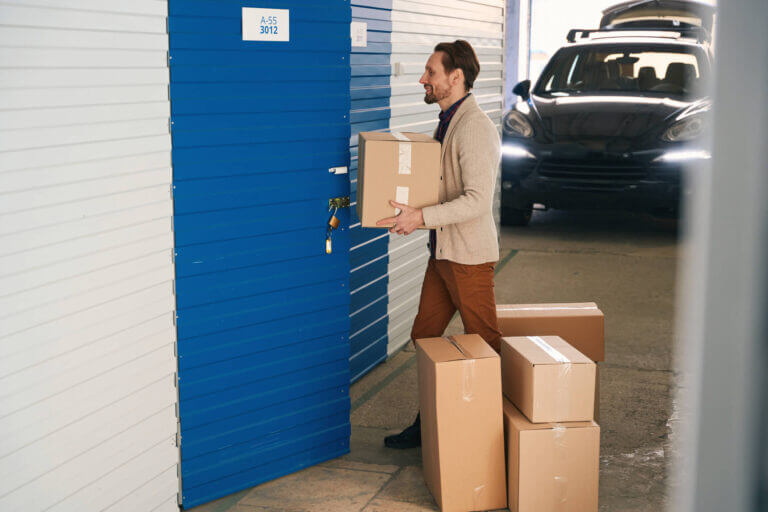
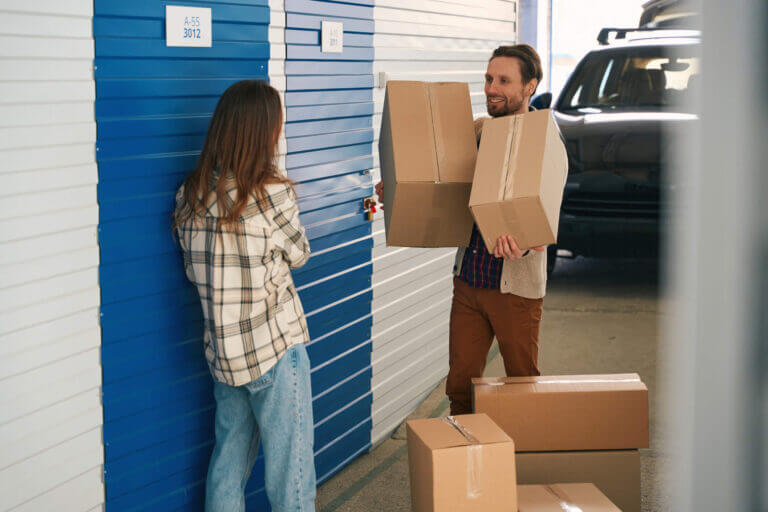
McDowell Mountain Community Storage Staff Guiding a College Student to her new Self Storage Unit in Scottsdale, Arizona
How College Students Can Locate the Best Self-Storage
Examine nearby facilities: Seek out self-storage facilities close to your house or your college campus. Make sure to ask about any discounts or special prices that may be available, as many facilities offer them to students.
Examine Ratings and Reviews: Read internet reviews to gauge the facility’s reputation. Look for evaluations that highlight customer service, cleanliness, and security.
Compare prices: The self-storage price might differ depending on the unit’s facilities, location, and size. To locate the most excellent offer, compare the costs of various institutions.
Inquire About Student Discounts: Many self-storage firms offer student discounts, so don’t hesitate to ask about exclusive offers or promotions.
Conclusion
Self-storage can be a lifesaver for college students who require additional space for their possessions. Several easy and reasonably priced solutions are available, whether you’re moving home for the summer, need a place to keep your clothing and other belongings tidy, or are storing seasonal items like fall clothes. Make your time in college less stressful and much more organized by picking the appropriate storage unit, packing well, and using student discounts. With tips on storing your clothes, vehicle, and other essentials, self-storage can save you money and provide a convenient service for living in dorms or off-campus housing. Whether you’re moving to a new state, preparing for a school year, or need a place for extra content, self-storage can be a great option. And if you’re a friend helping with the move, delivery services are available to make the process easier.
Frequently Asked Questions
How can I decide between storing things indoors or outdoors?
Indoor storage units are the best option for sensitive or essential objects because they are usually safer and weatherproof. In contrast, outdoor units are frequently more handy and reasonably priced for larger objects or automobiles. Your needs and the things you’re storing will determine your choice.
What should I do if I have to vacate my storage unit early?
Most self-storage facilities provide flexible month-to-month agreements that let you vacate early without incurring fees. To ensure you aren’t billed for extra months, review the terms of your lease and contact the facility in advance.
What occurs if I neglect to make my storage unit payment?
Most self-storage facilities will send reminders if you fail to make a payment. However, funds must be received within the allotted time to avoid the facility imposing late fines or even putting your belongings up for auction. To prevent issues, it’s critical to make your payments on time.
Are student discounts available at self-storage facilities?
Several self-storage companies offer discounts to college students, particularly during busy periods like summer vacation. When you ask about prices, remember to ask about student discounts or specials.
Can I go to my storage unit whenever I want?
Many self-storage facilities are open 24/7, so you can pick up or drop off belongings whenever convenient. When selecting a facility, check the access hours because some can have limited hours.
Are my belongings secure at a self-storage facility?
Self-storage facilities frequently offer high-security features like gated entrances, video cameras, and on-site supervision. To further secure your belongings, consider getting insurance or installing a lock.
How long is the self-storage unit available for rent?
Storing your stuff for as long or as little time as necessary is simple because self-storage spaces are usually offered for month-to-month rent. Depending on your needs, you can rent a unit for the entire academic year or just a few months during summer vacation.
Do sensitive objects have any additional storage options?
Indeed, many self-storage facilities provide climate-controlled units that keep the humidity and temperature constant. Electronics, artwork, documents, and other delicate objects that harsh environments could harm are best stored in these containers.
Can I use a self-storage facility to keep perishable goods?
No, self-storage containers should not be used to store perishable goods like food or plants. These may attract pests or deteriorate due to temperature changes. For these products, it’s best to locate alternate storage options.
Do my possessions in a self-storage facility require insurance?
Although it’s not necessarily required, many self-storage facilities offer insurance options. To safeguard your possessions from theft, fire, and natural disasters, it’s a brilliant idea to consider getting insurance. Sure, tenants’ insurance policies may also cover items in storage.
Simplified Self Storage Solutions for College Students
Choosing the best self-storage solution can be difficult for a college student, but it doesn’t have to be. At McDowell Mountain Community Storage Company, we offer a range of adaptable, reasonably priced student storage options to meet your unique needs. Our team can help you select the ideal unit whether you need to store books, furniture, or seasonal goods. We provide both climate-controlled and non-climate-controlled units to ensure the safety of your belongings during summer break, internships, or study-abroad programs.
With month-to-month rental options, you can keep your items for as long as you need. Our climate-controlled units protect delicate items like electronics and artwork, while non-climate-controlled units are budget-friendly for everyday items. Our logo represents convenience and reliability when storing closet items, career materials, or personal belongings. We also offer pickup services to make the process easier. Contact us today to simplify your storage experience!
One of the critical decisions you must make when storing your belongings, whether moving, decluttering, or while changing living situations, is choosing short-term or long-term storage. It is crucial to comprehend the distinctions between the two and determine which option is most appropriate for your circumstances, as they each offer unique advantages and are tailored to different requirements. Some customers prefer long-term storage for its moisture protection and security, while others value the freedom and flexibility of short-term solutions. At McDowell Mountain Community Storage, we are committed to helping you make the best choice on a case-by-case basis. Whether you’re storing some things temporarily or need long-term storage for valuable items, we provide a range of options designed to suit your needs. To assist you in selecting the optimal storage solution, we will examine the advantages and disadvantages of both options.
What is Short-Term Storage?
Short-term storage refers to rental spaces that are utilized for a limited period, typically ranging from a few days to a few months. This is the optimal solution for individuals who require transient storage during periods of transition, including:
Transitioning to a new residence: Short-term storage can accommodate your possessions while you await the completion of your new residence.
Home renovations: Storing furniture and valuables during the renovation process ensures their safety and prevents them from being in the way.
Seasonal storage: Seasonal storage involves storing items not required year-round, such as sporting equipment or holiday decorations.
Advantages of Short-Term Storage
Flexibility: Most short-term storage rentals are adaptable and can be rented for as little as a few days or weeks, allowing you to modify your rental period as necessary.
Accessibility: These units are typically user-friendly and are frequently accessible 24 hours a day, making them ideal for individuals who frequently retrieve or return items.
Affordable for transient requirements: The costs are generally lower than long-term storage because you only rent briefly.
Short-Term Storage Drawbacks
Limited capacity: The availability of size and location options may vary depending on the provider.
Increased monthly expenses: Although rentals are reasonably priced for brief periods, they may accumulate if the rental period is prolonged.
What is Long-Term Storage?
In contrast, long-term storage entails the rental of a facility for an extended period, typically six months to a year or more. This is appropriate for individuals who require the storage of items for an extended period, such as:
Excess furniture storage: Long-term storage can be an excellent solution for safeguarding personal objects and furniture when you are downsizing or cannot accommodate everything in your home.
Storing business inventory: Businesses that require additional storage space for inventory, documents, or supplies may capitalize on a long-term storage solution.
Preserving family heirlooms or memorabilia: A more secure, stable storage environment may be necessary for items you wish to preserve for an extended period, such as family heirlooms, artwork, or antiquities.
Advantages of Long-Term Storage
Cost-effective: This is an economical option if you intend to store your possessions for an extended period, as numerous storage companies provide discounts for long-term rentals.
Security: Long-term storage units are frequently furnished with sophisticated security features, including climate control, gated access, and surveillance cameras, making them an advantageous option for sensitive or high-value items.
Stability: You can rent the unit unlimitedly without fretting about frequent renewals or locating a new space.
Long-Term Storage Drawbacks
Less adaptable: Although numerous long-term storage rentals permit lease extensions, penalties or fees may be assessed for early termination of a long-term contract.
Infrequent access: While you may not require frequent access to your possessions, it may be less convenient than short-term storage if you do.
Short-Term vs. Long-Term Storage Unit in Scottsdale, Arizona at McDowell Mountain Community Storage Facility
Key Factors to Consider When Selecting Between Short-Term and Long-Term Storage
There are several critical factors to take into account when selecting between short-term and long-term storage:
Duration of Need: If you are still determining your storage requirements, a short-term option provides the flexibility to extend storage as required. A long-term rental may be advantageous if you anticipate a prolonged need for storage.
Type of Items: Items of high value, such as electronics or antiquities, may be more suitable for long-term storage with climate control. Conversely, frequently used items, such as clothing or holiday decorations, may be suitable for temporary storage.
Budget: Short-term storage may be more costly monthly, whereas long-term storage frequently offers more favorable rates for extended periods.
Frequency of Access: Short-term storage may provide more flexibility and straightforward access if you need to access your items regularly.
Conclusion
It is imperative to select the appropriate storage solution, whether decluttering your home, preparing for a move, or simply requiring a secure location to store your possessions. Long-term storage is optimal for individuals with long-term plans, providing security, cost savings, and flexibility to meet various storage needs. In contrast, short-term storage is ideal for temporary scenarios, offering convenience and ease during transitions. By considering your specific timeline, budget, and the differences between short-term and long-term options, you can make an informed decision that guarantees your items’ safe and convenient storage. Whether you need self storage for homes, business inventory, or seasonal items, understanding the benefits of each option will help you select the best fit for your needs. Additionally, seeking tips on maximizing your storage space and saving money ensures your solution aligns with your unique requirements and area.
Frequently Asked Questions
Is it permissible for me to share a storage unit with another individual?
At certain storage facilities, multiple individuals may share a unit. If you require access to the unit at various times or wish to store large items, it is crucial to coordinate the rental agreement with a friend or family member if you intend to share a storage unit.
Can a watercraft or RV be stored in a long-term storage facility?
Indeed, numerous long-term storage facilities provide specialized areas for storing large vehicles, such as RVs and yachts. Typically, these units are equipped with secure parking areas and larger driveways. When storing a boat or RV for an extended period, consider options that offer supplementary features, such as climate control or vehicle maintenance services. These features will help safeguard the condition of your vehicle.
What if I require frequent access to my possessions during prolonged storage?
If you anticipate frequent access to your possessions during a long-term storage period, look for a storage facility that provides convenient access hours and locations. Drive-up units or 24/7 access may be available at certain facilities, simplifying retrieving or adding items as needed.
What is the recommended amount of time to reserve a storage unit?
It is advisable to reserve your storage unit at least a few weeks in advance, particularly during prime moving seasons. Securing a unit in advance guarantees that you will receive the appropriate size and type of storage, as availability may fluctuate. Additionally, certain storage facilities provide reservations for specific dates or longer-term contracts.
Can a mattress or furniture be stored in a long-term storage facility?
Indeed, it is possible to store furniture and mattresses in long-term storage. However, it is crucial to ensure that they are adequately safeguarded. Mattresses should be protected from dust, dirt, and potential harm by being wrapped in plastic. Similarly, furniture should be covered with protective padding to ensure its longevity.
Is climate-controlled storage accessible for both short-term and long-term storage?
Indeed, climate-controlled storage units are accessible for both short-term and long-term rentals. These containers are optimal for storing delicate items, including electronics, artwork, documents, and furniture, and are susceptible to high temperatures or humidity damage. Long-term storage may provide more climate-controlled options to facilitate extended storage periods.
Are there any restrictions on how much data can be stored in a unit for short-term or long-term use?
Indeed, most storage facilities limit specific categories of items. Hazardous materials, perishable products, and flammable substances are generally prohibited. Furthermore, certain facilities may prohibit the storage of large objects, such as boats or vehicles, in smaller units. Before storing any items, it is imperative to consult the facility’s policy regarding prohibited items.
Is insurance coverage provided for my possessions during storage?
Most storage facilities provide basic insurance; however, the extent of coverage may differ. If you require short-term storage, verifying adequate coverage is crucial. If you are storing valuable or high-risk items, purchasing additional insurance or verifying that your homeowner’s insurance covers stored items for long-term storage may be advisable.
Is it possible to store personal and business inventory in the same storage unit?
Personal and business items can typically be stored in the same storage unit. However, it is crucial to consult with your storage provider regarding their specific policies. Certain facilities may provide distinct units for business inventory to guarantee secure and organized storage. It is essential to be aware of the items you store together, as business items may require special handling or conditions that personal items do not.
What are the consequences of terminating my long-term storage contract prematurely?
Depending on the storage facility’s policies, early cancellation of a long-term storage contract may incur a penalty or charge. Before committing to long-term storage, review the contract’s provisions regarding early termination fees.
Short-Term vs. Long-Term Storage: We Can Help You Decide!
The decision between short-term and long-term storage can be challenging, but we are committed to simplifying the McDowell Mountain Community Storage process. Short-term storage is the optimal solution for temporary requirements, including seasonal storage, home renovations, or relocation. It is ideal for individuals who require temporary storage of personal possessions, appliances, or furniture for weeks or months. However, long-term storage is an ideal solution for individuals who require the preservation of items for an extended period, such as family heirlooms, business inventory, or critical documents. Whether you need storage solutions for travel commitments, packing, and boxes, or secure storage services, our team is dedicated to helping you identify the optimal storage solution for your unique requirements, irrespective of the nature of your storage situation.
Our team of seasoned professionals is dedicated to assisting you in the secure organization and management of your belongings. We offer both temporary and permanent storage options. We ensure the highest level of protection and implement top-tier security measures to give you peace of mind. Contact us today to discover the advantages of long-term versus short-term storage and reserve the appropriate facility for your needs. We are committed to ensuring your storage experience is stress-free, offering convenient and reliable storage services tailored to your lifestyle.
In today’s fast-paced business environment, efficacy is essential for maintaining a competitive edge. Renting a storage unit can offer numerous benefits to businesses seeking to optimize operations, enhance organization, and enhance productivity. Business storage, such as self-storage units, can assist your organization in more effectively managing inventory, resources, and space, whether you are a small startup, a developing company, or an established enterprise. With the right system, you can meet your storage needs, whether for essential belongings or things that don’t require immediate access. A container or unit with essential amenities, such as electricity, can provide a secure and organized place to store anything, ensuring your goals are met with commitment and acceptance. With a focus on detail and tips for maximizing space, you can achieve your business objectives while keeping everything aligned with your long-term goals and distribution strategies.
Benefits of Using Business Storage
Optimize Office Space
Space requirements increase as your organization expands. Nevertheless, not all business operations necessitate prominent office locations for each item of inventory or equipment. Renting a storage unit lets you clear out clutter from the office and store non-essential items, such as obsolete files, seasonal products, or equipment that is only used occasionally. This enables you to optimize your office space’s utilization, fostering a more efficient and presentable work environment for your team.
Enhance Organizational Structure
A storage unit offers a designated, offsite location for organizing business inventory, documents, and equipment. Organizing all items in a single location guarantees that your office remains uncluttered and that they are easily accessible when required. A storage unit can assist in organizing business assets, including client records, marketing materials, and office furniture, thereby enhancing productivity and workflow.
Liberate Cash Flow
Leasing additional office space can be costly, and the expense frequently fails to justify the necessity for additional space. Renting a storage unit is a more cost-effective alternative that offers room for expansion and flexible terms. Rather than committing to long-term leases for larger office space, you can store items offsite and allocate your savings to other aspects of your business, such as marketing or operational expansion. This frees up cash flow to support growth.
Safeguard Seasonal Inventory
Businesses in retail, event planning, or any industry with seasonal demand frequently encounter the challenge of storing excess inventory during off-seasons. A storage unit provides a secure and convenient location to hold seasonal items until required. This prevents the primary workspace from becoming overcrowded and guarantees that your stock is well-maintained and prepared for use when the season arrives.
Improve Scalability and Flexibility
The necessity for storage increases as your business expands. Renting a storage unit provides flexibility in terms of duration and space. You can select a device suitable for your current requirements and adjust it as needed. This adaptability enables your business to remain agile and adapt to changing demands without the burden of long-term commitments.
Enhance Employee Efficiency
Employees can concentrate on their assignments without interruptions when they have access to a tidy, well-organized workspace. Renting a storage unit to accommodate surplus inventory, equipment, or documents can facilitate office space organization, fostering a productive atmosphere. By reducing the time spent searching for misplaced items, you can allocate more time to critical duties that propel your business forward.
Enhanced Security and Protection
Most storage facilities implement sophisticated security protocols, such as alarm systems, surveillance cameras, and gated access. This adds a layer.
Types of Business Storage Solutions for the protection of your business assets. You can be assured that sensitive documents, costly equipment, or valuable inventory are securely stored and accessible only to authorized personnel. The assurance that their business assets are secure is invaluable to business proprietors.
Maintain the Organization of Business Records
A storage unit is a secure and efficient solution for businesses that require the maintenance of extensive records or historical documentation. You have the option of storing obsolete documents offsite, as opposed to filing cabinets that consume valuable office space. This guarantees that documents are readily accessible for audits, legal purposes, or reference, all while freeing up space for more pressing business requirements.
Streamline Logistics and Delivery
The management of deliveries, the receipt of bulk shipments, and the proper storage and inventory tracking are all challenges that numerous businesses must confront. A storage facility provides a central location for storing products until they are prepared for shipment or relocation to the primary office. This can assist in optimizing logistics, thereby facilitating the management of incoming deliveries and preventing disruptions to your daily operations.
Cost-Effective Solution
Renting a storage unit is frequently a more cost-effective alternative to the expenses associated with expanding your office or warehouse. There is a storage solution compatible with your operational requirements and budget, as various options are available regarding unit size and lease terms. Additionally, numerous facilities provide climate control services, which are particularly advantageous for storing sensitive equipment or documents.
Types of Business Storage Solutions
The appropriate business storage solution depends on the nature of the items to be stored, the scale of the company, and the specific requirements. Whether you seek free space in your office or secure inventory and equipment, various storage options are available. Consider factors such as lighting, care needed for specific items, and how the storage aligns with your overall business goals. Below is an overview of various business storage solutions that can help you meet your objectives, whether organizing your menu of products or securely storing equipment.
Self Storage Units
Self-storage units are among the most popular and adaptable storage solutions for businesses. These units are generally situated in facilities that are readily accessible and available in various sizes, depending on the amount of space needed. Businesses can adjust their storage requirements as they evolve, with numerous self-storage companies providing month-to-month rental options. Whether you need space to store inventory, archived documents, office furniture, or seasonal items, self-storage offers the flexibility to meet your business’s changing needs. Additionally, the details of your storage requirements, such as the number of trucks needed for transport or the organization of a shop’s inventory, can be easily managed to align with your business goals.
Benefits:
Scalable and cost-effective.
24/7 accessibility (subject to the facility’s parameters).
Convenient locations near urban centers.
Optimal for: startups, small enterprises, or those needing temporary storage solutions.
Storage Under Climate Control
Climate-controlled storage offers a secure and consistent environment for businesses that store sensitive items such as electronics, artwork, documents, or temperature-sensitive inventory. These devices are designed to prevent damage from extreme weather conditions or fluctuating temperatures by maintaining a specific temperature and humidity level.
Benefits:
Safeguards inventory and sensitive materials.
Ideal for fragile or valuable objects.
Ensures a consistent environment throughout the year.
Optimal for: Organizations that manage archival records, pharmaceuticals, electronics, or wine storage.
Storage in a warehouse
Businesses with substantial inventory or operational requirements can benefit from warehouse storage, which provides ample storage space. Warehouses are well-suited for manufacturers, wholesalers, and e-commerce enterprises due to their capacity to accommodate bulky products, machinery, or bulk supplies. To optimize logistics, warehouses frequently offer inventory management services, including picking, packaging, and shipping.
Benefits:
Ample storage capacity for bulk inventory.
Customizable spaces and flexible rental terms.
Suitable for organizations that operate at a high volume.
Ideal for: Companies that require extensive storage solutions, distributors, manufacturers, and e-commerce businesses.
Storage Units with Drive-Up Doors
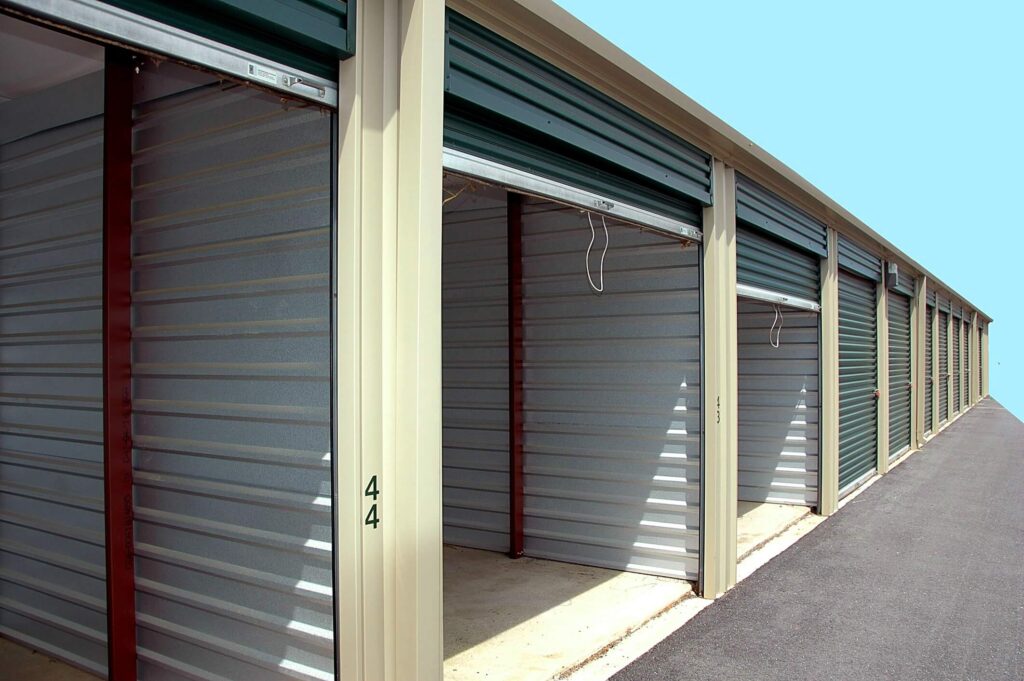
Businesses can store products that require frequent access or rapid movement in and out of drive-up storage units. These units are typically situated in outdoor facilities, where driving directly up to the entrance to load and unload items quickly is possible. This convenience makes them optimal for businesses requiring frequent access to weighty or significant equipment.
Benefits:
Easy loading and offloading.
Convenient for businesses that require frequent access to inventory or equipment.
Frequently, they are more cost-effective than indoor storage facilities.
Best suited for: businesses with a substantial inventory and equipment that require regular access, construction companies, or contractors.
Containers for Mobile Storage
Mobile storage containers provide a versatile solution delivered to your business location. You are free to load it at your leisure, and the storage company can transport it to their secure facility or store it on-site when you are prepared. This solution is optimal for businesses that are in the process of transitioning, relocating offices, or requiring storage during a renovation.
Benefits:
On-site storage is convenient.
A solution that is both user-friendly and adaptable for businesses that are constantly on the move.
Ideal for transient storage during office relocations or renovations.
Ideal for: Businesses that require temporary storage solutions, are enduring renovations, or are relocating.
Storage of Documents
Document storage solutions are indispensable for businesses managing substantial legal documents or documentation. They facilitate the secure organization and storage of records. Organizations frequently implement document storage services to safeguard sensitive data and archive files. Additionally, certain document storage services provide document disposal and scanning services for digitization.
Benefits:
The storage of sensitive documents in a secure manner.
Document shredding and digitizing for digitization are included in a multitude of services.
Ideal for: Healthcare providers, law firms, accountancy firms, and businesses that maintain extensive records or confidential materials.
Storage of Bulk Pallets
Pallet storage is an optimal solution for businesses that require the storage of substantial quantities of products on pallets. These units are intended for industries requiring effortless access to substantial inventories, as they are frequently configured with storage systems. Warehouses or facilities designed explicitly for palletized products can be used to manage pallet storage.
Benefits:
Suitable for the storage of substantial quantities of products.
Bulk inventory is readily accessible.
Inventory management solutions are frequently included.
Optimal for: Wholesale distributors, manufacturers, and retailers who manage bulk products.
Industrial Storage
Large-scale storage systems, or industrial storage solutions, are specifically engineered to accommodate specific industrial requirements, including massive machinery, parts, and large equipment. These units, which are frequently custom-built, frequently accommodate the bulk and weight of industrial products. Industrial storage is implemented to safeguard inventory and equipment valuable to businesses in logistics, manufacturing, or construction.
Benefits:
Adaptable to accommodate particular industrial apparatus.
Provides secure storage for products that are oversized or heavy.
Typically located in industrial locations for the sake of convenience.
Optimal for: logistics businesses, manufacturers, and construction companies that possess hefty machinery or oversized inventory.
Solutions for Virtual Storage
Cloud or virtual storage has become an increasingly significant business solution. Cloud storage offers an efficient method for businesses that depend on digital files to store and access documents and media without occupying physical space. Document management systems can be incorporated with cloud storage to simplify the sharing, searching, and retrieving of business data.
Benefits:
Easily accessible from any location.
Scalable to accommodate the increasing demand for data.
Decreases the necessity for document storage in human form.
Optimal for: legal firms, technology companies, digital marketing agencies, and any business that manages digital files.
Retail storage
Retail businesses frequently require storage solutions to accommodate excess stock, seasonal inventory, or non-display products. To accommodate additional inventory, backroom shelving, pallet racks, or storage areas in a neighboring facility may be employed for retail storage. This enables retailers to maintain an efficient stock supply while ensuring their exhibit areas are organized and ready for customer browsing.
Benefits:
Keeps retail display areas free of debris.
Facilitates the efficient replenishment of inventory.
Adaptable storage solutions for a wide range of retail requirements.
Secure and Clean Business Storage in Scottsdale, Arizona, at McDowell Mountain Community Storage
Businesses seeking to store inventory, equipment, or documents must make a critical decision regarding the appropriate storage facility. The appropriate storage solution can assist in optimizing operations, enhancing efficiency, and protecting assets. When selecting the optimal storage facility for your business, it is crucial to consider the following factors: whether you are storing seasonal products, sensitive documents, or large equipment.
Accessibility and Location
One of the most critical factors to consider is the location of your storage facility. You desire a storage facility that is conveniently situated, whether it is near your business operations, warehouse, or shipping facilities. The facility’s proximity can facilitate the faster and more convenient retrieval of stowed items, thereby reducing transportation time and expenses.
Factors to Consider:
What is the facility’s proximity to your business location or supply chain?
Is it readily accessible by major roads, highways, or shipping routes?
Is the facility open during reasonable hours? Are there options available around the clock?
Security and Safety Features
Security features are of the utmost importance when selecting a storage facility, particularly when storing sensitive or valuable business assets. To guarantee the security of your products, seek out a facility that implements stringent security protocols.
Security Features to Consider:
Video monitoring and surveillance cameras.
A keycard or PIN entry is required for gated access.
Patrols or security personnel who are present on the premises.
Adequate illumination to prevent vandalism or theft.
Factors to Consider:
Does the facility provide adequate security to meet your specific requirements, such as storing confidential documents or high-value equipment?
What is the frequency of security measures updates or inspections?
Type and Size of Storage Unit
It is crucial to choose a storage unit compatible with your business’s current and future storage requirements. Storage units are available in a variety of capacities. The quantity and dimensions of the items that require storage should be considered.
Types of Storage Units:
Standard Units: For archives, archives, or modest inventories.
Climate-controlled units: Indispensable for delicate items, including electronics, artwork, and documents.
Drive-Up Units: Suitable for frequent access or bulky items.
Warehouse Space: Intended for businesses that require more substantial, industrial-grade storage solutions.
Shelving or pallet racks: Ideal for storing large quantities of inventory or products that require bulk storage.
Factors to Consider:
Is the unit capable of accommodating the quantity of your inventory or equipment?
Can the dimensions be adjusted as your requirements expand?
Does the facility provide both interior and outdoor storage options?
Environmental Security of the Facility
In addition to physical security, evaluating the environment in which your products will be stored is essential. Environmental factors, including temperature, heat, and humidity, can substantially impact the quality of specific inventory categories, including electronics, pharmaceuticals, and perishable goods.
Factors to Consider:
Does the facility provide climate control if you require it? Is it appropriate for your specific needs (humidity, temperature)?
Does the facility provide safeguards against vermin, moisture, or extreme temperatures that could harm your inventory?
Rental Terms and Costs
The cost of storage is a critical factor when selecting the appropriate facility. Compare the rates of various storage providers and ensure that you know all the fees associated with the service, including insurance, access charges, and any concealed fees for early termination or late payments.
Factors to Consider:
Is the price within your budget?
Are any additional fees associated with facility upgrades, insurance, or access?
Does the facility provide more flexible rental terms, such as long-term or short-term leases?
Is there a discount available for signing a longer-term contract?
Facility Maintenance and Cleanliness
The longevity of your stored items depends on the condition of the storage facility. A well-maintained and sanitary facility minimizes the likelihood of pest infestations, water damage, and other potential issues that could impact your inventory.
Factors to Consider:
Is the facility following a consistent cleansing schedule?
Are the units dry, well-lit, and free of fungi or mildew?
Is there evidence of wear and tear on the property or units?
Services and Customer Support
When selecting a storage facility, it is imperative to prioritize customer service. The staff should be available to answer any inquiries, address any concerns, and be responsive and helpful. Furthermore, consider the facility’s supplementary services, including inventory management, delivery, or packaging supplies.
Factors to Consider:
How responsive and accommodating is the customer service team?
Are additional services available, such as inventory tracking, delivery, or packaging?
Does the facility offer assistance with business-specific requirements, such as bulk inventory management or temperature-sensitive storage?
Liability and Insurance
Comprehending the storage facility’s insurance policies and any liability restrictions is imperative. Numerous facilities offer insurance plans; however, they may only sometimes provide comprehensive coverage for your assets. Ensure you know the coverage included and, if necessary, consider purchasing additional coverage.
Factors to Consider:
Is insurance available for the items you have stored at the facility?
What sort of coverage is offered? Is your inventory, equipment, or documents entirely safeguarded?
Is it advisable to acquire additional insurance through a third party?
Convenience and Accessibility
Access to your stored items is essential, especially for businesses that require frequent access to products or supplies. Select a facility with convenient access, such as 24/7 availability, extended hours, or drive-up units.
Factors to Consider:
Are the access hours sufficiently adaptable to accommodate your business requirements?
Do you require specialized access, such as 24/7 entry or designated loading areas?
Does the facility provide delivery and collection services to save time?
Reviews and Reputation
Research the facility’s reputation by perusing online reviews and speaking with other business owners who may have utilized their services before making a final decision. Feedback from other consumers can offer valuable insights into the facility’s reliability, customer service, and quality.
Factors to Consider:
What are the opinions of current or former customers regarding the facility’s security and service?
Is the facility recognized for its ability to offer dependable storage solutions?
Are there any grievances or issues that could impact your business operations?
Conclusion
Renting a storage unit is prudent to enhance your organization, increase efficiency, and optimize space. A storage unit can enable your business to operate more efficiently and effectively by maintaining a clutter-free office, protecting merchandise, and providing a secure and cost-effective storage solution. With the correct business storage units, you can store everything from retail inventory to boxes and packages, keeping your vehicle, tools, and even a truck organized for easy access. Self-storage offers a flexible way to store something you may not need right away, allowing you to save money while safeguarding your rights to valuable assets. Keeping these items in mind helps you maintain control over your business’s growth, ensuring you remain competitive in a constantly evolving real estate and retail market.
Are you prepared to enhance your business’s efficacy? Consider renting a storage unit today.
Frequently Asked Questions (FAQs)
In what ways does the rental of a storage unit facilitate inventory management?
Renting a storage unit facilitates improved inventory organization by establishing a designated area for surplus stock. This reduces congestion and guarantees your primary business area is dedicated to current, high-priority items. Your team can more effectively monitor stock levels by utilizing well-organized, readily accessible storage, which enhances inventory management.
Can I expand my storage capacity through the expansion of my organization?
Indeed, most storage facilities provide scalable options and flexible rental agreements, which enable you to adjust your storage space as your business requirements expand or contract. If your inventory expands, you can rent additional units or convert to a larger one, guaranteeing that your storage solution is compatible with your evolving business needs.
What sorts of supplementary services could a storage facility provide?
Certain storage facilities offer supplementary services such as packing supplies, document shredding, inventory tracking, delivery and retrieval, and loading assistance. Contact the facility to determine whether they offer these services, which can improve the efficiency and convenience of managing your business’s storage requirements.
What methods can I employ to maintain the organization of my storage unit?
Use shelves, bins, and distinct labeling to ensure that items are easily identifiable in your storage unit. Store frequently used items in the front for easy access and rotate inventory regularly. For businesses with substantial inventories, consider employing inventory management software to monitor the contents of your unit.
Can It be rented to assist with a business relocation or renovation?
Indeed, renting a storage unit can be cost-effective for business relocations or renovations. It provides a secure and transitory location for storing inventory, office furniture, documents, and equipment during the transition of your business. This minimizes disruptions and guarantees the security of your business assets until you are prepared to establish your new location.
In what ways can the organization and workflow be enhanced by renting a storage unit?
Renting a storage unit streamlines your operations by ensuring that only the most essential items are kept on-site, while surplus inventory, equipment, or archived files are securely stored offsite. This increases efficiency and productivity by reducing clutter, allowing employees to concentrate on their duties without distractions, and increasing the functionality of their office or business space.
Can I access my business storage unit at any given moment?
Most storage facilities offer flexible access hours, with many offering 24/7 entry. However, some establishments may have restricted hours or require advance notification for after-hours access. Ensure that the facility’s access policy meets your business’s requirements, especially if you require frequent or urgent access to stored items.
What are the cost factors associated with renting a commercial storage unit?
The cost of renting a storage unit depends on its size, location, and the availability of supplementary features, such as climate control or 24/7 access. Prices can fluctuate significantly, ranging from $50 to $500 monthly. It is crucial to compare prices and consider the long-term savings and efficiency enhancements that renting a storage unit can offer.
What measures can I take to guarantee the security of my stored items?
Search for storage facilities that offer high-level security features, including gated access, 24/7 video surveillance, and on-site security personnel. Alarms, motion sensors, and secure locking are available at numerous facilities. In addition, it may be advantageous to acquire insurance coverage for your stowed items to ensure an additional layer of security.
Is it permissible to retain confidential business documents in a storage unit?
Indeed, business documents can be securely stored in a storage unit. Numerous storage facilities provide document storage services, including climate-controlled and dedicated record storage services. Consider selecting a storage unit with enhanced security features, such as restricted access, and ensuring that documents are stored in sealed cases to safeguard their integrity if you store confidential or sensitive information.
Our Expert Guidance Will Help You Choose the Right Business Storage Solution!
At McDowell Mountain Community Storage, we recognize that selecting the appropriate business storage solution can be daunting. Whether you require additional space for inventory, office supplies, or equipment, our team of professionals is available to streamline the process. Ensuring that your workspace remains organized and efficient, a 10×10 or 10×20 unit can provide the ideal space to store various items, including business files, seasonal products, furniture, and equipment. By utilizing storage containers and shelving, we assist businesses in optimizing their storage capacity, ensuring that their items are easily accessible at all times.
Whether you need a temporary storage facility during a relocation or a permanent solution for long-term inventory storage, we have options that suit your budget and help you achieve your business goal. Explore our range of storage unit sizes and prices today to see how renting a storage unit can be a cost-effective solution for your business. Contact us today to discuss your needs.
It is imperative to comprehend the size and capacity of a 10×15 storage unit to select the appropriate storage solution. This unit is an excellent choice for a wide range of storage requirements, as it provides 150 square feet of space and measures 10 feet in width and 15 feet in length. A 10×15 unit can accommodate the contents of a 2- to 3-bedroom house or apartment, including more oversized items like a king-sized bed, refrigerator, and washer, as well as appliances, sports gear, and a TV. Whether relocating, downsizing, or simply seeking a secure location for seasonal items and personal effects, this storage solution meets your needs. This guide will explore a 10×15 storage unit’s precise dimensions, practical applications, amenities, and strategies for organizing your belongings while estimating any associated fees.
Understanding Storage Unit
A storage unit is a rented, secure space for individuals or businesses to store personal belongings, inventory, or equipment. Self storage units can differ in size, features, and pricing, and they are typically situated within storage facilities across various locations in the U.S., including major cities like Los Angeles, Chicago, Las Vegas, Miami, Atlanta, and New York City. These units can accommodate items from multiple bedrooms, ensuring that each provider may offer unique amenities to cater to the diverse needs of customers throughout the country.
Standard Storage Units
Standard self-storage units come in various sizes, catering to a wide range of needs, from short-term storage during a move to long-term solutions for personal or business items. Understanding the standard self-storage unit sizes and their typical uses can help you decide which option is best.
Common Storage Unit Sizes
5×5 Storage Unit
Dimensions: 25 square feet
Typical use: It is ideal for small items such as seasonal decorations, sports equipment, or boxes. It is also great for students or individuals needing temporary storage for personal items.
5×10 Storage Unit
Dimensions: 50 square feet
Typical Use: It is suitable for the contents of a studio apartment, including a mattress, a small sofa, and several boxes. It is commonly used for downsizing or short-term storage needs.
10×10 Storage Unit
Dimensions: 100 square feet
Typical Use: Fits the contents of a one-bedroom apartment, making it ideal for individuals or couples needing extra space during a move or renovation. It can accommodate more oversized furniture and appliances.
10×15 Storage Unit
Dimensions: 150 square feet
Typical Use: Designed for the contents of a 2- to 3-bedroom apartment, including larger furniture pieces, appliances, and boxes. Suitable for families moving or businesses needing extra storage for inventory.
10×20 Storage Unit
Dimensions: 200 square feet
Typical use: This size is perfect for larger homes or multiple rooms. It can accommodate vehicles, more extensive furniture collections, or the contents of a three-bedroom house. It is often used for long-term storage solutions.
10×30 Storage Unit
Dimensions: 300 square feet
Typical Use: Ideal for those needing significant space, such as businesses storing equipment or individuals with extensive furniture collections. Suitable for larger moving projects or long-term storage.
Storage Units with Climate Control
Climate-controlled storage facilities provide a temperature-controlled environment that safeguards your possessions from severe weather conditions. These devices are engineered to preserve a consistent temperature and humidity level, making them ideal for storing delicate items.
Drive-Up Storage Unit
Drive-up storage units are a convenient and accessible option for individuals and businesses that need to store their possessions. These devices facilitate effortless loading and unloading by providing direct access to your vehicle.
Vehicle Storage Units
Facilities are spaces specifically designed to ensure the safety of various vehicles, including cars, motorcycles, boats, RVs, and other types of vehicles. Vehicle storage units provide various options to accommodate your requirements, whether you require short-term parking during the off-season or a long-term solution for your most valuable possession. You should be aware of the following regarding vehicle storage units:
Vehicle Storage Units: Size Variability
Diverse Dimensions: Vehicle storage facilities are available in various sizes to accommodate many vehicles, including compact cars, recreational vehicles (RVs), and boats. Selecting the appropriate measurement based on your vehicle’s dimensions is imperative.
Indoor Storage vs. Outdoor Storage
Outdoor Storage: These facilities are typically open-air spaces where vehicles can be parked directly. Although this option is frequently more cost-effective, it provides less protection from the elements.
Indoor Storage: Enclosed storage units protect completely from pollution, weather conditions, and potential damage. This alternative is optimal for valuable or classic vehicles that necessitate additional maintenance.
Security Features
Enhanced Security: To guarantee the safety of your vehicle, numerous vehicle storage facilities implement security measures, including surveillance cameras, secured access, and individual alarms.
Convenient Location
Convenient Entry and Exit: Most vehicle storage units have drive-up access, which simplifies the process of parking and retrieving your vehicle as needed.
Advantages of Vehicle Storage Units: Protection from the Elements
Weather Protection: Storing your vehicle in a climate-controlled or indoor facility safeguards it from environmental factors that can cause wear and tear, such as rain, snow, and UV rays.
Enhanced Security
Safety for Your Investment: Vehicle storage facilities provide a secure environment to safeguard your vehicle from theft or vandalism, ensuring you have peace of mind when your vehicle is not in use.
Maximizing Space Efficiency
Clearing Driveways and Garages: Renting a vehicle storage unit can free up space in your garage or driveway, improving the organization and accessibility of your property.
Storage Alternatives for the Long Term
Suitable for Seasonal Vehicles: Vehicle storage units are an excellent choice for storing seasonal vehicles, such as watercraft during the winter or RVs during the off-season. This allows you to safely store them until you are ready to use them again.
Applications of Storage for vehicles
Vintage and Classic Automobiles
Preservation: Classic car enthusiasts frequently employ vehicle storage units to safeguard their treasured possessions from the elements and guarantee their continued pristine condition.
Motorbikes
Secure Parking: Motorcycle owners can capitalize on dedicated storage units that safeguard against theft and weather damage.
Watercraft and Boats
Seasonal Storage: Boat owners frequently utilize vehicle storage for off-season storage to safeguard their vessels from winter weather.
Trailers and Recreational Vehicles
Off-Season Parking: RV owners can store their vehicles securely when not in use, freeing up driveway space and ensuring their RV’s safety from potential damage.
Commercial Automobiles
Business Use: When not in operation, vehicle storage containers may be employed by businesses that operate vehicles, such as delivery trucks or service vans, for parking and secure storage.
Portable storage units
Portable storage units, also called portable containers or PODs (portable on-demand storage), are adaptable storage solutions intended to offer convenience and flexibility for personal and business purposes. These units can be delivered directly to your location, enabling you to load and unpack at your leisure.
Advantages of Utilizing a Storage Unit
Extra Space: Offers additional storage capacity for objects not currently housed in your home or office.
Flexibility: Offers flexible rental agreements, enabling you to rent for brief or long periods.
Security: Surveillance cameras, gated access, and individual locks are among numerous facilities’ security features.
Accessibility: Most storage units provide convenient access to your possessions, with numerous facilities providing round-the-clock access.
Organized Storage: Facilitates decluttering your living space by ensuring your possessions are protected and organized.
Factors to Consider
Size: When Renting or Purchasing a Storage Unit, Select a unit capacity appropriate for your storage requirements. Consider the items you intend to store and how they will be accommodated.
Cost: Evaluate the prices of various facilities and consider supplementary expenses such as administrative fees and insurance.
Location: Choose a facility that is easily accessible for your stored products.
Features: Search for units with essential features, such as climate control, security measures, and drive-up access.
Rental Terms: Comprehend the rental agreement’s terms, which encompass notice periods, payment methods, and penalties for late payments.
Dimensions of a 10×15 Storage Unit
A 10×15 storage unit has a total storage space of 150 square feet, with dimensions of 10 feet in width and 15 feet in length. The dimensions and primary factors to consider for this unit size are as follows:
Length and Width
Width: 10 feet (approximately 3.05 meters)
15 feet (approximately 4.57 meters) in length
These dimensions offer sufficient floor space for storing diverse items, including furniture and crates.
Elevation
Height: Depending on the facility, the height of a 10×15 storage unit typically ranges from 8 to 10 feet (approximately 2.44 to 3.05 meters).
This vertical space enables the efficient stacking of items, thereby optimizing the unit’s storage capacity.
Total Volume
Volume: The total volume of a 10×15 storage unit is approximately 1,350 cubic feet, calculated as 10 feet x 15 feet x 9 feet, with an average height of 9 feet.
This volume is crucial to arrange your items and determine what can be adequately accommodated.
Floor Area
A unit with a 10×15 size can accommodate a diverse array of items, including a 150-square-foot floor space.
The contents of a two- to three-bedroom apartment.
Sofas, beds, and chests are examples of substantial furniture items.
Appliances, including refrigerators, cleaners, and dryers.
Recreational equipment and seasonal merchandise (e.g., bicycles, camping supplies).
Visualizing the Environment
To facilitate comprehension of the dimensions of a 10×15 storage unit, contemplate the following analogies:
Small Bedroom: In terms of its dimensions, a 10×15 unit is comparable to a small bedroom, providing ample space for walking and accessing your belongings.
Large Truck Bed: It can accommodate the equivalent of a large truck bed, making it appropriate for substantial relocation undertakings.
Common Uses for a 10×15 Storage Unit
The 10×15 size is an excellent option for individuals who require storage space for the contents of a medium-sized residence.
Furniture for multiple rooms: Large items such as couches, mattresses (up to gigantic), wardrobes, coffee tables, and bookshelves can be easily accommodated.
Appliances: A 10×15 unit provides ample space for the primary household appliances, including refrigerators, washers, and dryers.
Bins and boxes: It is an ideal location to store your packed items, with the capacity to accommodate 50–100 crates, contingent upon their size.
Outdoor equipment: This apparatus is capable of accommodating a variety of items, including lawnmowers, kayaks, and bicycles.
Small business inventory: This area is available for entrepreneurs to store surplus stock, office equipment, or products.
Comparison with Other Storage Unit Sizes
When choosing a storage unit, it’s essential to understand how different sizes compare to determine which option best meets your needs. Below is a comparison of a 10×15 storage unit with several other popular storage unit sizes.
5×5 Storage Unit
Dimensions: 5 feet wide by 5 feet long (25 square feet)
Capacity: Suitable for storing small items, boxes, and seasonal decorations.
Common Uses: Ideal for college students, small furniture, or a few boxes; perfect for short-term storage needs.
5×10 Storage Unit
Dimensions: 5 feet wide by 10 feet long (50 square feet)
Capacity: Can accommodate items from a studio apartment, such as a mattress, a small sofa, and several boxes.
Common Uses: Great for downsizing, seasonal storage, or storing items during a move.
10×10 Storage Unit
Dimensions: 10 feet wide by 10 feet long (100 square feet)
Capacity: Fits the contents of a one-bedroom apartment, including furniture, appliances, and boxes.
Common Uses: Suitable for individuals or families needing extra space during a move or renovation.
10×15 Storage Unit
Dimensions: 10 feet wide by 15 feet long (150 square feet)
Capacity: Accommodates the contents of a 2- to 3-bedroom apartment, including more oversized furniture and appliances.
Common Uses: Ideal for families moving, businesses storing inventory, or anyone needing long-term storage for more oversized items.
10×20 Storage Unit
Dimensions: 10 feet wide by 20 feet long (200 square feet)
Capacity: It is suitable for storing the contents of a larger home or multiple rooms, including vehicles or larger equipment.
Common Uses: It is perfect for long-term storage solutions, more extensive furniture collections, or moving to a new home.
Packing Tips for Efficient Use of Space
Careful packaging and organization are necessary to optimize the space in your storage unit. Make the most of your 10×15 storage unit with these practical tips:
Develop a Layout Plan
Visualize the Space: Determine how you wish to arrange your possessions before packaging. Consider access points for frequently used items and the secure stacking of more significant parts.
Utilize a floor plan: Draw a straightforward layout to ascertain the placement of each category of items, with heavier items at the bottom and lighter items at the top.
Maximize Vertical Space
Stack Boxes: Ensure that the boxes are durable and capable of being laid on top of one another. Label each package to facilitate the identification of its contents without unpacking.
Shelving Units: To optimize vertical space, consider installing shelving units. These units will enable you to store items and crates off the floor and out of the way.
Select the Appropriate Packing Materials
Uniform Box Sizes: The utilization of boxes of comparable sizes will facilitate the development of a more consistent layering structure, thereby facilitating the efficient utilization of vertical space.
Plastic Bins: Choose clear plastic bins over cardboard crates. This enables you to view the contents without opening each one.
Disassemble bulky objects
Disassemble furniture: To conserve space, it is necessary to disassemble larger furniture pieces, including mattresses and tables. Labeled bags that are affixed to the corresponding item are used to store screws and minor parts.
Foldable Items: To minimize their footprint during transportation, employ foldable items (e.g., tables or chairs).
Be careful with your possessions.
Wrap: Wrap fragile items in bubble wrap or blankets to safeguard them and prevent them from swaying during transportation.
Utilize wardrobe boxes: Wardrobe boxes can maintain the organization and wrinkle-free appearance of apparel and hanging items.
Clear the aisles to facilitate access.
Establish Pathways: Maintain narrow aisles between furniture and piled boxes to facilitate easy access to your possessions. This will enable you to retrieve items without the necessity of unpacking everything.
Organize Items That Are Seasonal From a strategic standpoint.
Store seasonal items at the rear of the unit: If you anticipate that you will not require specific items for an extended period, such as holiday decorations or winter clothing, place them at the rear of the unit. Arrange frequently used items near the front for effortless access.
Employ Empty Spaces
Fill Gaps Wisely: Capitalize on any vacant areas, such as the spaces between crates or within furniture drawers. To prevent shifting and cover these gaps, utilize soft items such as cushions or blankets.
Visualizing the Environment
Consider a space approximately the same size as a one-car garage or a spacious bedroom to provide context for the dimensions and storage needs. Suppose you are in the process of relocating or downsizing. In that case, this unit can accommodate most of the contents of a two—to three-bedroom residence, making it an ideal solution for families seeking extra storage space. Here are some tips to estimate your belongings’ volume and help select the best storage solutions.
Who should rent a 10×15 storage unit?
A10×15 storage unit is an excellent option for various individuals and situations. Here are some scenarios where renting this size unit makes sense:
Families Moving or Relocating
Transitioning Between Homes: Families moving from one home to another may find a 10×15 unit invaluable for storing furniture, appliances, and boxes until they settle into their new space.
Downsizing: For families moving to a smaller home, a 10×15 unit provides ample space to store items they wish to keep but cannot accommodate in their new residence.
Students
College Students: Students who need to store their belongings over the summer or during a study abroad program can utilize a 10×15 unit to keep their furniture, clothes, and personal items safe until they return.
Business Owners
Inventory Storage: Small business owners who need extra space for inventory, equipment, or seasonal products can benefit from a 10×15 unit. It offers enough room to keep items organized and easily accessible.
Office Overflow: Businesses facing space constraints in their offices can use this size unit for document storage, supplies, or equipment that needs to be regularly used.
Homeowners with Seasonal Items
Storing Seasonal Equipment: Homeowners with outdoor furniture, seasonal decorations, or gardening tools can use a 10×15 unit to keep these items organized and out of the way during off-seasons.
Hobbyists: Individuals with hobbies that require equipment, such as camping, sports, or crafting, can store their gear in a 10×15 unit, allowing for more accessible organization and access.
Individuals in Transition
Life Changes: People undergoing significant life changes—such as divorce, retirement, or relocation from work—might need extra space to temporarily store their belongings while they figure out their next steps.
Renovators and DIY Enthusiasts
Home Renovation Projects: During home renovations, a 10×15 storage unit can provide a secure space to keep furniture and belongings safe from dust and damage while work is being done.
Suggestions for Packing a 10×15 Storage Unit Effectively
Stack furniture and boxes: Utilize the height by vertically stacking products. Arrange items that are denser and more durable at the base of the container, while those that are lighter and more fragile are placed at the top.
Furniture disassembly: To conserve space, disassembling more oversized furniture, such as bed frames or tables, is advisable.
Utilize consistent containers: This facilitates clustering and optimizes the utilization of each square inch of the unit.
All items should be clearly labeled. Label crates and generate a map of their locations to maintain the organization of your storage unit.
Organizing Your Storage Unit
A well-organized space significantly improves your storage experience, facilitating the discovery of the items you need at the appropriate time. Here are practical measures to assist you in effectively organizing your space, regardless of whether you are using a 10×15 storage unit or any other size.
Develop a Strategy Before Packing
Evaluate Your Items: Take inventory of the items you intend to store and sort them into categories, including furniture, crates, seasonal decorations, and sports equipment.
Design a Layout: To facilitate the visualization of the placement of items in your storage unit, create a straightforward layout. This will enable you to optimize the available space and guarantee effortless accessibility.
Accumulate Packing Supplies
Ensure that you have the appropriate materials to organize and safeguard your possessions:
Crates: To facilitate stacking, use uniformly sized, durable crates. Avoid overpacking to prevent fracturing.
Plastic Containers: Clear plastic containers are viable for moisture protection and visibility.
Packaging Supplies: Stock up on bubble wrap, packaging tape, and labels.
Sort Your Personal Property into Categories
Assemble products that are similar to facilitate retrieval:
By Room: Arrange items according to their rooms (e.g., kitchen, living room).
By Season: organize seasonal items, such as summer apparel or holiday decorations.
By Frequency of Use: Position items that will require frequent access toward the front of the unit.
Label All Items
It is essential to have clear labeling to facilitate access:
Labels for boxes: Inscribe the contents and designated room on each carton.
Color Coding: Utilize a variety of colored labels to facilitate the identification of items at a glance.
Optimize the utilization of space.
Maximize the potential of your storage unit’s dimensions:
Vertical Storage: Utilize shelving units and arrange boxes to capitalize on the available height. Lighter items should be placed on top, while heavier ones should be stored at the bottom.
Utilize shelving: To optimize storage capacity and maintain order, consider installing shelving.
Establishing Pathways
Allow for the accessibility of items:
Access Aisles: Guarantee that there are pathways between furniture and crates to facilitate the effortless retrieval of items without the need to relocate everything.
Arrange by Access Frequency: Arrange items used frequently at the front of the shelf and those used less frequently at the rear.
Maintain an inventory
To prevent confusion, it is essential to maintain a record of your possessions:
Inventory List: Record the contents and box numbers of the items you have stowed. This list should be revised whenever new products are added or removed.
Digital Inventory: To maintain a digital inventory of your storage unit, consider capturing photos or utilizing an application.
Conduct regular reviews and reorganizations.
Maintain the organization of your storage unit over time:
Conducting routine inspections: Arrange routine evaluations of your storage unit to determine which items are still required and eliminate those no longer in use.
Reorganize as Required: Adjust your unit to accommodate your evolving storage requirements.
Climate Control Options for 10×15 Units
When renting a 10×15 storage unit, it is essential to consider climate control options as part of your selection process to safeguard your things from extreme temperatures and humidity.
What is the definition of climate control?
Climate control in storage units regulates temperature and humidity levels to establish a consistent environment for storing objects. This is particularly crucial for sensitive products, such as:
Extreme conditions may cause wood furniture to warp or fracture.
Highly susceptible to temperature and humidity fluctuations.
Stable conditions are necessary to prevent damage to artwork and antiquities.
Humidity can cause warping or fractures in musical instruments.
Features of Climate-Controlled Storage
The regulation of temperature
Temperature Consistency: Climate-controlled units typically maintain a temperature range of 55°F to 80°F (13°C to 27°C).
Heating and Cooling Systems: Units are outfitted with heating and cooling systems to accommodate seasonal fluctuations.
Humidity Regulation
Dehumidifiers: To safeguard items from mold and mildew, numerous climate-controlled units employ dehumidifiers to decrease humidity levels.
Stable Humidity Levels: It is recommended that humidity levels be maintained between 30% and 50%.
Management of Airflow
Ventilation: The unit’s air is circulated effectively, preventing stagnation and minimizing the risk of moisture accumulation.
Advantages of Climate-Controlled Storage
Protection from Extreme Temperatures: Prevents items from heat or cold damage.
Decreased Risk of Mold and Mildew: Mold growth is inhibited by lower humidity levels.
Valuable Items Preservation: This method is well-suited for storing sensitive or valuable items, including antiques, electronics, artwork, and documents.
Convenient Access: Units are generally situated in indoor facilities, which ensures a more pleasant environment for retrieving your possessions.
Climate-Controlled Unit Rental Considerations Cost
Increased rental fees: Climate-controlled units are generally more expensive than standard units, so it is essential to consider your budget.
Value of Items in Storage: Evaluate the value and cost of the items you store. The investment may be justified for sensitive or valuable objects.
Address
Facility Availability: Not all storage facilities offer climate-controlled options. Research nearby facilities to identify those that do.
Access Hours: Verify the access hours for climate-controlled units, as some facilities may have restricted access compared to standard units.
Size Options
Availability in a Variety of Sizes: Ensure the facility has climate-controlled units in the 10×15 dimensions you require.
Renting vs. Purchasing a Storage Unit
When contemplating acquiring additional storage space for your possessions, you may be faced with renting or purchasing a storage unit. The optimal decision is contingent upon your unique requirements and circumstances, as each alternative has advantages and disadvantages. The following is a comprehensive list of the variables to evaluate when selecting between renting and purchasing a storage unit.
Advantages of Renting a Storage Unit
Adaptability
Short-Term Solutions: Renting enables you to reserve a space for a period you require, whether for a few months or several years.
It is more accessible to upgrade or downsize: If your storage requirements evolve, transitioning to a larger or smaller unit is effortless.
Reduced Initial Expenses
No Significant Investment: Renting typically necessitates a reduced initial payment, frequently limited to the first month’s rent and a security deposit.
No Maintenance Costs: The facility is responsible for the maintenance, utilities, and repairs.
Accessibility
Convenience: Many rental facilities provide a variety of unit sizes and climate-controlled options, thereby simplifying the process of locating a suitable unit for your requirements.
Locations: Rental storage units are frequently accessible from multiple locations, ensuring that your possessions are easily accessible.
List of disadvantages
Fees that are recurring
Ongoing Costs: Monthly rental fees can accumulate over time, particularly if the unit is required for an extended period. Rental costs may rise due to market conditions or facility policies.
No Equity
No Ownership: Renters do not accumulate equity in the unit, which implies that they will not receive a return on investment when they no longer require the space.
Advantages of Purchasing a Storage Unit
Long-Term Investment
Equity Building: Holding a storage unit allows you to accumulate equity over time, which may prove advantageous if property values rise.
Asset Ownership: The unit may be a tangible asset within your portfolio.
Absence of monthly rent
The elimination of recurring fees means that you will no longer be required to pay monthly rent after the purchase, which could result in long-term savings.
Personalization
Owners can personalize their storage units to meet specific requirements, including adding security features or shelving.
List of disadvantages
Expensive Initial Investments
Ongoing expenses: property taxes, insurance, maintenance, and utilities are the owner’s responsibility and can accumulate over time.
Reduced Flexibility
Long-Term Commitment: Individuals with fluctuating storage requirements may need help finding the most suitable option for owning a unit, as renting or selling a unit can be time-consuming.
Market Risks: Your investment may be affected by property value fluctuations, which are contingent upon market conditions.
Essential Factors to Take into Account
Rental may be the superior choice if you require stowage for a brief period. Purchasing may be a viable option for those who require long-term storage.
Assess your financial circumstances. Generally, renting requires a lower initial investment, whereas purchasing requires a more substantial upfront cost.
Consider the value of the products you store. Investing in a purchased unit may provide long-term peace of mind if you have valuable or sensitive items.
If you are contemplating the acquisition of a unit, research the current condition of local real estate. You can ascertain whether this is a sound investment by comprehending the market.
Cost Considerations and Budgeting
It is imperative to comprehend the storage unit cost considerations and budget effectively when selecting a 10×15 self-storage unit to ensure that you choose the most suitable option for your requirements. The following is a comprehensive list of factors, including area, size, and volume, that should be considered when estimating the rental cost for a storage unit, along with advice for fitting your belongings and managing expenses.
Monthly Rental Fees for a Storage Unit: Cost Considerations
Base Rate: The cost of renting a 10×15 storage unit depends on the demand, location, and facility. You can pay between $100 and $300 per month.
Climate Control: If you opt for a climate-controlled unit, you should anticipate higher monthly fees, typically ranging from $150 to $400.
Security deposits
Initial Payment: A security deposit (usually equivalent to one month’s rent) is required by numerous storage facilities upon the initial rental of the unit. Typically, this sum is refunded provided that the unit is returned in a satisfactory condition.
Fees for administrative services
One-time expenses: Certain facilities assess administrative or set-up expenses, varying from $10 to $50. Ensure that you inquire about these fees in advance.
Insurance Fees
Options for Insurance Coverage: Storage facilities frequently mandate that tenants maintain insurance coverage for their possessions. You can purchase insurance through the facility or utilize your homeowner’s or renter’s insurance policy. Expect to pay between $10 and $30 monthly for storage insurance, although costs may fluctuate.
Transportation expenses
Moving Expenses: Consider the expense of transporting your items to and from the storage unit, which may involve renting a moving truck, employing movers, or using your vehicle.
Fuel expenses: It is crucial to account for petroleum expenses, mainly if the storage facility is far from your residence.
Added Services
Access Fees: Certain facilities may impose fees for particular services or after-hours access, such as using forklifts to transport large objects.
Budgeting Strategies Compare Facility Options
Conduct Pricing Research: Contact or visit numerous storage facilities to evaluate pricing and services. Search for any promotional offers or discounts that are available to new customers.
Read Reviews: Before making a decision, evaluate the quality of service and the facility’s security by consulting online reviews.
Agree to the Terms
Inquire about Discounts: Do not hesitate to inquire whether the facility provides discounts for long-term rentals or special promotions. For the initial few months, certain facilities may offer discounted rates.
Loyalty Programs: If you intend to remain for an extended period, inquire about referral discounts or loyalty programs.
Formulate a Comprehensive Budget
Compile a comprehensive list of expenses: Incorporate all prospective expenses into your budget, such as insurance, monthly fees, moving expenses, and packing supplies.
Monitor Expenses: Maintain a record of your expenses to guarantee that you remain within your budget and that you can revise your spending as needed.
Evaluate Long-Term Requirements
Evaluate Storage Duration:
Determine the duration of time for which you anticipate requiring the storage unit.
Focus on facilities that provide flexible rental agreements if it is a temporary solution.
Determine whether purchasing a unit would be more cost-effective in the long term.
Take advantage of promotions:
Certain storage facilities offer promotions during specific seasons, such as back-to-school sales. Take advantage of these discounts to reduce expenses.
Conclusion
In conclusion, a 10×15 storage unit provides a generously proportioned solution for individuals who require additional storage space. Due to its generous dimensions of 150 square feet, it is well-suited for a diverse array of items, including seasonal possessions, business inventory, and furniture. By comprehending the size and capacity of this unit, you can make informed decisions about your storage requirements and effectively optimize your space. A 10×15 storage unit can offer the convenience and adaptability you need, whether managing business supplies, decluttering, or moving.
A 10×15 storage unit is an excellent intermediate option for those seeking a solution that balances cost and dimensions. It provides ample space for the possession of a medium-sized family residence without occupying an excessive amount of space. This unit size offers a versatile solution for short-term and long-term storage requirements, whether storing furniture like a dining room table, appliances such as a dryer, or organizing items from a closet. If you are still determining the appropriate measurement, you may visit the storage facility and inspect the unit in person. This can help you visualize the required space and determine whether a 10×15 unit suits your storage objectives.
Frequently Asked Questions
What are the dimensions of a 10×15 storage unit?
A storage unit that is 10 feet wide and 15 feet long offers 150 square feet of storage space. This facility is ideal for those looking to organize their belongings, as it can fit a variety of items, from personal possessions to furniture. Remember the size measurement when considering your rental options to ensure everything you need to store fits comfortably.
What is the maximum capacity of a 10×15 storage unit?
The contents of a two- to three-bedroom apartment can typically be accommodated by a 10×15 storage unit. This may encompass:
Furniture (including beds, tables, chairs, and lounges)
Appliances (e.g., laundry machines and refrigerators)
Bins and crates (up to 15–20 standard-sized boxes)
Bicycles and lawnmowers comprise outdoor apparatus.
What is the height of a 10×15 storage unit?
The height of a 10×15 storage unit can vary depending on the facility, but it is typically between 8 and 10 feet high. This enables the vertical stacking of products, optimizing space utilization.
Is a 10×15 storage unit appropriate for commercial storage?
Indeed, a 10×15 storage unit may be appropriate for commercial storage. It is an excellent choice for small businesses or those needing additional workspace, as it can accommodate office furniture, equipment, inventory, and supplies.
Is storing a vehicle in a 10×15 storage unit permissible?
Although a 10×15 unit is typically insufficiently large to accommodate most vehicles, including automobiles and trucks, it can accommodate smaller items like motorcycles or scooters. A larger unit or a dedicated vehicle storage space is typically required for full-sized vehicles.
Are there climate-controlled storage units available for a 10×15 size?
Numerous storage facilities provide climate-controlled alternatives for a 10×15 unit. This unit type is optimal for storing delicate items, such as electronics, artwork, or wooden furniture, due to its ability to maintain consistent temperature and humidity levels.
What is the most effective method for organizing a 10×15 storage unit?
To efficiently organize a 10×15 storage unit:
Prepare in advance: Establish a plan before commencing the preparation process.
Categorize Items: Assemble items that are similar to facilitate their retrieval.
Stacking Wisely: Position the heavier crates at the bottom and the lighter ones at the top. If possible, implement accessible shelving.
Leave aisles: Establish pathways for your items to be accessed without the need to relocate them.
Which items should I avoid storing in a 10×15 storage unit?
Perishable items, hazardous materials (such as chemicals or explosives), live animals, and anything unlawful should not be stored. Furthermore, storing items susceptible to extreme temperatures is only advisable in a climate-controlled facility.
What is the cost of a 10×15 storage unit?
The cost of a 10×15 storage unit can fluctuate significantly depending on the location, facility features, and climate control. An average monthly cost of $100 to $300 is typical, with climate-controlled units costing more.
How can I locate a 10×15 storage unit in my vicinity?
To locate a 10×15 storage unit, you may search online through storage facility websites, local directories, or storage search engines. Compare prices, features, and reviews to identify the optimal choice for your requirements.
Our Expert Guidance Will Help You Understand the Space of a 10×15 Storage Unit!
Finding the proper storage solution, especially for a 10×15 self-storage unit, can be challenging. A well-organized unit reduces congestion and guarantees the proper price for space. We provide 10×15 storage units at McDowell Mountain Community Storage Facility and can help you understand their possibilities.
Our dedicated staff is here to guide you through the world of self-storage, ensuring you make informed decisions. Whether you’re storing toys, seasonal items like a motorcycle or piano, or basic furniture like a couch, kitchen table, and mattress, we’ll help you make the most of your 10×15 unit. This is particularly beneficial for families with a lot to store. We’ll also assist you in evaluating your automobiles, washers, and dryers to determine if this spacious option is right for you. We’ll even compare self-storage unit capacities with other providers to ensure you get the best fit for your U.S. needs.
You no longer need to guess what will work in your storage unit. Our expert advice will help you choose 10×15 storage unit products. Dressers, sofas, and beds from a two- or three-bedroom apartment can be stored. Refrigerators, microwaves, and washers are vital for daily life. Consider seasonal products like patio furniture and holiday decorations. Sports equipment like bikes and kayaks and everyday stuff like TVs, mattresses, motorcycles, kitchen tables, tools, and dryers may quickly accumulate in storage.
Rest assured, we’ll help you organize your belongings securely and efficiently. The unit’s height allows for stacking crates and utilizing vertical space, providing an added layer of security for your items.
Check Out our Other Blog for more Ideas About Self Storage Unit Options:
Our experts can help with everything, from short-term storage during a move to long-term storage for your belongings. We provide the tools and advice you need to meet your storage capacity needs. With plenty of options available, we’ll guide you through our storage unit prices and sizes, helping you find the ideal solution to optimize your experience and secure your possessions. Contact us today to reserve a storage unit or learn more about the information about units!
Who is Responsible If a Storage Unit Gets Broken Into?
In today’s world, storage units are essential for individuals and families who need extra space to store their items. Whether due to downsizing, moving, or simply a lack of available space at home, renting a storage unit provides an excellent option to store belongings safely. However, what happens when the worst-case scenario occurs—your storage unit is broken into, and your items are stolen? Many are unsure who is ultimately responsible for covering stolen or damaged property costs in these situations. Is it the storage facility? The tenant? The insurance company?
If you find yourself in this predicament, you’re not alone. This blog post will delve deep into understanding the legalities, insurance claims, tenant rights, and how to protect yourself against theft, breach, and loss. We will also explore the role of storage facilities like McDowell Mountain Community Storage, a premier Scottsdale-based storage facility, in ensuring your belongings are secure.
Understanding Your Rental Agreement and Insurance Coverage
When renting a storage unit, it’s crucial to understand the legal framework that governs your relationship with the storage facility. This relationship is typically defined by a rental agreement, a contract that outlines the terms of your lease, and, more importantly, where the responsibility lies if your storage unit is broken into or your items are stolen.
One of the first things to look for in your rental agreement is a section on liability. Most storage facilities include a clause that explicitly limits or excludes their responsibility for stolen or damaged property. This means that, in most cases, the facility will not cover the cost of replacing stolen items unless the theft was due to the facility’s negligence. For instance, if a lock was tampered with due to a failure in the security system or the facility did not maintain its security measures, the tenant may have grounds to hold the facility accountable.
While the storage facility may not be liable for theft, this doesn’t mean you’re out of options. Most storage facilities, including McDowell Mountain Community Storage, offer insurance plans that cover specific types of losses, such as theft, fire, or natural disasters. It’s highly recommended that you purchase insurance through the facility or ensure that your current homeowner’s or renter’s insurance covers the items in your storage unit. You may ask your insurance company for details regarding what is covered when your belongings are offsite.
Another critical factor is that many insurance policies limit coverage for items stored outside your home. Therefore, it’s a good idea to thoroughly review your policy or speak to an insurance attorney if necessary. In many cases, you may be able to purchase additional coverage to ensure that your items are fully protected in the event of theft or damage.
At McDowell Mountain Community Storage, we understand how important your personal property is to you. That’s why we advise on the best insurance options for your storage needs. Whether you’re storing valuable family heirlooms, business documents, or extra furniture, having adequate coverage can offer much-needed peace of mind.
Security Measures and Preventive Actions
Security is often the first defense when preventing theft at a storage facility. Most reputable storage facilities, including McDowell Mountain Community Storage, implement comprehensive security measures to protect tenants and their belongings. These include security cameras, secure gates, personal locks, and limited access points that require tenants to enter personal codes or badges to enter the facility.
Despite these robust security measures, no system is entirely foolproof. Thieves can be highly opportunistic, and some may have extensive knowledge about bypassing locks or avoiding detection from security cameras. Therefore, tenants should also take preventive actions to reduce the theft risk. For instance, it’s advisable to use a high-quality lock, such as a disc lock or cylinder lock, which are generally more resistant to tampering. If you’re storing high-value items, you may consider adding an extra layer of protection, like a portable alarm system for your unit.
At McDowell Mountain Community Storage, we employ state-of-the-art security systems that monitor the premises 24/7. Our facilities have security cameras, motion detectors, and on-site personnel to deter unauthorized access. We regularly update our security measures based on the latest technology to provide our tenants with the safest storage environment possible.
If a break-in does occur despite these security measures, the first step is to file a police report. This is crucial for documenting the incident and can be required when filing an insurance claim. You should also immediately notify the storage facility management so they can begin an investigation and review any evidence, such as footage from security cameras or records of who accessed the facility during the break-in.
Legal Liability: Who is at Fault?
The issue of legal liability after a storage unit break-in can be complicated. As mentioned earlier, most storage facilities are not automatically held liable for theft unless there is clear evidence of negligence. If a facility fails to maintain proper security measures—such as malfunctioning locks, broken cameras, or gates that don’t close properly—the tenant may have grounds for legal action. However, the burden of proof lies with the tenant to show that the facility’s negligence contributed directly to the theft.
Tenants who wish to pursue legal action should first gather all available evidence. This includes the police report, a list of stolen items, and any correspondence with the facility regarding previous security concerns. It’s also essential to consult with an attorney specializing in property law or tenant rights to explore your options for filing a lawsuit. In some cases, lawsuits can be settled out of court through mediation or arbitration, depending on the terms of your rental agreement.
In rare instances, tenants may also file a negligence claim against the storage facility if the facility’s security system is compromised or maintenance is overlooked. However, such claims can be challenging to prove and often require the guidance of legal counsel.
At McDowell Mountain Community Storage, we maintain an open dialogue with our tenants and take all complaints about security seriously. We aim to prevent issues before they arise by regularly inspecting our facilities and addressing potential security concerns. Should a tenant experience a break-in, we work with local law enforcement and insurance companies to ensure that the tenant’s needs are handled efficiently and professionally.
The Role of Insurance Claims
If your storage unit is broken into and your belongings are stolen, filing an insurance claim is one of the most critical steps. Whether your insurance is through the storage facility, owner, or renter insurance policy, filing a claim follows a similar path.
The first step is to document everything. Make a detailed list of the stolen items, their estimated value, and any evidence you have that proves ownership (e.g., receipts, photographs, or appraisals). You’ll also need to submit the police report and, in some cases, provide a copy of your rental agreement.
Next, contact your insurance company to begin the claims process. Depending on your policy, the insurance company may cover the total value of the stolen items or a portion based on depreciation or a deductible. It’s essential to ask for answers to any questions you might have upfront so that you fully understand what will and won’t be covered.
At McDowell Mountain Community Storage, we assist our tenants in navigating the insurance claims process by offering support and helping them compile the necessary documentation. While we hope our tenants never face such an unfortunate situation, we aim to make the process as smooth and stress-free as possible.
In some cases, tenants may find that their insurance policy does not fully cover the value of their storage. This is why it’s vital to periodically review your insurance coverage and update it as needed, especially if you’re ng precious items. Many insurance companies offer additional coverage for offsite storage, which can be worth the investment if you’re concerned about potential losses.
Tenant Rights and Legal Recourse
As a tenant of a storage facility, you have specific rights that protect you in the event of a theft or break-in. However, these rights can vary depending on your state and the terms outlined in your rental agreement.
For example, in some states like Texas or Arizona, storage facilities must meet specific minimum security measures, and tenants have the right to take legal action if the facility fails to meet those standards. In other cases, tenants may need to go through arbitration rather than taking the case to court, depending on whether the court has an arbitration clause.
If you believe that your storage facility is at fault due to negligence, it’s critical to consult an attorney who specializes in property or tenant law. A good lawyer can advise you on whether you have a strong case and what legal actions are available. Whether you’re seeking compensation for losing your items or trying to hold the facility accountable for failing to meet basic security measures, a lawyer can guide you through filing a lawsuit or negotiating a settlement.
At McDowell Mountain Community Storage, we work diligently to ensure that our tenants are well informed about their rights and have all the necessary resources. We encourage our tenants to ask questions and express concerns at any point during their lease.
Conclusion
While storage facilities like McDowell Mountain Community Storage take every precaution to ensure that your belongings remain safe, the unfortunate reality is that theft can happen anywhere. Whether due to negligence on the part of the facility or the actions of a determined thief, having a plan in place can make all the difference.
Understanding your rental agreement, investing in insurance, and being proactive about security measures can significantly reduce your risk and protect yourself during a break-in. At McDowell Mountain Community Storage, we offer top-tier storage solutions and the information and resources needed to make informed decisions about security and insurance.
We encourage you to review your rental agreement carefully, consult your insurance provider, and stay informed about the latest security measures. Whether you’re a renter or considering renting a storage unit, please contact us with any questions. We’re here, too, and are committed to providing the highest level of protection for your belongings.
Final Key Points Recap:
Understand the rental agreement and the liability clauses under all circumstances, ensuring you are clear on who is responsible for anything that happens to your stored belongings.
Review your insurance coverage and consider additional policies for offsite storage, ensuring they fit your unique circumstances as a client.
Take preventive actions such as using high-quality locks and staying informed about security protocols to avoid leaving anything to chance.
Be prepared to file a detailed insurance claim if necessary, considering the steps that might involve multiple persons and lawyers during the process.
Know your rights as a tenant and consult with lawyers or legal counsel if you believe the facility is at fault to ensure you properly handle anything related to the breach of responsibility.
McDowell Mountain Community Storage is always available to provide guidance and support in the event of a theft or break-in. Your peace of mind is our priority, and we’re here to answer anyquestions about your storage unit and its security.
Frequently Asked Questions
How frequently should I inspect my storage unit to guarantee its security?
Regular inspections, such as monthly visits, can help guarantee the security of your unit and enable you to identify any potential issues at an early stage.
Is it permissible to install my security camera in my storage unit?
While storage facilities have varying policies, most do not permit tenants to install personal security cameras. Inquire with the facility regarding the availability of this option.
What is the frequency of storage unit break-ins?
Although break-ins are uncommon at reputable facilities with robust security measures, they are somewhat unheard of. Risk is mitigated by selecting a secure facility and insuring products.
Is theft from a storage unit covered by my credit card?
Purchase protection is available on specific credit cards, which may provide coverage for items that are temporarily stored. Contact your credit card provider to inquire about the terms of storage units.
In the event of a break-in, does my selection of a lock impact my liability?
In certain instances of larceny, the use of a high-quality, tamper-resistant lock, which may reduce risk and demonstrate diligence, may impact liability.
Are alarms installed in storage units to prevent break-ins?
While some units are equipped with individual alarms, others depend on security measures implemented throughout the building. It is advisable to inquire about the specific security features.
Can I file a lawsuit against the storage facility for a break-in?
If you suspect the facility was negligent, you may have a valid claim for a lawsuit. It is possible to ascertain whether there is a viable case by consulting with a legal professional.
Is it mandatory for the storage facility to notify tenants of break-ins?
Indeed, reputable facilities typically inform tenants about break-ins, particularly if they impact their units. Additionally, facility personnel may collaborate with law enforcement to conduct investigations.
Can I hold them accountable if the storage facility’s security measures are unsuccessful?
You may have a valid claim in certain instances if you demonstrate that the facility’s negligence or lack of security contributed to the break-in. Legal counsel may be required.
Does my storage facility offer compensation for missing items?
The majority of storage facilities do not provide compensation unless negligence contributed to the break-in. Please consult your contract for the specific terms and conditions.
Selecting the appropriate storage unit measurement is essential for a stress-free and hassle-free experience, regardless of downsizing, decluttering, or requiring additional space. Finding the ideal solution for your requirements can be daunting due to the abundance of alternatives available. This ultimate storage unit measurement guide has been developed to assist you in making an informed decision. Learn how to select the appropriate measurement for your possessions by continuing to read.
What is a Storage Unit?
A storage unit is a rented, secure space that allows individuals and businesses to store personal possessions, furniture, or inventory for a certain amount of time. Accommodated self-storage units typically offer a variety of unit capacities to accommodate storage unit requirements of various sizes. These units are rentable monthly and enclosed, rendering them suitable for short-term and long-term storage solutions. Storage units come in different types, including self-storage units, similar to small car garage spaces, and climate-controlled units that regulate humidity and temperature. Each unit is accessible through a lockable door, ensuring only the tenant has access. Some facilities offer 24-hour access, while others have specific operating hours, but all prioritize the security of your belongings.
Storage containers are employed for a variety of purposes, including:
Decluttering or Downsizing: Storage units provide a temporary solution for excess items when relocating to a smaller residence or reclaiming space.
Storage of Seasonal Items: When unused, items such as Christmas trees, winter clothing, or recreational equipment can be stored.
During a Move: Storage units are especially beneficial during transitions, such as moving homes or renovating a living room, as they offer a secure location for personal belongings and furnishings.
Business Storage: Storage units are a convenient and user-friendly solution for individuals needing extra space. They come in various sizes and options, making finding one that suits your needs easy.
Types of Storage Units
The selection of the storage unit that is most appropriate for your requirements is facilitated by an understanding of the various types of storage units that are available. The following is a comprehensive description of the different varieties of storage units and their respective attributes:
Standard Storage Units
These are the most prevalent storage units. They are typically available in various sizes to meet the requirements of different individuals and are situated in an easily accessible warehouse-like facility.
Ideal for furniture, seasonal storage, and general household objects. They are frequently more cost-effective than specialized alternatives and appropriate for short-term and long-term use.
Climate-Controlled Storage Units
These units safeguard delicate items from extreme weather conditions by regulating temperature and humidity. They ensure that the environment remains consistent to prevent injury from fluctuations in moisture or temperature.
This is ideal for items susceptible to temperature and humidity fluctuations, including electronics, antiquities, documents, artwork, and delicate fabrics.
Drive-Up Storage Units
Drive-up units are directly accessible from your vehicle. They are situated on the ground level and feature roll-up doors, which facilitate the loading and unloading of items.
It is ideal for Frequent access, convenience, and storing large or weighty items. It is also ideal for rapidly moving or storing substantial quantities of products.
Indoor Storage Units
These units are situated within a building and offer additional security and protection from the elements. They are frequently located within a multi-story facility equipped with temperature control.
Ideal for items necessitating safeguarding from temperature and weather extremes and for individuals prioritizing security.
Outdoor Storage Units
These units are frequently situated outside and are frequently a component of a fenced facility. They are typically accessible through a roll-up door and are less protected from environmental conditions.
Ideal for items that do not necessitate climate control, watercraft, RVs, and vehicles. Frequently employed for the long-term storage of more oversized products.
Vehicle Storage
Specialized units are designed to accommodate vehicles such as automobiles, trucks, motorcycles, boats, or recreational vehicles. These may provide additional security features and can be either covered or uncovered.
It is most suitable for Vehicle storage that requires extended periods, whether for seasonal use or to prevent a vehicle from being driven.
Business Storage Units
Specifically engineered to accommodate inventory, equipment, and records. These units may provide supplementary features, such as larger capacities and improved security.
Optimal for business proprietors who require additional space for archival storage, office supplies, or products.
Portable Storage Units
These mobile units are delivered to your location and can be loaded at your convenience. After filling them, they can be transported to a storage facility or another location.
This option is best if you require flexible storage solutions that can be accessed at various locations or if you have moving and short-term storage requirements.
Self-Storage Units
You can access a self-storage unit anytime during the facility’s operating hours. These containers are available in various sizes and types, including climate-controlled options.
Ideal for flexible access, personal possessions, and business items. Ideal for individuals who require the ability to administer their storage and access it at their leisure.
High-Security Storage Units
These units are designed with advanced security features, including surveillance cameras, restricted access controls, and securing systems.
Best suited for High-security requirements, sensitive documents, and valuable items that require additional protection.
Warehouse Storage
Rentable warehouses or more extensive facilities. These facilities are frequently outfitted to accommodate industrial or commercial storage requirements and offer a variety of sizes.
Optimal for businesses with substantial inventory, large-scale storage requirements, or bulk storage of products.
Understanding the Dimensions of Storage Units
When renting a storage unit, selecting the appropriate quantity can be challenging. You should avoid overpaying for space that will not be utilized and underestimating the size, which could result in congestion or damage to your possessions. This comprehensive guide will assist you in determining the optimal storage unit sizes for your requirements, regardless of whether you are storing a few crates or the contents of an entire house.
5×5 Storage Unit: Ideal for Half Single Rooms
A 5×5 unit is approximately the measure of a small bathroom. It is an ideal storage solution for seasonal items, tiny furniture, or a few boxes. This compact dimension is perfect for individuals who are either college students who need to store dorm essentials over the summer break or individuals who are decluttering a room.
What may be accommodated?
Chairs and lamps are examples of small furnishings.
Décor or apparel that is specific to the season
Books, documents, toys, or small things
5×10 Storage Unit: Ideal for Single Rooms
A 5×10 unit is an excellent choice for storing the contents of a studio room. It provides ample space for oversized furniture, such as a settee or mattress, a desk, and smaller possessions and boxes.
What may be accommodated?
A cot that is queen-sized
A small settee or chair
Sports Equipment (sports gear)
Small appliances, bicycles, or crates
10×10 Storage Unit: Ideal for Couple Bedroom House
A standard bedroom is approximately the measure of a 10×10 unit. This size accommodates furniture, culinary appliances, and boxes when moving or remodeling a small apartment.
What may be accommodated?
A bedroom set which includes a bed, dresser, desks, and nightstands
Dryer, washer, or refrigerator
Miscellaneous objects and numerous boxes
10×15 Storage Unit: Ample Space for Multiple Rooms
Do you require additional space? A 10×15 unit can accommodate the contents of a two-bedroom apartment or garage car. It is also an excellent choice for storing large, unwieldy items such as furniture, construction equipment, or office supplies.
What may be accommodated?
More oversized furniture (such as dining sets and sofas)
Major appliances
Supplies and equipment for the office or business
10×20 Storage Unit: Suitable for Homes of a Larger Size
The contents of a three-bedroom residence can be stored in a 10×20 unit. This unit size is ideal for those who are in the process of downsizing, moving, or storing a vehicle.
What may be accommodated?
Household furnishings in its entirety
Several very enormous appliances
A motorcycle vehicle (such as an RV car, truck, SUV, or boat)
10×30 Storage Unit: The Maximum Storage Capacity for Large Moves
Massive in dimensions, the 10×30 unit is approximately equivalent to a garage. It can accommodate the contents of a substantial residence or serve as a business storage solution for substantial quantities of inventory, supplies, or equipment.
What may be accommodated?
Entire households with numerous bedrooms
Equipment and inventory of the business
Trailers, boats, RVs, vans, or oversized cars
Assessing Your Storage Needs
It is essential to thoroughly evaluate your storage requirements to select the appropriate storage facility and guarantee your possessions’ efficient and secure storage. The following is a comprehensive guide that will assist you in evaluating your storage needs:
Conduct an inventory of your possessions.
Items in the List: Compile an exhaustive inventory of all items that require storage. Incorporate specifics, including the quantity of crates, appliances, large furniture pieces, and other items.
Divide into categories: To comprehend the potential organization of items in the storage unit, categorize them (e.g., seasonal, office supplies, furniture).
Determine the Size Requirements
Items to Measure: Measure the dimensions of bulky objects, such as furniture and appliances. Please observe the dimensions of containers or cartons.
Volume Estimation: Determine the total volume of your possessions. This can assist you in determining the quantity of storage space you will require.
Evaluate accessibility
Access Frequency: Determine the frequency at which you will require access to your items. If you require frequent access, consider an easily accessible storage unit.
Accessibility Requirements: Consider the degree of accessibility that items will require. You may wish to ensure that frequently utilized items are stored near the front of the unit.
Inspect Special Requirements
Climate Control: Determine whether your possessions, including electronics, antiques, artwork, or documents, necessitate climate control. This will assist you in determining whether or not you require a climate-controlled unit.
Security Requirements: Assess whether you require additional security features, particularly for sensitive or valuable objects.
Develop an Organizational
Strategy for Storage Solutions: Determine how to arrange items within the unit. Do you require shelving, containers, or other organizational tools?
Stacking and Layout: Develop a strategy for strategically stacking and arranging crates and items to optimize the available space while maintaining order.
Take into account potential future requirements.
Potential Growth: Be prepared for any future modifications or additions to your inventory. Select a unit that offers some adaptability if you require additional storage capacity later.
Seasonal Variations: Develop a strategy for rotating seasonal objects in and out of storage.
Evaluate Accessibility and Location
Facility Location: The storage facility’s location should be considered. Select the most convenient option for you in terms of accessibility and distance.
Hours of Access: Verify that the facility’s access hours meet your requirements. While some facilities provide access 24 hours a day, others have restricted hours.
Budgetary Factors
Cost: Establish your storage budget. Compare the prices of various unit sizes and varieties to determine which is cost-effective and suitable for your requirements.
Surcharges: Be aware of any additional fees, including those for climate control, enhanced security, or access.
Consult with storage professionals.
If you are still determining the appropriate unit size or type, it is advisable to seek the advice of a storage facility expert. They can offer suggestions that are tailored to your inventory and needs.
Visit the Facility
Inspect Units: If feasible, visit the storage facility to evaluate the available units. This lets you observe the space in person and ascertain whether it suits your requirements.
Assessing Features: Evaluate the facility’s attributes, including sanitation, security, and accessibility, to guarantee that they meet your needs.
Tips for Choosing the Right Storage Unit Size
Selecting the appropriate storage unit size is crucial to guarantee that your items are housed adequately without incurring additional costs for unused space. The following are some practical storage tips to assist you in selecting the most suitable unit for your requirements:
Conduct an inventory of your area.
Before selecting a storage solution, conducting a comprehensive inventory of your space is crucial to determine the precise items you need to store and the space you need. The following is a comprehensive guide to inventorying your area efficiently:
Compile a List of Items
Dividing possessions into categories: Sort objects into categories, including furniture, appliances, boxes, seasonal items, and documents. This will help you better understand the quantity and nature of the necessary space.
Provide a detailed description of each item: Incorporate information such as the quantity, dimensions, and any unique storage requirements (e.g., climate control for delicate products).
Measurements for Large Items
Use a tape measure to measure the dimensions (length, width, and height) of larger objects such as furniture, appliances, and equipment. Note these measurements to assist you in selecting a unit that can accommodate them.
Disassembly is a viable option: It is advisable to disassemble substantial items (e.g., bed frames) to optimize stowage and conserve space.
Assess the Contents of the Box
Box Counting: Please estimate the number of boxes and their average dimensions. This will help estimate the number of crates accommodated in a specific storage unit.
Boxes with labels: The contents of each package should be clearly labeled to facilitate organization and retrieval.
Evaluate Accessibility Requirements
Frequent Access Items: Determine which items require frequent access and determine how they will be organized in the storage unit to facilitate retrieval.
Organize by Access Frequency: Place items frequently accessed near the front of the unit or in a readily accessible location.
Take Special Requirements into Account
Climate Sensitivity: Determine whether any items, such as electronics, artwork, or critical documents, require climate control to prevent harm.
Security Requirements: If you possess valuable items, verify that the storage solution includes sufficient security features.
Determine Space Requirements
Volume Estimation: Using your list and measurements, estimate the total volume of items that require storage. Use this estimate as a reference point for selecting the appropriate unit measurement.
Utilize Storage Calculators: Numerous storage facilities provide online calculators that enable you to input your inventory information to obtain a suggested unit size.
Evaluate and Modify
Confirmation: Verify the integrity of your inventory list and measurements. Modify as required in response to any modifications or supplementary items.
Revise Inventory: If you acquire or remove items, keep your inventory list up-to-date to assess your storage requirements accurately.
Conducting a comprehensive inventory will better prepare you to select a storage unit suitable for your requirements, guaranteeing a streamlined and organized storage experience.
Measurements for Large Items
It is crucial to obtain precise measurements of large items to determine the appropriate storage unit size and guarantee that all items are accommodated comfortably. Compare units that can accommodate bulky items, including furniture, mattresses, and appliances, by measuring them. Understanding the dimensions will facilitate comprehension of the necessary space. To effectively measure large products, follow these steps:
Collect the necessary equipment.
Tape Measure: Employ a dependable tape measure with distinct markings.
Pen and Notebook: This misfortune.
Helper (Optional): The assistance of a third party can facilitate the measurement of larger objects.
Measure the dimensions.
Length: Measure the item’s longest dimension from one end to the other.
Width: Measure the lesser side in a perpendicular direction to the length.
Height: The vertical dimension from the base to the summit.
Example: To determine the length of a settee, measure it from end to end, from the front to the back, and from the floor to the top of the backrest.
Incorporate Additional Components
Disassembled Components: If the item is disassembled, measure each component individually (e.g., legs, cushions, or removable shelving).
Accessories: Include any accessories or supplementary items requiring stowage, such as mattress toppers or table legs.
Take into account any unique features.
Protrusions and Handles: Measure any handles, knobs, or other conspicuous features that may impact the item’s fit in a storage unit.
Shape Disturbances: To comprehensively comprehend the space that irregularly shaped items will occupy, measure the most comprehensive and tallest points.
Measurements are documented.
Unambiguous Detailed Notes: Record each dimension and any unique characteristics. If it is beneficial to visualize the item’s fit, include a design or diagram.
Categorize: To facilitate planning and maintain inventory organization, organize measurements by item type or room.
Take into account the available space for navigation.
When organizing storage, it is advisable to allocate additional space around large items to facilitate movement and prevent harm. This is particularly crucial if you require frequent access to items.
Examine the measurements twice.
Verify your measurements to guarantee their precision. Mistakes are commonly made, mainly when dealing with intricate or substantial items.
Use measurements to determine the appropriate unit size and compare it to the unit’s dimensions.
To ascertain the optimal fit, compare your measurements to the dimensions of the available storage facilities. Ensure that there is sufficient space for the items and for simple access and movement.
By meticulously measuring your oversized items, you can minimize the risk of damage and improve the organization of your storage experience. This will ensure that you select a storage unit that can accommodate them efficiently.
Utilize a storage calculator or size guide.
A handy storage calculator or size guide is a tool for determining the appropriate storage unit size for your requirements. Here is a method for utilizing these instruments to ensure that you choose the ideal unit:
Gain an understanding of the significance of a storage calculator.
Objective: Storage estimators or calculators determine the space required for the objects intended for storage. They recommend an appropriate unit size based on inputs such as the quantity and type of items.
Features: Certain calculators provide visual aids or diagrams to help users comprehend the compatibility of items with various unit sizes.
Compile Inventory Data
Items on the List: Create a comprehensive inventory of all items that require storage, including their dimensions if feasible. This inventory should include furniture, boxes, appliances, and other large or small items.
Quantity: Provide a comprehensive understanding of your storage requirements by specifying the quantity of each item.
Utilize online storage calculators.
Locate a Calculator: Numerous storage facility websites provide online calculators. Search for one on the website of the storage provider you are considering, or utilize a general storage calculator application accessible online.
Input Details: The calculator requires the inventory details to be entered. This may encompass the categories of items, their dimensions, and their quantities.
Results Review: The calculator will generate an optimal unit measurement for your inputs. It may also provide recommendations for the organization of the elements within the unit.
Refer to size guides.
Access measurement Guides: Storage facilities frequently offer measurement guides on their websites. These guides illustrate various unit sizes and provide examples of what can be accommodated in each dimension.
Size Comparison: Utilize the guide to ensure that your inventory corresponds with the unit measurements. For instance, the contents of a one-bedroom apartment may serve as an illustration for a 10×10 unit.
Use diagrams to visualize
Utilize visual aids: Certain calculators and size guides include diagrams or images that illustrate the compatibility of various items with different unit sizes. These can assist you in imagining how your possessions will be organized.
Layout Planning: Use these visual aids to determine the optimal arrangement of items within the unit, maximizing space utilization and facilitating access.
Modify by unique requirements.
Climate Control: If your items necessitate climate control, verify that the recommended unit size includes access to climate-controlled options.
Access Requirements: If you frequently need to access specific items, select a dimension that facilitates effortless movement and organization.
Verify with the facility.
Request Assistance: If you are still determining the results, seek guidance from the storage facility. They can verify whether the recommended unit size suits your requirements and offer further insights.
In-Person Visitation: If feasible, arrange to visit the storage facility to inspect the units in person and verify that they satisfy your needs.
Examine the measurements twice.
Size Verification: Before making a final decision, verify that the unit size corresponds with the measurements of your inventory to guarantee that it will accommodate all items as intended.
Employing a storage calculator or measurement guide can help you make an informed decision and guarantee that you choose the most suitable storage unit for your requirements. It streamlines the process of determining the appropriate measurement and assists in avoiding common pitfalls associated with organization and space.
Organize for Accessibility
Organizing your storage unit for accessibility guarantees that you can promptly locate and retrieve items when required. Here is a method for efficiently organizing your storage space to improve accessibility:
Develop a Layout Plan
Divide your storage unit into zones according to the frequency of consumption or the categories of items. For instance, designate distinct seasonal, frequently used, and long-term storage areas.
Map Out Accessibility: Design a layout that facilitates the effortless retrieval of frequently used products. Place these items in a prominent location or in a position that is easily accessible without the need to relocate other items.
Use Proper Stacking Techniques
For Heavy Items: Initially, place heavy items at the bottom to ensure a stable foundation and prevent injury to lighter items. Arrange lighter items on top.
Establish accessible stacks: If items are frequently accessible, avoiding stacking them excessively high is advisable. Ensure the top boxes or items are readily accessible without disassembling the stack.
Utilize transparent containers.
Transparent Bins: Items are stored in transparent, clear bins, which allow for easy viewing of their contents without the need to uncover them. This expedites the process of locating items and minimizes the necessity of opening multiple containers.
Label: Indicate the contents, room of origin, or pertinent information on each container or package. To facilitate identification, use labels that are both large and easily readable.
Establish Pathways and Aisles
Leave Walkways: Guarantee that the unit has clear walkways or aisles to facilitate retrieval of items from the rear. This eliminates the necessity of removing or relocating numerous objects to access a desired item.
Prevent Overcrowding: Ensure that the unit is not overcrowded to the extent that it becomes difficult to navigate and that there is sufficient space to navigate it effectively.
Employ Racks and Shelves
Install shelving: If permissible, vertically store items by employing shelving units. Shelves can organize items and facilitate their accessibility without relocating other crates.
Racks can be utilized to organize and make items such as bicycles and extended tools accessible. They can also be employed to store items in an easily accessible manner or to display them.
Categorize Similar Items
Categorize similar Group items, Such as holiday decorations, culinary supplies, or office documents. This facilitates the identification and retrieval of particular items.
Arrange similar items: Streamline access and prevent the need to seek through unrelated items by storing items from the same category in the same area of the unit.
Take into account the access frequency.
Front Placement: Position items that require frequent access near the front of the unit or in a readily accessible location.
Seasonal Rotation: Consider rotating seasonal items to ensure that the current season’s items are easily accessible and the off-season items are positioned at the rear.
Employ Organizational Instruments
Bins and Containers: Utilize bins, hampers, and containers to maintain order and prevent clutter among smaller items.
Hooks and Hangers: To conserve space and maintain order, utilize hooks or hangers for items that can be suspended, such as coats, bags, or tools.
Ensure that the organization is up.
Conducting routine inspections: Ensure your storage unit is accessible and organized by conducting regular reviews and reorganizations. Modify the arrangement as required to accommodate fluctuations in your storage requirements.
Label Updates: To maintain the system’s efficiency and precision, labels must be updated, and the configuration must be reconfigured when items are added or removed.
Visualizing Unit Sizes
Visualizing the size of a storage unit can help you better understand how much space you’ll need and how to arrange your items effectively. Here’s a guide to help you calculate, visualize, and conceptualize different storage unit sizes:
Small Storage Units (e.g., 5×5 or 5×10 feet)
Visual Representation:
Size Comparison: A 5×5 unit is equivalent to a small walk-in closet. It is about the size of a small bedroom closet, while a 5×10 unit resembles an enormous closet or a small office space.
Examples:
5×5: It can fit small furniture pieces, seasonal clothing, and a few boxes. It is ideal for storing personal items, holiday decorations, or small appliances.
5×10: This size fits the contents of a small studio apartment or the items from a typical room. It is suitable for storing a mattress, small furniture, and several boxes.
Visualization Tips:
Imagery: Picture a small closet filled with boxes and a few pieces of furniture. For the 5×10 unit, imagine a closet with additional space for oversized items or boxes.
Floor Plan: Visualize the unit as a small room where you can stand in one corner and see the entire space around you.
Medium Storage Units (e.g., 10×10 or 10×15 feet)
Visual Representation:
Size Comparison: Comparable to a small bedroom or a large walk-in closet. A 10×10 unit can be compared to a typical bedroom, while a 10×15 is slightly larger, similar to a small guest room.
Examples:
10×10: Can hold the contents of a one-bedroom apartment, including furniture, boxes, and appliances.
10×15: Accommodates the contents of a one-bedroom apartment with additional space for more oversized furniture or more items.
Visualization Tips:
Imagery: Imagine a small bedroom where you can arrange furniture and stack boxes along the walls. For the 10×15, picture a room with extra space for more extensive or bulkier items.
Floor Plan: Visualize the unit as a room where you can walk around and organize items, with enough space for more substantial storage.
Large Storage Units (e.g., 10×20 or 10×30 feet)
Visual Representation:
Size Comparison: Equivalent to an oversized garage or a small warehouse. A 10×20 unit is similar to a standard two-car garage, while a 10×30 is larger, comparable to a small warehouse or oversized garage.
Examples:
10×20: Can hold the contents of a two- or three-bedroom home, including large furniture, multiple appliances, and numerous boxes.
10×30: This size is suitable for storing the contents of a three-bedroom house or a small business inventory. It provides ample space for large furniture, multiple rooms’ worth of items, or business equipment.
Visualization Tips:
Imagery: Picture a two-car garage with additional shelving or storage room. For the 10×30, imagine a spacious warehouse or oversized garage with ample room for organizing large items.
Floor Plan: Visualize the unit as an ample open space to arrange items in rows or sections, with plenty of room to move around.
Using Online Tools
Storage Unit Size Calculators: Many storage facilities offer online calculators or size guides to help you visualize and select the right size for your needs. These tools often include diagrams and examples to give you a better sense of each unit size.
Interactive Floor Plans: Some facilities provide interactive floor plans or virtual tours that allow you to see the unit sizes more visually.
Tips for Visualizing
Measure Your Items: Measure your more oversized items and use the measurements to estimate how they’ll fit in the unit.
Create a Mock Layout: Use graph paper or digital tools to create a mock layout of how you plan to arrange items in the unit.
Visit the Facility: If possible, visit the storage facility to see the units in person. This provides a tangible sense of size and helps you make a more informed decision.
By visualizing storage unit sizes through these methods, you can better understand how much space you need and plan your packing and organization accordingly.
Packing Tips for Different Sizes
Packing efficiently according to the size of your storage unit is critical to maximizing space and ensuring your items are well-protected. Here’s how to approach packing for various storage unit sizes:
Small Storage Units (e.g., 5×5 or 5×10 feet)
Plan Your Layout
Vertical Space: Utilize vertical space by stacking items. Place heavier items at the bottom and lighter items on top.
Shelving: Consider using small shelving units to keep items organized and accessible.
Packing Techniques
Compact Packing: Use smaller boxes and containers to fit items neatly. Avoid overloading boxes to ensure they’re easy to handle.
Protective Wrapping: Wrap fragile items in bubble wrap or packing paper. Use towels or blankets for additional cushioning.
Efficient Use of Space
Labeling: Label boxes for easy identification. Group similar items together to make retrieval simpler.
Flat Items: Store flat items like pictures or mirrors against the walls to save space.
Medium Storage Units (e.g., 10×10 or 10×15 feet)
Organize by Zone
Create Zones: Designate areas for different types of items (e.g., seasonal decorations, furniture, sports equipment).
Accessibility: Keep frequently accessed items near the front for easy retrieval.
Packing Techniques
Stacking and Shelving: Use shelving units and stack boxes to maximize vertical space. Ensure stacks are stable and well-supported.
Furniture Protection: If possible, disassemble large furniture and cover it with protective sheets or covers to prevent dust and damage.
Maximize Space
Use Furniture: Store items inside furniture (e.g., drawers, cabinets) to save space.
Optimize Box Sizes: Use medium-sized boxes to avoid overloading. Pack items tightly, but avoid crushing delicate items.
Large Storage Units (e.g., 10×20 or 10×30 feet)
Strategic Layout
Create Aisles: Leave space for walkways to access items without moving everything. Designate clear paths through the unit.
Zone Division: Create distinct zones for different categories of items, such as clothing, tools, or seasonal decorations.
Packing Techniques
Shelving and Racking: Utilize large shelving units or racks to organize and access items easily. Consider using pallet racks for heavy or bulky items.
Protective Measures: Use furniture covers, protective sheets, and climate control measures for sensitive items.
Efficient Use of Space
Stack Wisely: Stack boxes and containers to maximize vertical space. Ensure heavier boxes are on the bottom and lighter ones on top.
Disassemble Large Items: Disassemble large furniture and store pieces flat if possible. Use the space inside more oversized items for additional storage.
General Tips for All Sizes
Use Quality Packing Materials
Boxes and Containers: Sturdy boxes and plastic containers protect your belongings. Avoid using weak or damaged boxes.
Bubble Wrap and Packing Paper: Protect fragile items with bubble wrap or packing paper to prevent damage during storage.
Label Everything
Clear Labels: Label each box with its contents and the room to which it belongs. This makes it easier to locate items without unpacking everything.
Prioritize Accessibility
Keep Essentials Accessible: Store essential items near the front or in easily accessible areas for quick retrieval.
Plan for Retrieval: Consider how you will retrieve items and plan the packing layout accordingly to avoid moving multiple boxes.
Maintain a Clean Environment
Regular Checks: Periodically check the storage unit for any issues, such as pests or moisture, and keep it clean to protect your belongings.
Determining Accessibility Requirements
Understanding your accessibility needs for a storage unit is crucial for ensuring you can efficiently access your items when needed. Here’s a guide to help you determine your accessibility requirements:
Frequency of Access
Regular Access: If you frequently need to access your storage unit, choose a unit with convenient access hours and consider a location that minimizes travel time. If you anticipate needing to retrieve items at various times, opt for a facility that offers 24/7 access.
Occasional Access: Standard access hours might be sufficient for items you rarely need. However, ensure the facility’s access times align with your schedule.
Type of Items
Frequently Used Items: Store frequently accessed items near the front of the unit or in an easily reachable location. Consider using clear bins and labels to identify and retrieve these items quickly.
Rarely Used Items: Place items you seldom need toward the back or in a less accessible area. This allows you to keep more frequently used items within easy reach.
Size and Layout of the Unit
Space Planning: Choose a unit size that provides enough space for easy movement and access. Ensure you can navigate the unit comfortably without moving many items to reach what you need.
Organizational Layout: Plan the layout of your storage unit to create clear pathways and designated areas for different categories of items. This organization helps improve accessibility.
Unit Type and Features
Drive-Up Units: If convenience is a priority, drive-up units allow you to load and unload items directly from your vehicle, making them ideal for frequent access.
Indoor Units: Indoor units might be preferable for added security and protection from weather, though they may require navigating hallways and elevators.
Facility Access
Location and Proximity: Consider the facility’s location relative to your home or business. A facility closer to you reduces travel time and effort.
Access Hours: Check the facility’s access hours and policies. Ensure they match your needs for accessing the storage unit when required.
Physical Accessibility
Elevators and Lifts: For indoor storage units on higher floors, verify if the facility has elevators or lifts to transport items easily.
Accessibility Features: If you have mobility concerns, ensure the facility has features such as ramps, wide aisles, and accessible restrooms.
Security and Convenience
Security Measures: Consider the facility’s security features, such as surveillance cameras, secure entry points, and well-lit areas. Safe access can enhance the convenience of retrieving items.
Customer Service: Evaluate the facility’s customer service and support. Good customer service can assist with any special accessibility needs or issues.
Consultation with Experts
Get Advice: Consult storage facility experts to discuss your accessibility needs. They can recommend unit types, sizes, and features that best meet your requirements.
Trial Access
Inspect the Facility: Visit the storage facility to evaluate the unit’s accessibility. Test the ease of access to ensure it aligns with your needs before finalizing your choice.
Review and Adjust
Monitor Accessibility: Once you start using the storage unit, periodically review its accessibility and adjust as needed. This includes reorganizing items or choosing a different unit if your needs change.
Evaluation of Your Requirements
Conducting a comprehensive assessment of your requirements before selecting a storage unit is crucial. This evaluation will guarantee that you select the appropriate capacity and avoid paying excessively for unused or insufficient space. Take into account the subsequent characteristics:
Inventory of Items: Develop a comprehensive inventory of the items you intend to store. Furniture, crates, appliances, and any smaller items should be included in this category. Estimating the size and quantity of each item can help you gain a more comprehensive comprehension of the space required.
Type of Belongings: The storage requirements of various goods may vary. For example, fragile or sensitive items such as electronics, artwork, or family artifacts may require additional space and potentially climate control. Conversely, furniture and other durable items can be stored and laid down more efficiently.
Short-Term vs. Long-Term Needs: You are in control of your storage needs. If you only store items briefly, you can pack them securely. Nevertheless, ensuring sufficient space to access specific items without retrieving everything is essential if you require long-term storage.
Future Requirements: Evaluate whether you will require additional products in the future. If so, it may be more advantageous to lease a unit that offers additional space for expansion rather than renting an additional unit later.
Accessibility: How frequently will you need access to your possessions? If frequent access is necessary, selecting a spacious unit to accommodate pathways between items is advisable. A well-organized unit with sufficient space can prevent injury to items and save time during retrieval.
By thoroughly assessing your needs, you can make an informed decision and prevent unnecessary anxiety during storage.
Prices of Storage Units
The price details of a storage unit can fluctuate based on various factors, including the specific facility, location, unit size, and additional features (such as climate control). A comprehensive list of the prices of typical storage units is provided below:
The average monthly cost of a 5×5 foot storage unit (25 square feet) ranges from $40 to $75.
Suitable for seasonal decorations, tiny items, or boxes.
Monthly rent for a 5×10-foot space (50 square feet) ranges from $50 to $125.
Appropriate for the contents of a modest bedroom or office.
Monthly rent for a 10×10 foot (100 square feet) space ranges from $90 to $175.
Ideal for the storage of the contents of a one-bedroom apartment.
Monthly rent for a 10×15-foot (150 square foot) space ranges from $120 to $225.
Enough space to accommodate the furniture and domestic items of a two-bedroom apartment.
$150 to $300 per month for a 10×20-foot (200 sq. ft.) space
Capable of accommodating the contents of a three-bedroom home or a compact vehicle.
$200 to $400 per month for a 10×30-foot (300 sq. ft.) space
Appropriate for substantial household contents or business inventory and equipment.
Surcharges:
Climate-controlled units are typically 20% to 50% more expensive than standard units because they provide additional protection for sensitive objects.
Location: Prices are typically more expensive in urban areas or prominent neighborhoods due to the high demand, whereas rural or less central locations frequently offer more affordable rates.
Security Features: Rental fees may be increased for facilities implementing additional security measures, such as gated access, 24/7 surveillance, and individual unit alarms.
Additionally, there are additional fees to think about:
Initial Administration Fees: A one-time establishment fee, which is typically between $20 and $50, may be charged by specific facilities.
Insurance: Insurance for your stored items may incur a monthly fee of $10 to $30, although it is effective at certain facilities.
Promotions or Discounts: Numerous facilities provide incentives for initial tenants, including complimentary months or discounted rates for extended leases.
Please verify the precise pricing with your local storage facility. Rates may vary depending on availability, promotions, and demand.
Conclusion
Selecting the appropriate storage unit size is imperative to guarantee that your possessions are securely stored and readily accessible. Make the most of your storage experience by assessing your storage requirements, comprehending the different unit sizes, and employing space-optimizing strategies. It is essential to consider the type of items being stored, future access, and facility features such as climate control and security. This comprehensive guide will provide the tools to identify the optimal storage solution for your requirements, whether for short-term or long-term use.
Frequently Asked Questions
Can I modify the capacity of my storage unit at a later time?
Indeed, numerous storage facilities permit customers to modify their unit sizes in response to fluctuations in their storage requirements. Before deciding, it is advisable to inquire about the facility’s policies regarding downsizing or renovating.
Is it possible to store large items, such as utilities or vehicles?
Indeed, larger units (e.g., 10×20 feet or 10×30 feet) can accommodate appliances, vehicles, and other oversize objects. Additionally, specific vehicle storage options are available at certain facilities.
What is the frequency of access to my storage unit?
It depends on the facility. Some storage facilities provide 24/7 access, while others have specific operating hours. Review the facility’s access policy to ensure that it meets your requirements.
For How Long Can I Rent a Storage Unit?
Storage facilities are typically rented month-to-month, making them suitable for short-term and long-term storage solutions. At certain facilities, long-term reservations may be eligible for discounts.
If my unit is at capacity, what are the consequences?
If you encounter insufficient space, you may either rent an additional unit or upgrade to a larger one, provided that your facility provides the option. Prepare in advance to prevent the necessity of transporting items between units.
Streamline Your Storage Unit Selection with Expert Guidance!
By selecting the appropriate storage unit size, you can prevent congestion and guarantee that you only pay for the required space. Our team of professionals at McDowell Mountain Community Storage is available to assist you in selecting a unit that is optimally suited to your requirements, regardless of whether you are storing a few crates or the contents of an entire home.
We are committed to offering exceptional storage solutions in a clean, controlled environment at McDowell Mountain Community Storage in Scottsdale, Arizona. Contact us today to discover how our state-of-the-art facilities and expert guidance can facilitate your self-storage unit requirements and ensure the safety of your possessions.
Small business owners are always looking for ways to maximize efficiency, save money, and streamline operations. One solution that offers a lot of advantages is using a self-storage unit. Whether you’re an entrepreneur just starting out or a growing company looking to expand, self-storage provides a convenient and cost-effective way to manage your space and resources. In this article, we’ll explore the benefits of using self-storage for small businesses and why it might be the right choice for you.
1. Cost-Effective Solution
For small business owners, managing costs is a constant concern. Traditional office spaces and warehouses often come with high rents, long-term leases, and additional expenses for utilities and maintenance. Self-storage units offer a more affordable alternative. By choosing a storage unit size that fits your specific needs, you can avoid overpaying for space you don’t use.
This is especially important for entrepreneurs and small businesses that need to allocate their funds wisely. Whether you’re storing office supplies, electronics, or furniture, a self-storage unit can save you a lot of money in the long run.
2. Flexibility and Scalability
As your business grows, your storage needs will likely change. You might start with a home office that gradually fills with belongings, packages, and office supplies. Eventually, you may need more room to store additional items like furniture, electronics, or even a car.
A self-storage unit provides the flexibility to scale your storage space up or down as needed. You can easily switch to a larger or smaller unit without the hassle of relocating your business, giving you the freedom to expand or downsize based on your current situation.
3. Enhanced Security
Security is a top priority for small business owners, especially when storing valuable items like electronics, furniture, or important documents. Self-storage facilities are designed with security in mind, offering security features like 24/7 surveillance, gated access, and individual unit alarms.
Some facilities even offer climate control options, which are essential for protecting sensitive items from extreme temperatures or humidity. By using a secure storage facility, you can ensure that your business belongings are safe and protected at all times.
4. Improved Organization
Clutter can be a major obstacle for any business, particularly for those operating out of a small office or home office. A disorganized workspace can lead to inefficiencies and lost time searching for things you need. By moving non-essential items to a self-storage unit, you can free up valuable space in your office or home.
This improved organization allows you to create a more productive work environment, where everything is in its place. Whether you need to store seasonal items, promotional materials, or extra office supplies, a storage unit gives you the room to keep your workspace tidy and functional.
5. Convenient Access
For many small businesses, convenience and accessibility are key factors when choosing a storage solution. Self-storage facilities typically offer flexible access hours, with some providing 24/7 access. This means you can retrieve or store items whenever it suits your schedule, whether it’s during regular business hours or after-hours.
For companies that deal with logistics, such as shipping and receiving packages, this level of accessibility is crucial. You won’t have to worry about being limited by the facility’s hours of operation, giving you the freedom to run your business on your terms.
6. Inventory Management
Managing inventory can be a logistical challenge for small businesses, especially those that operate from a home office or small storefront. Self-storage units provide a practical solution for storing excess stock, bulk purchases, or seasonal items. By using a business storage unit, you can keep your inventory organized and easily accessible, which is essential for maintaining efficient operations.
With a range of storage unit sizes available, you can choose the right option for your needs, ensuring that your inventory is stored safely and ready for distribution when needed.
7. Document and Record Storage
Small businesses generate a lot of paperwork, from contracts and invoices to tax records and employee files. Storing these documents in your office can quickly take up space and create clutter. A self-storage unit offers a secure and organized way to store important documents offsite.
With climate control options, you can protect sensitive documents from environmental damage, such as moisture or extreme temperatures. This not only frees up space in your office but also ensures that your records are safe and easily accessible when needed.
8. Support for Seasonal Business Fluctuations
Many small businesses experience seasonal fluctuations in demand, leading to varying space requirements throughout the year. During peak seasons, you might need extra room for inventory, promotional materials, or even furniture. Conversely, during slower periods, you may want to downsize your storage needs to save money.
A self-storage unit offers the flexibility to adjust your storage options according to your business cycle, providing a convenient and cost-effective solution for managing seasonal changes.
9. Backup Location for Business Operations
Unexpected events, such as natural disasters, fires, or other emergencies, can disrupt your business operations. Having a backup location is essential for minimizing downtime and ensuring business continuity. A self-storage unit can serve as a secure backup location for essential business items, such as electronics, documents, and equipment. In the event of an emergency, having these items safely stored in a storage facility can help you quickly resume operations, minimizing the impact on your business and your customers.
10. Support for Entrepreneurs and Startups
Entrepreneurship comes with unique challenges, particularly when it comes to finding affordable space to store inventory, equipment, or office supplies. Renting a full office or warehouse space may not be financially viable in the early stages of your business. A self-storage unit offers a practical and affordable solution for entrepreneurs, providing a safe and secure space to store business belongings. Whether you’re a woman starting a new venture from your garage or an entrepreneur looking to grow your business, self-storage provides the flexibility and scalability needed to support your goals.
Conclusion
Self-storage is more than just a place to keep extra things—it’s a strategic tool that can support the growth and efficiency of your small business. With options ranging from small units for office supplies to larger spaces for furniture and inventory, self-storage offers a convenient, cost-effective, and secure solution for managing your business’s storage needs. By utilizing a self-storage unit, you can optimize your workspace, improve organization, and adapt to changing business needs. Whether you’re just starting out or looking to expand, self-storage provides the flexibility and convenience that small business owners need to succeed.
Frequently Asked Questions (FAQs)
Here are some FAQs about the benefits of using self storage for small business:
Q. Is self storage a secure option for storing business items?
Yes, self-storage is a secure option for storing business items, as many facilities offer 24/7 surveillance, gated access, and individual unit alarms. These features provide peace of mind and ensure that your inventory, archive, and other valuable business assets are well-protected.
Q. How does using self storage reduce clutter in a small business?
Using self-storage reduces clutter by allowing you to move non-essential items, seasonal inventory, and office supplies offsite, creating more room in your workspace. This organized approach helps streamline operations, making it easier to manage your business and plan for expansion.
Q. Are there any limitations or restrictions on what can be stored in self storage for small businesses?
Yes, there are typically some limitations on what can be stored in self-storage, including restrictions on hazardous materials, perishable goods, and illegal items. However, most business-related items like furniture, electronics, and archive documents are perfectly suited for these storage solutions.
Q. Can self storage provide flexibility for small business owners?
Self-storage offers significant flexibility for small business owners by allowing them to scale their storage space up or down as needed, depending on their current needs. This adaptability is ideal for businesses experiencing growth, expansion, or seasonal fluctuations.
Q. Are there any additional services or amenities offered by self storage facilities for small businesses?
Many self-storage facilities offer additional services and amenities, such as climate-controlled units, package acceptance, and extended access hours. These solutions are designed to cater to the unique needs of small businesses, providing convenient and secure storage options.
Unlock Extra Space for Your Business with McDowell Mountain Community Storage
As a small business owner in Scottsdale, Arizona, maximizing your workspace while ensuring the safety of your belongings is crucial. At McDowell Mountain Community Storage, we understand the challenges of running a business and offer climate-controlled storage units that cater perfectly to your needs. Our facilities provide the ideal environment to protect your valuable inventory, sensitive documents, and essential equipment from the intense Arizona heat. Whether you’re looking to store seasonal items, expand your inventory, or declutter your office, we have a variety of storage options to suit your requirements.
With the added convenience of flexible access and the security you can trust, McDowell Mountain Community Storage offers the perfect solution for creating more room to grow your business. Discover the benefits of using self storage for small business today and take the next step in optimizing your business operations!
Storage units are a convenient solution for managing excess belongings, housing items during a move, or storing business inventory. Yet, it’s surprising how often people abandon these units, leaving behind personal possessions and forgotten treasures. This phenomenon, where people abandon storage units, is more common than one might think, and understanding why it happens can shed light on broader social and economic issues.
1. Financial Hardship
Financial hardship frequently leads individuals to abandon storage units. When unexpected expenses or a loss of income disrupt financial stability, the monthly rental fees for storage facilities in places like McDowell Mountain Community Storage can become overwhelming. Faced with the choice between paying for storage or meeting critical needs such as housing, food, and utilities, individuals often prioritize immediate survival over maintaining their storage unit payments.
Unfortunately, failure to keep up with these payments can result in eviction from the storage facility, compounding the challenges of navigating financial instability. This situation underscores the tough choices people confront during difficult times, illustrating how financial pressures can force them to abandon their storage units.
2. Life Changes
Significant life changes such as divorce, relocation, or the death of a family member often trigger the abandonment of storage units. During a divorce, the emotional and logistical strain can consume individuals, causing them to overlook or forget about their storage units amidst the chaos. Abrupt relocations frequently leave people unable to manage all their belongings in time, unintentionally leading to unit abandonment.
Similarly, the passing of a loved one can create emotional turmoil and practical challenges, causing their storage unit to be neglected or overlooked afterward. These events illustrate how personal crises can divert attention from maintaining and retrieving stored items, potentially resulting in neglect, damage, or even theft due to security lapses or expired rental contracts.
3. Lack of Need
Renting a self-storage place is often a solution for temporary needs, like storing furniture during home renovations or relocation. However, these temporary states can lead to neglect or abandonment of the rental property. When someone faces life’s changes, such as finishing renovations or settling into a new place, the urgency to clear out clutter diminishes.
Often, renters intend to manage their valuables later but get caught up in the busyness of life or other priorities. This delay can inadvertently result in the abandonment of the self-storage unit, with everything left untouched for extended periods despite ongoing payment and contractual obligations for unit maintenance.
4. Emotional Avoidance
Storage units serve not only as physical repositories but also as emotional archives holding items imbued with sentimental value and memories. For many, the thought of revisiting these units and confronting the emotions tied to their possessions can be daunting and emotionally taxing. This emotional burden often leads to procrastination and avoidance, where individuals delay the task of sorting through their belongings.
Over time, this procrastination can escalate to the point where the storage unit is entirely forgotten or intentionally abandoned, as the mental hurdle of revisiting and dealing with the emotions becomes insurmountable. This cycle underscores how personal attachments and emotional avoidance can contribute significantly to the abandonment of storage units, turning them into unintentional time capsules of forgotten memories.
5. Health Issues
Health problems, whether physical or mental, can significantly contribute to the abandonment of storage units. Physical ailments, such as chronic pain, mobility issues, or serious illnesses, can make it physically challenging for individuals to travel to and access their storage units. Concurrently, mental health issues, such as depression or anxiety, can drain a person’s energy and motivation, making everyday tasks, including managing a storage unit, seem overwhelming or insurmountable.
In severe situations, the progression of illness or the need for more intensive care may necessitate a move to assisted living or other healthcare facilities, where the logistics of handling a storage unit become an afterthought. Consequently, these units are often left unattended, accumulating unpaid rent and forgotten belongings, sometimes for years, until they are eventually deemed abandoned.
6. Miscommunication
Storage units can be abandoned due to straightforward miscommunication or oversight, often stemming from families being unaware of their existence, particularly in cases involving deceased relatives. In such situations, the original renter may not have communicated the unit’s location or existence to their family members, leaving them uninformed about its ongoing rental obligations.
Consequently, the rental fees may go unpaid without anyone realizing, eventually leading to the unit being deemed abandoned by the storage facility. This scenario underscores the importance of clear communication within families regarding all aspects of personal belongings and financial responsibilities to prevent unintentional loss of valuable possessions.
7. Inconvenience
The geographical proximity of a storage unit to a person’s residence significantly influences its accessibility and likelihood of abandonment. When a unit is situated far away or in an inconvenient location relative to where one lives, the effort and time required to visit it regularly increase. This inconvenience become a deterrent, especially if the items stored hold low monetary or sentimental value.
Over time, the initial intent to retrieve or manage these items can diminish, ultimately leading to abandonment. The logistical challenges posed by distance can easily overshadow the perceived value of the stored belongings, making it easier for individuals to neglect or forget about the unit altogether. Thus, the location of a storage unit plays a crucial role in determining whether it remains actively managed or falls into disuse and abandonment.
8. Forgotten Treasures
Abandoned storage units hold a captivating allure due to the forgotten treasures they often contain. Owners frequently stash items away with plans to reclaim them later, only to lose track of time or face unexpected circumstances that prevent retrieval. Consequently, these units become time capsules, harboring a diverse array of belongings that span from valuable antiques to deeply personal mementos.
The stories behind these forgotten items add a layer of mystery and nostalgia, illustrating the transient nature of ownership and the emotional connections tied to possessions. Uncovering such units through storage auctions or clean-outs can evoke a sense of adventure and curiosity, as each discovery unveils a fragment of someone else’s past and the complex reasons behind their abandonment.
9. The Aftermath of Abandonment
When a storage unit is abandoned, the facility undergoes a structured legal procedure to regain possession and recoup unpaid rental fees. This process frequently includes public auctions of the unit’s contents, a phenomenon widely recognized through media portrayals such as “Storage Wars.”
These storage unit auctions can unveil unexpected finds, adding an element of intrigue, but they also signify the profound loss for the original owners who forfeit access to their possessions. Such abandonment underscores the diverse reasons individuals may neglect or forget about their stored items, ranging from financial hardships to significant life changes, illustrating the complexities of managing personal belongings amidst life’s uncertainties.
Conclusion
People abandon storage units for various complex reasons, including personal, financial, and situational factors. This issue highlights the delicate balance individuals must maintain when managing their possessions amid life’s uncertainties. Financial hardships, significant life changes, and sometimes simply overlooking rental contracts contribute to this phenomenon. By understanding these dynamics, we can better grasp the intricacies of storage unit abandonment and explore strategies to lessen its impact on individuals and families.
Frequently Asked Questions
Are storage units that have been abandoned auctioned off?
Yes, storage companies frequently auction off vacant units to recoup lost rental revenue. Auctions can be conducted online or in person and are often open to the public.
What kinds of things are frequently discovered in storage containers that have been abandoned?
Abandoned storage units may include everything from clothing and furniture to sentimental items. Less frequently, more expensive goods such as electronics or memorabilia are discovered.
Why would someone purposefully leave a storage unit unattended?
Some people may decide to abandon a unit if they no longer think the objects in it are helpful or if the cost of the unit is more than the value of its contents.
Does leaving a storage unit have any legal repercussions?
Abandonment usually carries no legal consequences, but if the renter doesn’t pay the rent, they could get in debt or damage their credit.
What happens to private belongings in abandoned apartments, such as family photos?
Personal belongings are frequently included in the auction unless the facility has special management procedures. However, some establishments may reserve them if the original renter requests them back.
How do auctions for storage facilities that have been abandoned operate?
Usually, the public can attend storage auctions, and the contents are awarded to the highest bidder. Bidders are simply given a quick tour of the unit before placing their bid.
Can employees of storage facilities enter and take things out of units that aren’t being used?
No, most facilities can only access items in preparation for an auction or until a unit is deemed abandoned. Staff usually adhere to stringent policies to preserve renters’ privacy.
How frequently are unusual or valuable objects left in storage lockers that have been abandoned?
Though uncommon, it is feasible. Most units include commonplace stuff, but some auctions have turned up valuables like antiques, collectibles, or vintage cars.
Can we bid on a storage auction?
Indeed, anyone interested in attending or placing a bid online may do so if they fulfill any restrictions imposed by the auction organization.
If a renter decides they no longer need their storage unit, what should they do?
When a renter decides they no longer need a unit, they should vacate it, notify the facility that they wish to terminate the lease and ensure all payments are current to prevent further charges.
Discover Secure Storage Solutions at McDowell Mountain Community Storage Today!
Exploring why people abandon storage units reveals how uncertainty can lead to surprising results. At McDowell Mountain Community Storage in Scottsdale, Arizona, we recognize the significance of dependable storage options designed to meet your requirements. Whether dealing with a temporary setback, navigating a major life change, or seeking additional space, our secure and convenient units offer reassurance. Don’t let your belongings fall victim to abandonment.
Visit McDowell Mountain Community Storage today and learn how we can help you protect what’s valuable. Contact us today to discover more about our competitive rates and outstanding service!
Renting a storage unit can be a practical solution for personal and business needs, whether moving from an apartment, downsizing, or dealing with an unexpected situation. It’s essential to carefully review the details of your rental agreement, including the amount of rent, fees, and other costs involved, to ensure you’re managing your money wisely. At McDowell Mountain Community Storage, we prioritize transparency and aim to help tenants make informed decisions. If you have questions about your agreement, please request a detailed letter outlining the terms. Whether you’re storing items long-term or short-term, understanding your agreement’s rules, costs, and benefits is crucial. Here are some tips before signing a storage rental agreement in Arizona.
Understanding the Rules and Responsibilities
Every storage facility has specific rules governing its operation, and these policies are in place to protect tenants, landlords, and the property itself. As a tenant, familiarize yourself with the lease or rental agreement outlining your rights and responsibilities. For example, are there restrictions on what you can store? Some facilities may prohibit hazardous materials, perishable goods, or pets. It’s essential to control what you store and understand the rules about different types of things. Ensure the facility’s address and contact information are listed in the agreement if any issues arise. Additionally, some facilities may require payment in cash or have specific guidelines on payment methods. If a dispute arises, it’s essential to know the reason for the disagreement and, in the worst-case scenario, understand the potential for legal action in court.
Tenants should also understand how notices are handled. In case of a policy change or eviction, proper notice from the landlord is required by Arizona state laws. Similarly, if you decide to end your tenancy, you must provide the required notice stated in the lease. The lease should outline the specific process for giving notice, which may include providing a written letter or notice through a specific communication method, such as email or a menu of options in the tenant portal. Review any posts or updates from the facility that may pertain to your tenancy. Anyone involved in the lease, including co-tenants, should know the notice requirements. Also, please understand if any lease fees are associated with early termination or other aspects of ending the agreement.
Reviewing these details ahead of time can prevent misunderstandings. Don’t hesitate to ask the landlord or management if you have questions about the agreement or any specific terms. They should be able to clarify any points regarding payment, property rights, and more.
Review the Terms of Your Lease
Storage leases are not one-size-fits-all. While some tenants might prefer month-to-month arrangements, others may want a long-term lease for consistency and reduced fees. Whatever your preference, carefully review the lease’s duration, cancelation policies, and renewal notice requirements. Additionally, examine any fees associated with the lease, including insurance or security deposit fees. Understanding these costs upfront can help avoid surprises and ensure you’re prepared for the financial aspects of your storage arrangement.
Certain agreements may include lease fees and additional charges added to your monthly payment. Knowing these costs in advance ensures you won’t face unexpected fees later. Additionally, check the agreement for clauses about termination. For example, some leases may allow you to end the contract early with proper notice and payment of a cancellation fee. Review the lease’s duration and how it affects access to the facility, especially if you need to retrieve your items or adjust your storage plan during the contract period.
Understanding the finer details of your agreement will save you from issues down the road. For businesses relying on storage for inventory or equipment, long-term leases may offer financial advantages compared to short-term solutions.
Consider the Costs and Security
Storage costs involve more than just monthly rent. Facilities often require a security deposit, and you might also need insurance for your items. The agreement should clearly outline all fees, including payment obligations, insurance requirements, and additional costs for specific services like climate-controlled storage units.
Climate-controlled storage units are particularly important in Arizona, where high temperatures can damage sensitive items like electronics, artwork, and important documents. Although these units typically cost more, they provide an advantage by protecting belongings from extreme heat and humidity.
Additionally, assess the facility’s security measures. Look for features like gated access, security cameras, and on-site staff. Knowing your items are well-protected provides peace of mind and ensures that your valuable possessions are safe.
Evaluate the Unit Size and Storage Tips
Choosing the right storage size is a critical step in your decision-making process. Use a storage size guide to avoid paying for more space than you need—or struggling to fit everything into a smaller unit. This tool can help you estimate the square footage required for your belongings.
For example, a 5×5 unit might be suitable for small items or seasonal decorations, while a 10×20 unit can accommodate the contents of a three-bedroom home. Business storage needs may vary, requiring larger spaces for inventory or specialized setups.
When packing your unit, follow practical storage tips to maximize space and protect your items. For instance, stack boxes vertically, use sturdy containers and label everything for easy access. Consider a climate storage unit to prevent damage if you’re storing fragile or temperature-sensitive items.
Be Aware of Legal and Financial Implications
Storage agreements are legally binding contracts, and tenants should understand their legal obligations before signing. One key area to review is liability. Who is responsible if a storage unit gets broken into? Most agreements state that the tenant is responsible for insuring their belongings. However, some facilities offer insurance options to provide additional protection.
It’s also important to know your rights as a tenant. Arizona state laws require landlords to provide proper notice before making changes to the lease or initiating eviction proceedings. Similarly, landlords must maintain the property and make necessary repairs to ensure the facility is safe and functional.
Keep proof of payment, correspondence, and a copy of your agreement in a safe place. These documents serve as evidence in case of disputes or legal issues. Whether it’s a question about lease fees or a problem with the unit, having documentation can help resolve matters efficiently.
Prepare for Unexpected Situations
Life is unpredictable, and planning for unexpected situations is essential when renting storage. For instance, you might encounter damage to your items caused by normal wear and tear or unforeseen incidents like leaks. Facilities are generally not liable for such damages, so having insurance is crucial.
Additionally, check the agreement for details on what happens if payment is delayed. Some contracts include a grace period, while others impose immediate late fees or eviction notices for non-payment.
When considering storage for business purposes, think about long-term solutions. A well-maintained and secure facility with flexible lease terms can be a strategic advantage for businesses needing reliable storage for inventory or equipment. At McDowell Mountain Community Storage, we offer secure, climate-controlled storage options and flexible agreements to meet your needs. Our facility provides the peace of mind that your items are in good hands, whether for personal or business use.
Key Considerations When Moving In
Before moving items into your unit, scrutinize the space. Look for pre-existing damage, wear, or issues that could affect your belongings. Notify the landlord of any problems in writing, and document the condition of the unit with photos.
Facilities offering additional amenities, like climate-controlled units or on-site storage for oversize items, can provide added convenience. Ensure the facility has a reliable access system, allowing you to retrieve items when needed without hassle.
Finally, pack strategically. Place frequently used items near the entrance of your unit and store heavier items at the bottom to prevent damage. Proper organization will save time and make your storage experience smoother.
Frequently Asked Questions
Are there discounts available for long-term storage rentals?
Some storage facilities offer discounts for tenants who commit to long-term leases. These discounts vary, so it’s worth asking about any promotions or reduced rates for extended agreements.
Can I share a storage unit with someone else?
Many facilities allow tenants to share units, but both parties should be listed on the rental agreement. Clarify how payments, access, and liability will be handled in case of disputes.
What happens to items left behind after the lease ends?
If tenants don’t remove their belongings before the lease expires, the facility may declare the items abandoned. This often leads to auctioning the contents to recover unpaid rent, as permitted by Arizona state laws.
Can I switch to a different unit if my needs change?
Yes, most facilities offer the option to upgrade or downgrade your storage unit based on availability. Be sure to ask if additional fees or steps are involved in transferring to a new unit.
Are there penalties for accessing the unit after hours?
Some storage facilities have strict operating hours, and accessing your unit outside of these times may result in penalties. Check the lease for any restrictions on after-hours access.
Do I need to clean the unit before moving out?
Yes, most facilities require tenants to leave the unit in the same condition as when renting it. Failure to clean the space could result in cleaning fees being deducted from the security deposit.
Can I run a small business from a storage unit?
Certain facilities permit business operations, such as inventory storage or document archiving, but running a full-scale business from a storage unit is typically prohibited. Check with management for their policies on business use.
What happens if the facility is sold to a new owner?
If ownership changes, the new landlord must honor the terms of your existing agreement. You should receive notice of the transition and any updates to payment methods or contact information.
Are there restrictions on renovating or customizing a storage unit?
Tenants are generally not allowed to permanently change storage units, such as painting or installing shelving. Temporary modifications might be permitted with prior approval.
What should I do if I lose the key to my unit?
If you lose your key, contact the facility immediately. Some may charge a fee to cut and replace the lock, and you’ll likely need to provide proof of identity to access your unit.
Final Thoughts
Signing a storage rental agreement is an important decision that requires careful consideration. By understanding the rules, reviewing the lease terms, and evaluating your specific needs, you can avoid common issues and maximize your storage experience.
At McDowell Mountain Community Storage, we provide guidance every step of the way. From selecting the right unit size to offering secure climate storage units, we’re committed to helping you find the perfect solution for your storage needs.
For more storage tips, a detailed storage size guide, or advice on protecting your belongings, visit our website or contact us today!
In today’s fast-paced world, storage units have become vital resources for individuals and businesses. They offer a convenient solution for storing belongings that don’t fit into our daily living or working spaces. However, failing to adhere to the terms can lead to eviction, like any rental agreement. Storage unit evictions can be stressful and costly, but they are entirely avoidable with proper planning and management.
Avoid Storage Unit Evictions with Ease!
At McDowell Mountain Community Storage in Scottsdale, Arizona, we believe in providing a stress-free storage experience for all our clients. By following these simple tips, you can ensure that your belongings remain safe and secure. Whether you need help understanding your rental agreement, setting up automatic payments, or exploring insurance options, we’re here to assist you every step of the way.
Call us today at McDowell Mountain Community Storage and let our friendly staff help you avoid eviction and maintain peace of mind. Your satisfaction is our priority!
Frequently Asked Questions (FAQs)
Here are some FAQs about how to avoid storage unit evictions:
Q. What steps can I take if I receive an eviction notice for my storage unit?
If you receive an eviction notice for your storage unit, the first step is to review the terms of your rental agreement to understand the reasons for the eviction. Contact the storage facility immediately to discuss the situation and explore potential solutions, such as paying any outstanding fees or renegotiating the terms of your contract. Take prompt action to remove your belongings from the unit before the specified deadline to avoid further complications or loss of property.
Q. How do I ensure I don’t get evicted from my storage unit?
To avoid eviction from your storage unit, make sure to pay your rent on time and in full. Keep the unit clean and organized, following any rules or guidelines set by the facility. Additionally, ensure that your lock is secure at all times to prevent unauthorized access. Regularly review and comply with the terms of your rental agreement to maintain a good standing with the storage facility.