

Most checklists for how to move out of a storage unit start with giving notice to the facility. That is the easy part, and it takes one phone call. What actually decides whether move-out day takes a couple of hours or eats an entire weekend is the thing those checklists skip: knowing where every item in the unit is going before you pick up the first box.
Things in storage have been out of sight for months, sometimes years. Some of it is headed to a new home. Some of it should be donated or sold. Some of it is trash. And in some cases the better answer is a smaller unit, not an empty one. Settle that first, and the rest of this storage unit move-out checklist is just logistics.
The Short Answer: How to Move Out of a Storage Unit
- Decide where each item is going: a new place, donation, sale, or disposal.
- Check your rental agreement and give notice with a specific move-out date.
- Line up a vehicle, helpers, and supplies sized to the unit.
- Empty the unit and keep each pile separate as you go.
- Sweep, inspect, and photograph the empty unit.
- Remove your lock and close out any gate access.
- Tell the office the unit is empty, get confirmation, and check your final bill.
Here is how each step works in practice.
Step 1: Decide Where Everything Is Going
Every move-out ends one of three ways, and each one changes your checklist:
- Everything moves to a new place: a new home, a new facility, or a relative’s garage. Your main job is transport and timing.
- You are downsizing: some items leave and a smaller unit keeps the rest. Your main job is sorting.
- You are clearing the unit out entirely: most of it is donated, sold, or thrown away. Your main job is disposal, and it takes longer than people expect.
Walk the unit with a notepad, or use your move-in inventory if you kept one, and sort every item into four piles: moving with me, donate, sell, and dispose. If a particular item has you stuck, the four-question test in our guide on what to keep, donate, sell, or store settles most of them quickly.
Before you commit to leaving, ask whether you actually need to. If the unit has been overcrowded or mostly empty, a different size may solve the problem. The size guide and space estimator show what fits in each unit, and our post on short-term vs. long-term storage helps if the real question is how long you need the space.
Step 2: Check Your Rental Agreement and Give Notice
Pull out your rental agreement and look for three things: any notice requirement, your billing date, and how the facility confirms a move-out. Rent is typically billed monthly, so the day you finish can affect your last charge. It is much better to know that before you book the truck than after.
Units at McDowell Mountain Community Storage are month-to-month with no long-term commitment, so there is no lease term to wait out. When you tell the office, be specific: give your unit number and the exact date you plan to be finished. You can call (602) 899-5484 or stop by. The office is open Monday through Saturday from 9 a.m. to 6 p.m. and Sunday from 10 a.m. to 4 p.m., and it is closed on select holidays.
Step 3: Line Up Your Vehicle, Help, and Supplies
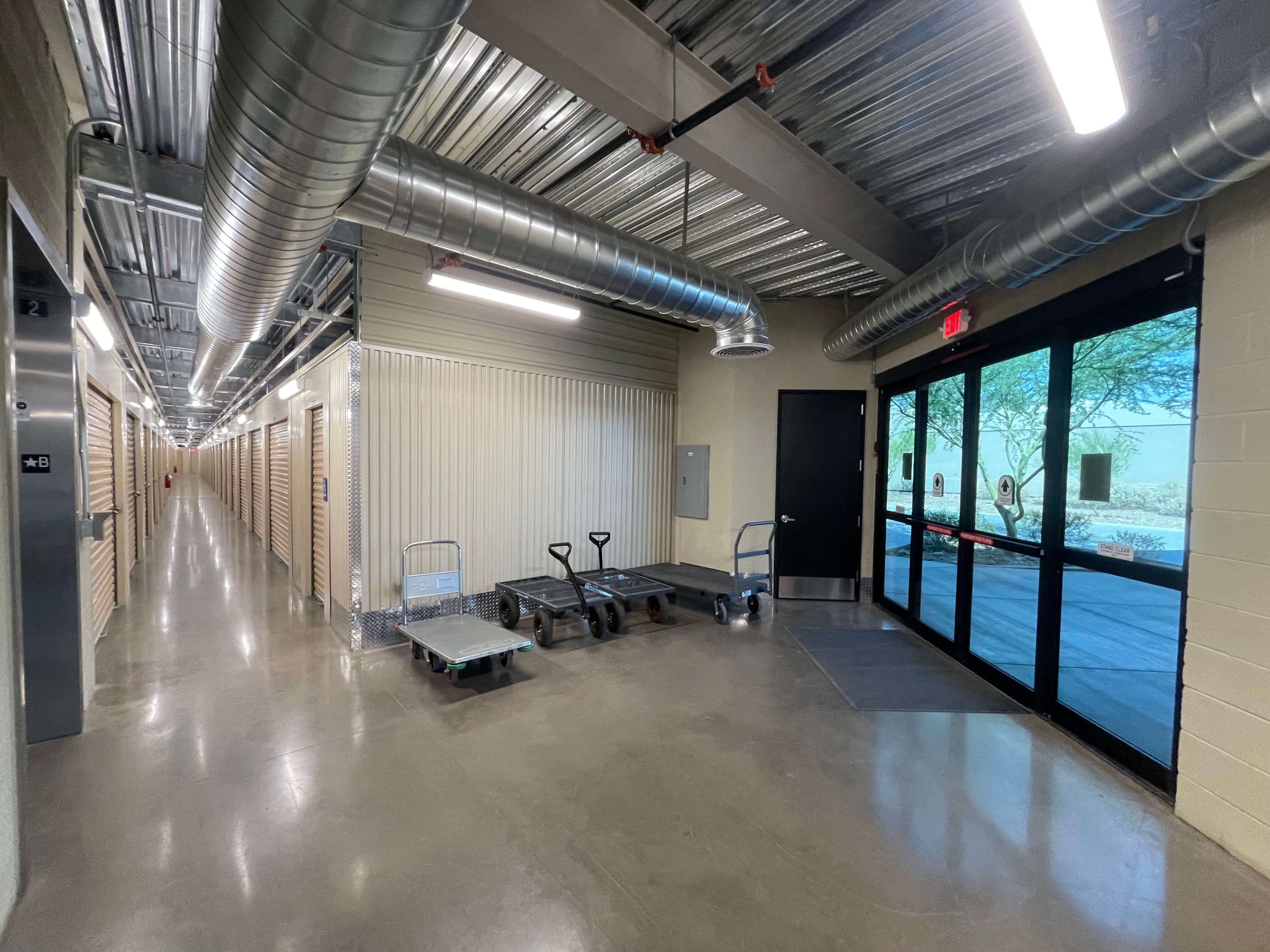
Match the vehicle to the unit. The size guide shows what fits in each size from 5×5 to 10×25, which also tells you roughly how much truck you will need. Bring at least one helper for furniture and appliances, and ask the office what carts or hand trucks are available so you are not guessing on the day.
The building works in your favor if you plan around it. Ground-floor units mean less hauling, and if your unit is on an upper floor, the two elevators and multiple loading docks let you move everything without stairs. Moving supplies are available on-site if you run short on boxes, tape, or packing paper.
Timing matters too. Facility access hours run from 5 a.m. to 10 p.m., so plan to finish your last load well before the end of the day instead of racing the clock. In the summer months, start early. Our moving day checklist has a full plan for working around desert heat.
Step 4: Empty the Unit in the Right Order
Think of it as move-in in reverse: what went in last is nearest the door. Clear the front first so you can reach the rest, and stage everything by destination as you go. Keep one area for the truck, one for donations, and one for trash. Mixed piles are how donation boxes end up in the new house, and good furniture ends up at the dump.
- Load heavy and sturdy items first so they sit at the bottom of the truck.
- Check inside furniture. Dresser drawers, cabinets, and a washer drum are common places for forgotten items.
- Look at the top shelves and the back corners. Anything pushed behind furniture on move-in day is still there.
- If you kept an inventory list, tick items off as they leave the unit.
Step 5: Deal With What Is Not Going With You
This is the step that stretches move-out day, so do as much of it as you can before the day itself.
- Donate: take donations straight to the drop-off the same day and ask for a receipt. If you plan to claim the donation on your taxes, the IRS explains what records to keep in Publication 526.
- Sell: give yourself a deadline. If it hasn’t sold by then, donate it.
- Dispose: do not assume you can leave trash behind. Ask the office before using any facility trash area, and plan a dump run or a junk removal pickup for anything large.
One more category deserves a warning: hazardous items. Our storage tips ask tenants not to store combustibles like paint, solvents, or fuel, but if something got tucked into a box years ago, keep it out of the trash. The EPA’s page on household hazardous waste explains what counts and how to find safe disposal options.
Step 6: Sweep, Inspect, and Photograph the Empty Unit
Leave the unit the way you would want to find it: swept, free of tape and packing debris, with no spills or stains on the floor. Check the corners and the edges along the walls. Then take a few dated photos of the empty unit from the doorway, showing the floor, the walls, and the door. If a question about the unit’s condition ever comes up, those photos settle it in seconds.
Step 7: Remove Your Lock and Close Out Access
Take your lock with you. Leaving a lock on an empty unit leaves the office unsure whether you are finished, and it can delay closing your account. Check the latch and door once more after the lock is off.
If you shared your gate code or gave anyone access to the unit, such as movers, a contractor, or a family member, mention it to the office when you confirm your move-out so everything is closed out cleanly. Our post on how to keep your storage unit secure explains why leftover access is one of the most overlooked storage risks.
Step 8: Confirm Your Move-Out and Check Your Final Bill
Do not assume you are done when the truck pulls away. Tell the office the unit is empty, ask for confirmation that your move-out is complete, and keep that confirmation with your records. Because the office closes at 6 p.m. Monday through Saturday and 4 p.m. on Sunday, plan to check in before then.
Then review your final statement. If you pay through the online bill pay system, confirm that no further payments are scheduled so you are not charged for a unit you no longer have.
Mistakes That Cost People Time or Money on Move-Out Day
- Never deciding what is going where. It leaves a pile of “maybe” items and nowhere to put them.
- Skipping the rental agreement. Notice and billing dates can change when you should finish.
- Leaving the lock on the door. It delays closing the account and creates an extra trip.
- Forgetting items inside furniture or on top shelves. Check drawers, cabinets, and appliances before you call it done.
- Starting late in the day. Access hours end at 10 p.m., and a half-loaded truck at closing time is a bad plan.
- Skipping the confirmation. Without it, you cannot be sure the rental actually closed.
Frequently Asked Questions
How much notice do I need to give to move out of a storage unit?
It depends on your rental agreement, so check it before you choose a date. McDowell Mountain Community Storage units are month-to-month, so there is no long-term term to wait out. Call the office at (602) 899-5484 to confirm the notice for your unit and the date you plan to finish.
Do I have to clean my storage unit before I move out?
Plan on it. Sweep the floor, remove tape and packing debris, and clean up any spills. A swept, empty unit avoids questions later, and dated photos give you a record of its condition.
Can I move out of a storage unit in one day?
Often, yes, especially with a small unit and a clear plan for where everything is going. Larger units, or moves that involve donation runs and disposal trips, usually take longer. Facility access hours run from 5 a.m. to 10 p.m., so start early and leave yourself margin.
What happens if I leave items behind?
Leaving belongings in a unit generally means the rental is not finished, and it may lead to additional charges. Check your rental agreement, and if you realize you forgot something after you leave, contact the office right away.
Will I get a refund if I move out in the middle of the month?
Rent is typically billed monthly, so whether any unused time is credited depends on your rental agreement. Ask the office about final-month billing before you set your move-out date, ideally before your next billing date.
Do I need to take my lock with me?
Yes. A lock left on the door keeps the unit closed to the office and can delay closing your account. Remove it once the unit is empty.
Need a Different Size Instead of an Empty Unit?
If you are moving out because the unit no longer fits your needs, you may not have to leave at all. McDowell Mountain Community Storage offers fully indoor, climate-controlled storage units in Scottsdale from 5×5 to 10×25, so moving up or down a size is a conversation with the office, not a whole new search. Call (602) 899-5484 or contact us, and we will help you find the right fit or walk you through the move-out.