
Yes. Business inventory is one of the most common and most practical uses of self-storage, and at a well-equipped facility it works reliably for a wide range of business types and inventory categories. But most articles on this topic answer the “can you” question and stop there, which skips the more interesting question: when is a storage unit not just viable for business inventory but actually the right financial and operational choice compared to the alternatives?
In Scottsdale specifically, that question has a clear answer for a significant number of businesses.
For Scottsdale Businesses, This Is Often the Right Decision, Not Just the Affordable One
Commercial real estate in the Scottsdale and North Scottsdale corridor is expensive. Warehouse and flex-space square footage in the area trades at rates that price out many small businesses, side-by-side businesses, and e-commerce operations that don’t need the full infrastructure of a commercial lease, just the square footage to store, organize, and access their inventory reliably.
A self-storage unit at the right facility provides that square footage at a fraction of commercial rental rates, without a long-term lease commitment, without build-out costs, without separate utility accounts, and without the property management overhead that commercial space typically requires. For a business storing between 50 and several hundred square feet of inventory that needs regular access but not a dedicated staffed location, this isn’t a compromise arrangement. It’s a straightforward financial optimization.
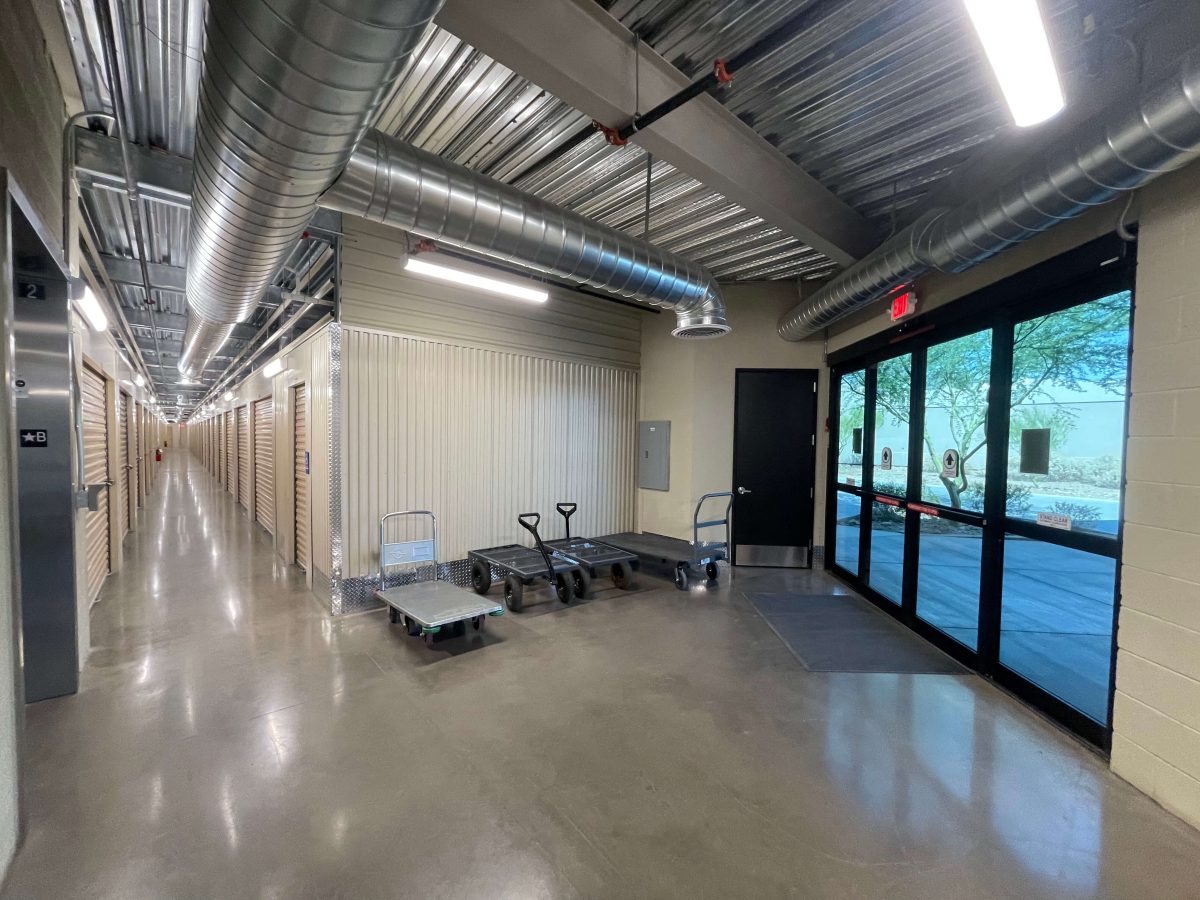
The comparison gets even clearer once you factor in what a quality facility provides that a bare commercial space typically doesn’t: security infrastructure at the building level, climate control maintained by facility management rather than tenant-installed equipment, loading dock access, elevator service for multi-story access, and the ability to scale up or down as inventory volume changes without renegotiating a lease.
What Types of Business Inventory Work Best in Storage
The range of inventory categories that work well in a properly equipped storage unit is broader than most business owners initially assume. A few categories worth understanding specifically:
E-commerce product inventory is one of the most common business storage use cases. Sellers on platforms like Amazon, eBay, Etsy, and Shopify who are operating from home but have outgrown their garage space, or who want to separate business inventory from living space, find that a dedicated storage unit functions well as a warehouse alternative. The unit becomes the pick-and-pack location: inventory in, orders out. The practical requirements are climate control for products sensitive to heat, reliable access during business hours, and enough unit depth and ceiling height to organize efficiently with shelving. All of these are available at a facility with the right specifications.
Seasonal inventory for retail or service businesses that carry significantly different product volumes at different times of year benefits from storage as overflow capacity rather than permanent warehouse space sized to the peak-season volume. A landscaping company storing off-season equipment, a retailer holding holiday inventory in the lead-up to Q4, or a contractor storing materials between projects all represent uses where storage serves a specific operational function rather than replacing a permanent facility.
Product samples and display materials for businesses whose primary operations are digital or office-based, but which need physical product available for client meetings, trade shows, and demonstrations. Storing these materials in a dedicated unit rather than cycling them through office space is a clean operational solution that many professional service businesses use more than people typically imagine.
Temperature-sensitive inventory deserves specific attention in a Scottsdale context. Electronics, cosmetics, pharmaceuticals, supplements, specialty foods, candles, vinyl products, and many other inventory categories have manufacturer-specified storage temperature requirements that a standard outdoor or non-climate-controlled unit absolutely cannot meet during an Arizona summer. In a facility where every unit is fully indoor and climate-controlled, these products can be stored with confidence in their integrity throughout the year. This is not a minor operational detail; for businesses in regulated categories, temperature exposure during storage can affect both product quality and compliance with manufacturer warranties or industry guidelines.
What the Scottsdale Climate Changes About the Storage Calculation
Most generic articles about business inventory storage treat climate control as a feature worth considering. In Scottsdale, it’s a requirement, not a preference, for any inventory category that isn’t specifically designed to withstand sustained exposure above 100 degrees Fahrenheit.
Standard outdoor drive-up storage units in Arizona can reach interior temperatures of 130 degrees or higher during summer months. This temperature range damages or destroys electronics, degrades cosmetics and personal care products, melts candles and wax-based items, warps vinyl and plastic components, and can render pharmaceuticals and supplements ineffective or unsafe. Businesses storing any of these inventory types in a non-climate-controlled unit during an Arizona summer are accepting product loss as a cost of doing business, which is not a necessary cost if the right facility is chosen from the start.
At McDowell Mountain Community Storage, every unit is fully indoor and climate-controlled. There is no category of business inventory that is appropriate for climate-controlled storage that arrives here at risk from Arizona temperatures. The air conditioning is managed at the facility level, not dependent on individual unit configuration or tenant-installed equipment.
Operational Considerations for Running a Business Out of Storage
A few practical points that matter for businesses using storage operationally rather than just for archiving:
Access hours matter for business operations. A business that needs to ship orders daily needs to be able to access the unit reliably during its operating hours. The specific access schedule at your facility of choice should be confirmed before signing an agreement, particularly if your fulfillment activity happens early morning or evening.
Loading dock and elevator access changes what size inventory you can move efficiently. Bringing pallets, large boxes, or multiple cartloads of inventory in or out of a unit on a regular basis is a different operational reality at a facility with a loading dock versus one where everything has to be carried from a parking lot. For businesses with significant inventory movement, this infrastructure matters as much as the unit itself.
Security infrastructure affects insurance and peace of mind. 4K digital camera coverage at the building level, controlled access entry, and a well-lit, professionally managed facility reduce both the actual and insurable risk of storing business inventory. Some business insurance policies have specific requirements for the security level of storage locations; a facility with documented security infrastructure is more likely to satisfy those requirements than an unmonitored location.
Unit size flexibility supports changing inventory volumes. A business that starts with a 5×10 and grows to need a 10×15 six months later should be able to make that transition without finding the larger size unavailable or having to change facilities. Working with a locally owned facility that can manage unit availability with flexibility is a meaningful operational advantage over a regional chain where unit availability is managed at a corporate level.
Getting the Unit Size Right for Your Inventory
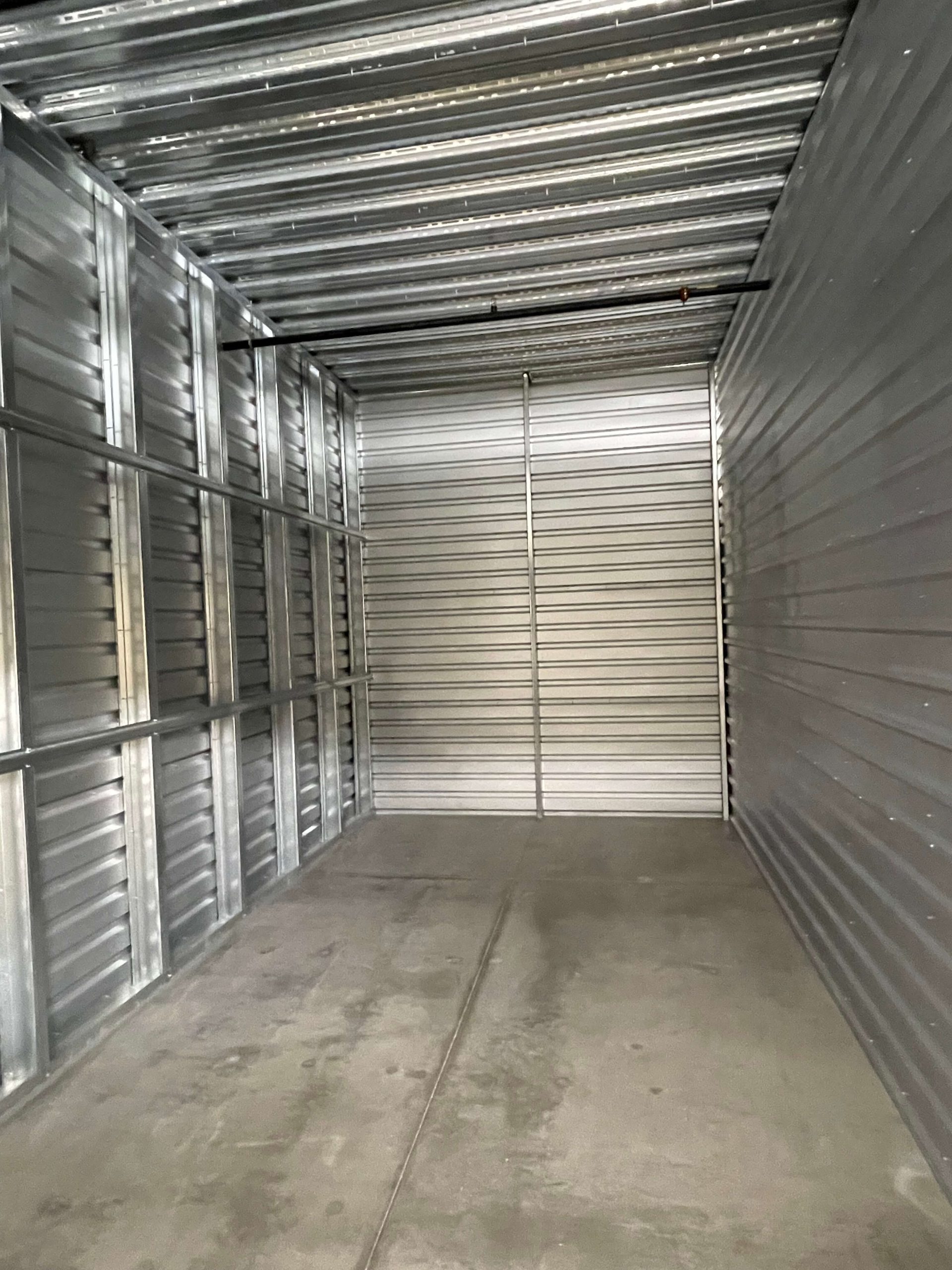
The most common business storage mistake is undersizing the unit, which produces a chronically overpacked space that’s difficult to work in and that limits the organized access the business operation requires. A unit sized correctly for your current inventory volume with room to move efficiently is more functional than a maximally packed unit that saves a few dollars per month.
The unit size guide shows what fits in each size from 5×5 through 10×25, with specific examples. The space estimator lets you input your specific inventory items and get a size recommendation. For businesses with unique inventory configurations, such as tall racking systems, pallet storage, or bulk quantities of specific items, the team at the facility can walk you through what unit dimensions will work for your specific setup before you commit.
To see current unit availability and pricing, visit our Scottsdale storage unit rental page, or call us at (602) 899-5484. We’re open seven days a week and are happy to discuss your specific business inventory requirements before you make a decision.
Frequently Asked Questions: Business Inventory Storage in Scottsdale
Can I run my e-commerce business out of a storage unit in Scottsdale?
You can use a storage unit as your inventory and fulfillment location for an e-commerce business, picking and packing orders from the unit and shipping from there or from home. Storage unit rental agreements typically prohibit operating a retail business with customer traffic coming to the unit, meaning the unit can’t function as a storefront, but using it as a private warehouse for online order fulfillment is a common and accepted use. Confirm the specific terms of your rental agreement before setting up your fulfillment operation.
Does temperature control matter for business inventory in Scottsdale?
Yes, significantly. Many inventory categories, including electronics, cosmetics, supplements, specialty foods, candles, and vinyl products, have manufacturer storage temperature specifications that standard outdoor storage units in Arizona cannot meet during summer months. Interior temperatures in non-climate-controlled units can exceed 130 degrees Fahrenheit during Scottsdale summers. A fully indoor, climate-controlled facility maintains temperatures appropriate for sensitive inventory year-round.
How much does business inventory storage cost compared to commercial warehouse space in Scottsdale?
Self-storage rates vary by unit size and facility, but are generally a fraction of commercial warehouse space per square foot in the Scottsdale area, without the lease commitment, build-out costs, or separate utility accounts that commercial space requires. For businesses that need reliable inventory storage and access but not a dedicated staffed location, the cost comparison typically favors storage significantly. Contact McDowell Mountain Community Storage at (602) 899-5484 for current pricing on specific unit sizes.
Can I install shelving in a storage unit for inventory organization?
Freestanding shelving units are typically permitted in storage units and significantly improve the usability of the space for business inventory by creating vertical storage capacity that reduces the footprint required for a given inventory volume. Confirm with your facility whether any modifications to the unit walls or floor are permitted, as permanently attached fixtures may not be allowed, but freestanding commercial shelving is standard practice in business storage situations.
What should I do if my business inventory needs increase over time?
Work with a facility that can accommodate a unit upgrade as your needs grow. At McDowell Mountain Community Storage, with over 660 units ranging from 5×5 to 10×25, moving to a larger unit as inventory volume increases is a conversation with the management team rather than a facility change. Planning for growth at the outset, which might mean starting slightly larger than you immediately need, is typically easier than finding yourself in an undersized unit with a full inventory during a busy period.