

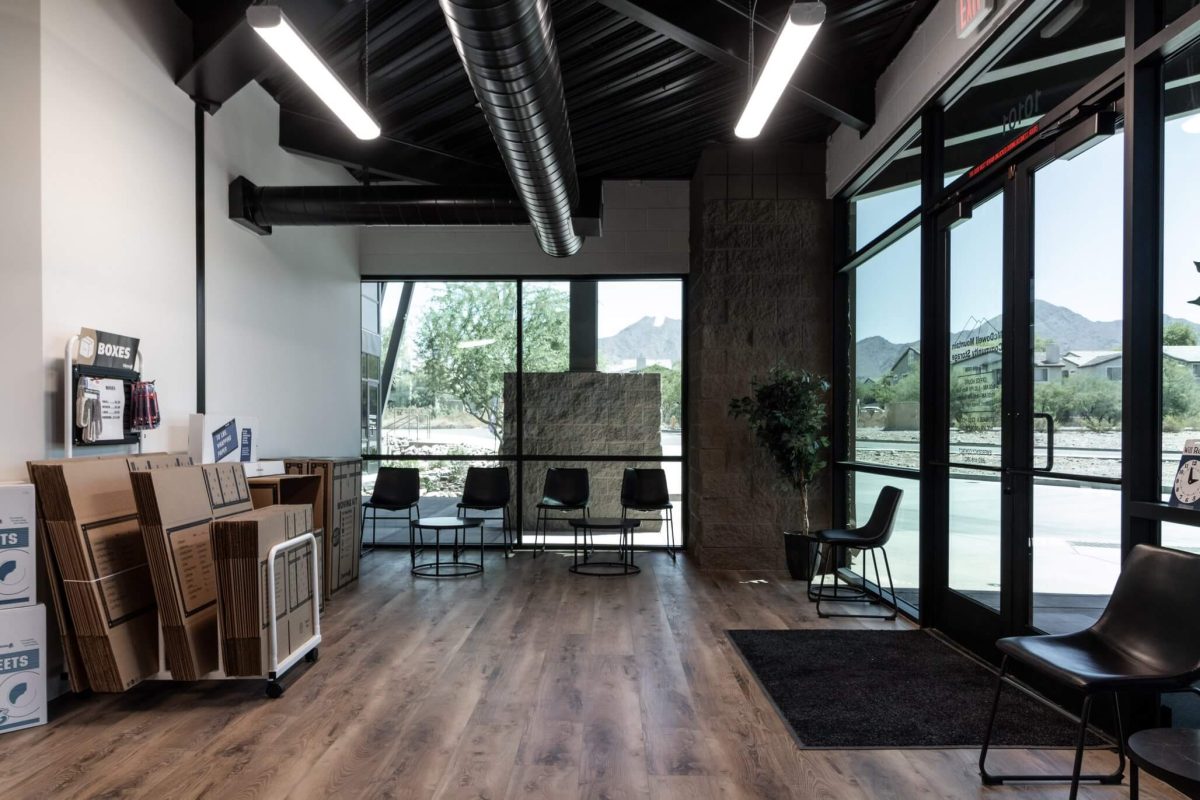
Most people who end up with damaged items in storage made the same mistake: they packed for the move-in day, not for the months in between. The box looked fine going in. The furniture seemed secure. Nothing appeared wrong when they pulled the unit door down and locked it.
The damage happened later, quietly, while no one was looking. Cardboard softened under accumulated humidity. Foam padding compressed under a load it was not rated for. Wood expanded and contracted through seasonal temperature cycles. By the time the unit was opened again, items that had been in good condition on move-in day were warped, cracked, stained, or infested.
Packing for storage is not the same as packing for a move. A moving box needs to survive a few hours in a truck. A storage box may need to survive a year in conditions that change with every season. Here is where most people go wrong, and why the consequences take so long to become visible.
The Difference Between Immediate Damage and Slow Damage
It helps to think about storage damage in two categories. Immediate damage is obvious quickly: a box that fails during move-in, a glass item that was not padded and breaks on first contact, a mattress that gets dirty because it was not covered. These mistakes are easy to catch and relatively easy to prevent with basic care.
Slow damage is the more expensive category. It involves processes that are invisible at move-in and take weeks or months to produce visible results: moisture migration into improperly sealed boxes, compressive load failure in overpacked stacks, adhesive failure on packing tape in high-heat environments, off-gassing from certain plastics that can cloud glass or damage finishes, and pest infiltration through gaps that seemed insignificant at the time.
In Scottsdale’s climate specifically, slow damage has an accelerant that most generic packing guides do not account for: sustained extreme heat. The Valley regularly sees summer temperatures above 110 degrees Fahrenheit, and even with climate control, the thermal environment of a storage unit is different from a home interior. In non-climate-controlled units, interior temperatures during summer can reach extreme levels that significantly accelerate slow-damage processes. Understanding how heat interacts with common storage mistakes changes the calculus of what to prioritize.
Mistake 1: Packing Boxes Too Heavy or Too Light
Overpacking a box is the most common mistake and produces one of the most predictable failure modes. A standard corrugated cardboard box has a compression strength rating (the weight it can bear when stacked) that assumes the box is filled and fully supported by its contents from the inside. An overpacked box exceeds the load the cardboard was designed to carry; an underpacked box is not adequately supported from within and deforms under pressure from above.
The failure typically does not happen immediately. It happens several weeks into storage when the boxes above have settled, when humidity has slightly softened the cardboard, and when the cumulative load has exceeded the box’s rated capacity. The bottom of the stack fails, which cascades upward.
The right approach: heavy items (books, tools, kitchenware) go in smaller boxes to keep the total weight manageable. Lighter items (linens, pillows, clothing) can fill larger boxes. Every box should feel solid when its top is pressed, indicating that the contents are supporting the walls and lid. If the top collapses under light pressure, the box is underpacked and will fail under stack load.
Mistake 2: Using Old or Recycled Boxes
A box that previously held a refrigerator from a grocery store has already been compressed, handled, and possibly exposed to moisture. The corrugated walls have lost a significant percentage of their original compression strength. This degradation is not visible from the outside; the box looks like a box.
In Scottsdale’s climate, the problem is compounded. Packing tape adhesive weakens in sustained high heat, and the flap closures of degraded boxes are more likely to fail when the adhesive loses its bond. A box that was adequately sealed in February may have compromised seams by August.
New boxes from a storage facility have rated compression strength, standard dimensions that stack predictably, and clean interiors without residual moisture, odors, or pest eggs from previous contents. The cost difference between new and salvaged boxes is small relative to the cost of replacing damaged items.
Mistake 3: Skipping the Void Fill
A box with items rattling around inside it is not adequately packed. Every void inside a box allows its contents to shift and impact each other during handling and whenever the stack above settles or shifts. For fragile items, a single impact against the inside wall of an inadequately packed box can cause a crack or break that would not have occurred with proper void fill.
Packing paper is preferable to newspaper for long-term storage: the ink in newspaper can transfer to surfaces, particularly in warm conditions where the ink may become slightly tacky. Bubble wrap is effective for fragile items but compresses over time under load; it should not be the sole support material under heavy items. Foam padding rated for storage compression is the most durable option for long-duration storage of breakable items.
Mistake 4: Sealing Items with Plastic When They Need to Breathe
This is one of the most counterintuitive storage mistakes, and it is particularly relevant in Scottsdale. The instinct when storing fabrics, upholstered furniture, leather goods, and similar items is to wrap them tightly in plastic to protect them from dust and moisture. The reality is that sealing organic materials in plastic bags or plastic sheeting traps any moisture that was present at the time of sealing, and creates a humid microenvironment that accelerates mold, mildew, and off-gassing.
Clothing, bedding, and soft furnishings should be stored in breathable fabric bags or cardboard boxes, not sealed plastic bins or plastic wrap. Leather furniture should be conditioned before storage and covered with breathable cotton drop cloths, not plastic sheeting. Wood furniture similarly benefits from breathable covers rather than plastic, which can trap condensation during temperature swings.
Plastic bins with tight-fitting lids are appropriate for items that are genuinely moisture-sensitive and non-organic: tools, hardware, documents in sealed protective sleeves, electronics in their original packaging. For everything else, breathability is the priority.
Mistake 5: Stacking Furniture Directly on the Floor Without Elevation
Concrete floors in storage units, even in indoor facilities, can transmit moisture upward through capillary action. Furniture placed directly on concrete, particularly wood furniture, can absorb that moisture through the base and develop staining, warping, or mold growth on the contact surface over an extended storage period.
Elevating furniture on pallets, furniture risers, or even boards creates an air gap between the concrete surface and the furniture base, allowing air circulation that prevents moisture accumulation. This is a simple step that is consistently skipped and consistently produces damage during long-term storage of wood furniture.
Mattresses should be stored flat, not upright. A mattress stored on its side for an extended period compresses unevenly, and the internal spring or foam structure shifts toward the bottom. After a few months, the mattress no longer has uniform support and may not recover its original shape.
Mistake 6: Storing Items That Attract Pests
Food is the obvious pest attractant, and most people know not to store opened food containers. The less obvious attractants are the ones that get overlooked: pet food sealed in original packaging that has small tears, birdseed stored for the off-season, candles with food-based fragrance (wax that smells like vanilla or cinnamon to a rodent is food), and soaps and toiletries with food-based scents.
In Scottsdale, the pest environment is specific: Arizona bark scorpions, roof rats, and certain ant species are the most common storage unit intruders. Scorpions are attracted to dark, undisturbed environments and are not food-motivated; they are harder to deter through packing choices. Rodents are highly motivated by scent and will chew through cardboard and fabric to reach anything that smells like food.
Keep all food-scented items out of storage. Store fabric items in sealed plastic bins (the exception to the breathability rule applies here specifically for pest deterrence on short-duration storage). Inspect units periodically rather than leaving items undisturbed for months.
Mistake 7: Not Accounting for Scottsdale’s Heat When Choosing What to Store
Certain items should not go into non-climate-controlled storage in Scottsdale at all, regardless of how well they are packed. Vinyl records warp at sustained temperatures above approximately 140 degrees Fahrenheit, which a non-climate-controlled unit can reach in summer. Candles melt. Photographs and film negatives degrade. Wooden instruments can crack as the wood’s moisture content drops in extreme dry heat. Certain electronics have operating temperature limits that sustained storage heat can exceed even when the electronics are off.
For temperature-sensitive items, climate-controlled storage is not a luxury; it is a storage requirement. At McDowell Mountain Community Storage, all of our units are fully indoor and air-conditioned, which addresses the extreme heat variable that makes non-climate-controlled storage in Scottsdale a genuine risk for this category of items. If you have items that are sensitive to temperature, check our available Scottsdale storage units to find the right size for what you need to protect.
Mistake 8: Not Labeling Boxes on the Sides
Labels on the top of boxes are invisible once a second box is stacked on them. A well-labeled top becomes useless the moment a unit is stacked more than one box high, which is almost immediately. Labels on the sides of boxes, specifically on the sides that face outward in the stack, remain readable without moving anything.
Beyond labeling what is inside, the most useful addition is a contents priority level: items you are likely to need access to during storage should be toward the front and labeled accordingly; items going into long-term storage can go deeper. A unit that was organized at move-in saves significant time and effort at every access visit.
Before You Pack: A Quick Pre-Storage Checklist
- New or structurally sound boxes only, sized to keep weight manageable
- All void fill complete so contents cannot shift during handling
- Fabric and organic materials in breathable covers, not plastic wrap
- Wood furniture elevated off the concrete floor
- All food-scented items removed or sealed in hard containers
- Temperature-sensitive items allocated to a climate-controlled unit
- Labels on box sides, not just tops, with contents and access priority noted
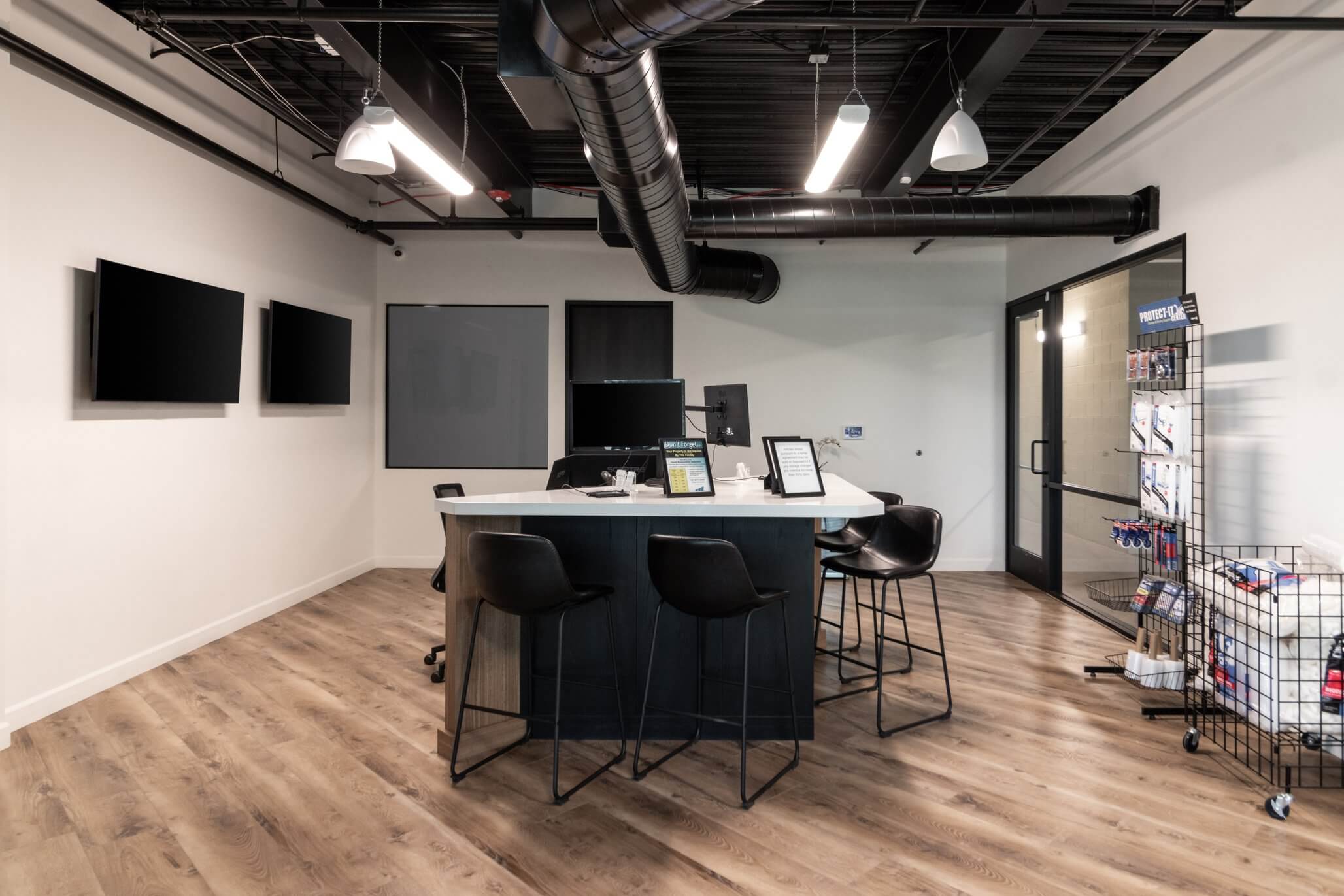
Moving supplies including boxes, packing tape, and packing materials are available on-site at McDowell Mountain Community Storage, so you do not need a separate trip to prepare. If you have questions about which unit size is right for what you are storing, contact us today to find the right storage unit for your needs.
Frequently Asked Questions
Does climate control prevent all storage damage?
Climate control addresses temperature and humidity, which eliminates the largest category of slow-damage risk for temperature-sensitive items. It does not protect against damage from poor packing: overpacked boxes still fail under load, improperly padded items still break on impact, and items stored without elevation can still absorb moisture from the concrete through capillary action. Climate control and proper packing work together; neither is a substitute for the other.
How long can items stay in storage without being checked?
There is no fixed safe period, but periodic inspection is always better than long-term neglect. For items in climate-controlled, well-packed units, many items can be stored for a year or more without significant deterioration. For anything in non-climate-controlled storage in a hot climate like Scottsdale, more frequent checks are warranted during summer months. Items that are particularly sensitive (electronics, wood instruments, photographs, vinyl) should be in climate-controlled storage regardless of duration.
What is the best way to store wood furniture?
Clean and condition wood furniture before storage. Disassemble pieces that can be safely disassembled to reduce their footprint and stress on joints. Elevate off the concrete floor on pallets or boards. Cover with breathable cloth drop cloths, not plastic sheeting. In Scottsdale, climate-controlled storage is recommended for wood furniture, particularly antiques or pieces with veneer, because extreme heat and low humidity can cause cracking and veneer separation.
Can I store electronics in a Scottsdale storage unit?
Electronics should be stored in climate-controlled units in Scottsdale. Most consumer electronics have maximum storage temperature ratings between 113 and 140 degrees Fahrenheit. Non-climate-controlled storage in Scottsdale during summer can exceed these ratings, potentially damaging circuit boards, batteries, and display screens even when the devices are powered off. Store electronics in their original packaging if available, or in anti-static bags inside well-padded boxes, in a climate-controlled unit.
Is packing tape adequate for long-term storage boxes?
Standard packing tape is adequate for short-term storage and moving. For long-term storage, particularly in high-heat environments, acrylic-based packing tape outperforms rubber-based tape because it maintains its bond at higher temperatures and does not yellow or become brittle with age. In Scottsdale, this distinction matters: rubber-based tape adhesive can fail in sustained heat, leaving box seams unsealed months into storage. Check tape bonds as part of any periodic storage unit inspection.