Most advice on how to store musical instruments in a storage unit can be summed up in one line: rent a climate-controlled unit. That is good advice, and it takes the worst of the summer heat out of the picture. It also skips the part that actually cracks guitars, warps bow sticks, and loosens the seams on violins in a dry place like Scottsdale: humidity.
Wood absorbs and releases moisture along with the air around it. Keep a wooden instrument in air that is too dry for long enough, and it shrinks. This guide covers how to prepare each instrument type, how to set up the unit, and one inexpensive habit that protects wood instruments better than temperature control alone.
The Short Answer: How to Store Musical Instruments
- Clean the instrument and dry it completely.
- Prepare it for its type: ease string and bow tension, swab and disassemble wind instruments, take batteries out of electronics.
- Keep it in a hard case or a breathable cover, never loose and never wrapped in plastic.
- Add two-way humidity control for wooden instruments, plus a small digital hygrometer so you can see the actual humidity.
- Store it on a shelf, off the floor, away from the door, with nothing stacked on top.
- Check on it monthly at first, and replace humidity packs on schedule.
Why Humidity Matters More Than Most Guides Admit
Heat gets the attention in Arizona, and it deserves some. Our post on how Arizona’s heat affects stored items explains why, and how an indoor, air-conditioned unit solves most of it. Humidity is a separate question, and for wooden instruments it is the bigger one.
Taylor Guitars puts the ideal humidity range for an acoustic guitar at 45 to 55 percent and warns that dry conditions can lead to wood cracking, a sinking top, a lifting bridge, protruding fret ends, and poor string action. The same pattern applies to other wooden instruments. String instrument shops commonly cite a range of roughly 40 to 60 percent for violins, and Steinway describes the wood and felt in a piano as highly sensitive to swings in temperature and humidity. Exact numbers differ by maker, but they all stress the same thing: steady conditions.
Arizona makes this more relevant than most places. The air outside is dry to begin with, and air conditioning pulls moisture out of the air as it cools. Monsoon season, from mid-June through September, then brings humidity spikes in the other direction. A climate-controlled unit keeps the temperature steady, but you should verify humidity yourself instead of assuming.
Three habits that cover it
- Measure it. A small digital hygrometer costs little and sits inside the case or on the shelf next to it. Taylor calls a hygrometer in the case the only way to be certain of the humidity level.
- Use two-way humidity packs for wood instruments. These packs release moisture when the air is too dry and absorb it when the air is too damp. Taylor notes that this type of pack can last from two to six months depending on conditions.
- Skip plain desiccant packets for wooden instruments. Desiccant only removes moisture, which is the last thing a guitar or violin needs in dry air. It makes sense for metal parts or electronics, not for wood.
Prep: What to Do Before Any Instrument Goes In
- Clean it. Wipe off fingerprints, rosin dust, and oils with a soft, dry cloth. Dirt and moisture left on an instrument are the two things you do not want in a sealed case for months.
- Let it dry fully. Never close a case on a damp instrument.
- Take photos and note serial numbers. A quick record of the instrument’s condition and serial number helps later, whether you are comparing it after storage or keeping an inventory.
- Remove batteries from pedals, keyboards, and electronics, and keep them at home. Our post on storing electronics covers the rest, and it is worth asking the office about facility rules on batteries before you bring any.
- Check the case. Latches, hinges, and padding should be in good shape. A hard case is one of the best protections you can add. Our guide to preparing belongings for storage has more on packing materials.
Instrument by Instrument
Guitars, basses, and ukuleles
Keep them in a hard case with a two-way humidity pack and a hygrometer. Wipe down the strings and body. You do not need to remove the strings, though some players ease the tension slightly for long storage, so check your maker’s guidance. Avoid storing a guitar out of its case, even in a climate-controlled unit, because the case is what buffers it against changes in the air.
Violins, violas, and cellos
Slacken the bow hair before storing the bow, and take off the shoulder rest before the violin goes in its case. Store both instrument and bow in a hard case. Violin Online’s care guide gives the same advice and adds that players in dry climates should use a humidifier made for violins, since excessive dryness can cause cracking or open the seams.
Woodwinds: clarinets, saxophones, flutes
Swab the inside thoroughly after the last time you play. Take the reed off the mouthpiece, wipe it dry, and store it flat in a reed case. Leaving a reed on the mouthpiece in the case warps it. Follow your maker’s instructions for taking the instrument apart, put each piece in its slot in the case, and apply cork grease if the corks feel dry. Wooden clarinets can crack when they go through sudden temperature or humidity changes, so a steady environment matters most for them. For more, see these clarinet care tips.
Brass: trumpets, trombones, horns, tubas
Empty the moisture from the tubing and slides, wipe the instrument down, and let it dry completely. Lightly oil the valves and slides according to the maker’s instructions. Eastman’s care guide walks through emptying and cleaning brass. Brass handles temperature swings better than wood, but moisture can still tarnish and corrode it.
Pianos and keyboards
A piano is the one instrument that should not be a do-it-yourself move. Steinway advises using specialist carriers to transport a piano, and that is a good rule for any acoustic piano. Once it is in the unit, close and lock the lid, cover it with a breathable cloth cover instead of plastic, and keep everything off the top. Pianos are made largely of wood and felt, so steady humidity matters, too; a hygrometer on a nearby shelf shows what the piano is dealing with. Our size guide and space estimator can help you size the unit, since a piano takes far more room than a guitar or a few cases.
For digital keyboards and electronic pianos, power them down, take out batteries, coil the cables, and cover them with a dust sheet.
Drums and percussion
Ease the tension on the drumheads, take stands and hardware apart, and put the hardware in labeled bags so nothing gets lost. Keep cymbals in padded bags, and don’t stack heavy items on them. Do not stack hard cases on top of drum shells either.
How to Set Up the Unit
- Shelves, not the floor. Raise cases and boxes onto shelving or pallets.
- Away from the door. Keep instruments toward the back of the unit, where they are least likely to be bumped while you move other items in and out.
- Nothing stacked on instruments. This includes other cases, boxes, and furniture. Pressure on a case can damage an instrument that looks perfectly protected.
- Keep a walkway. You will want to check the hygrometer without moving everything.
- Avoid plastic wrap. It traps moisture against the finish and prevents the instrument from breathing.
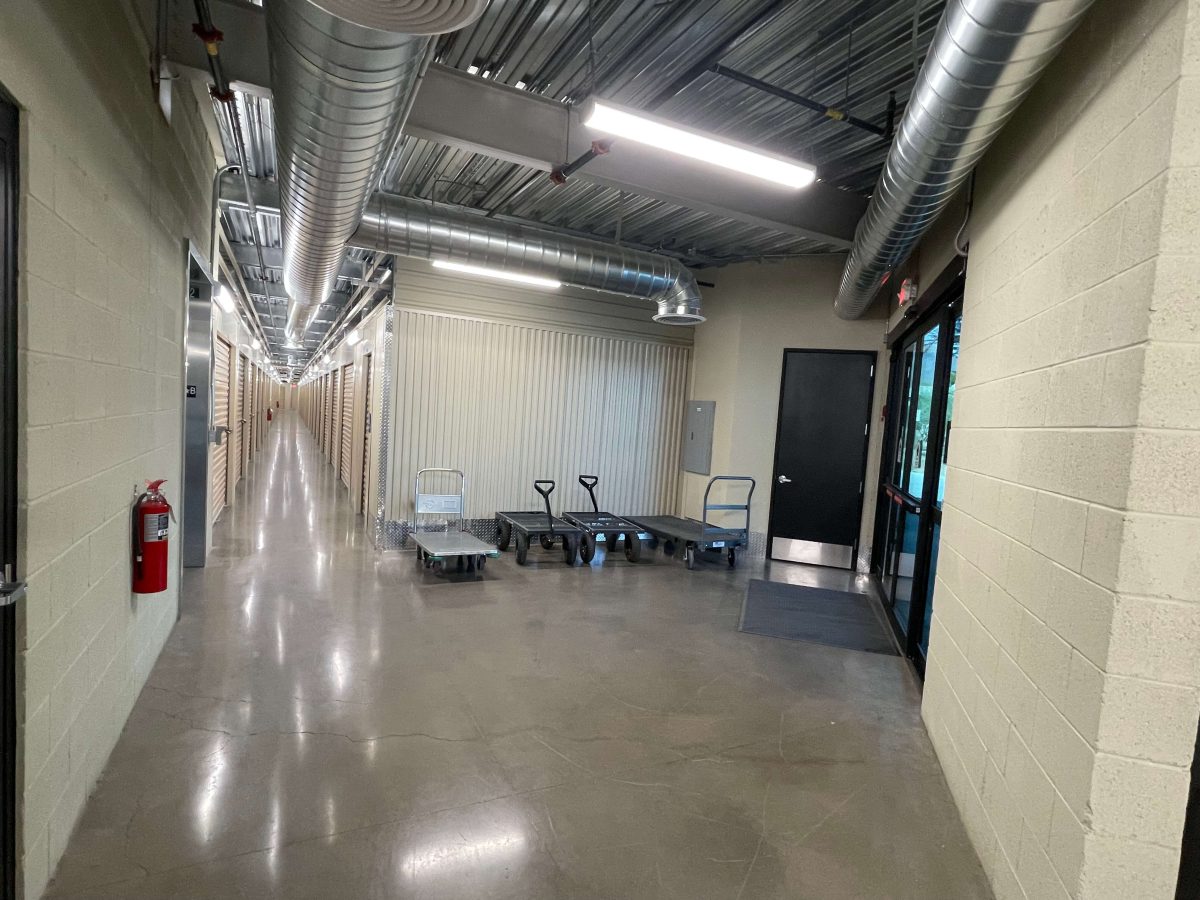
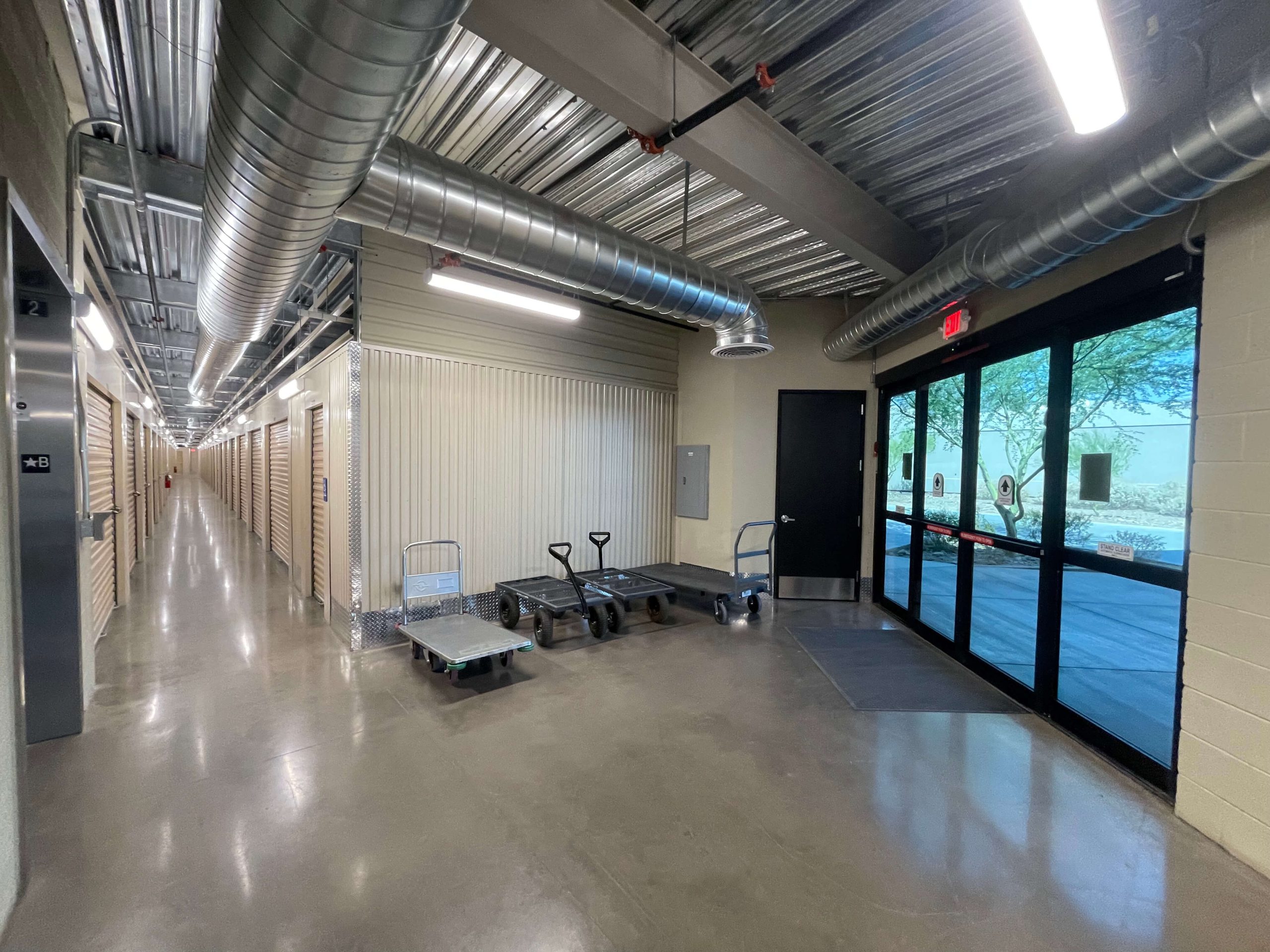
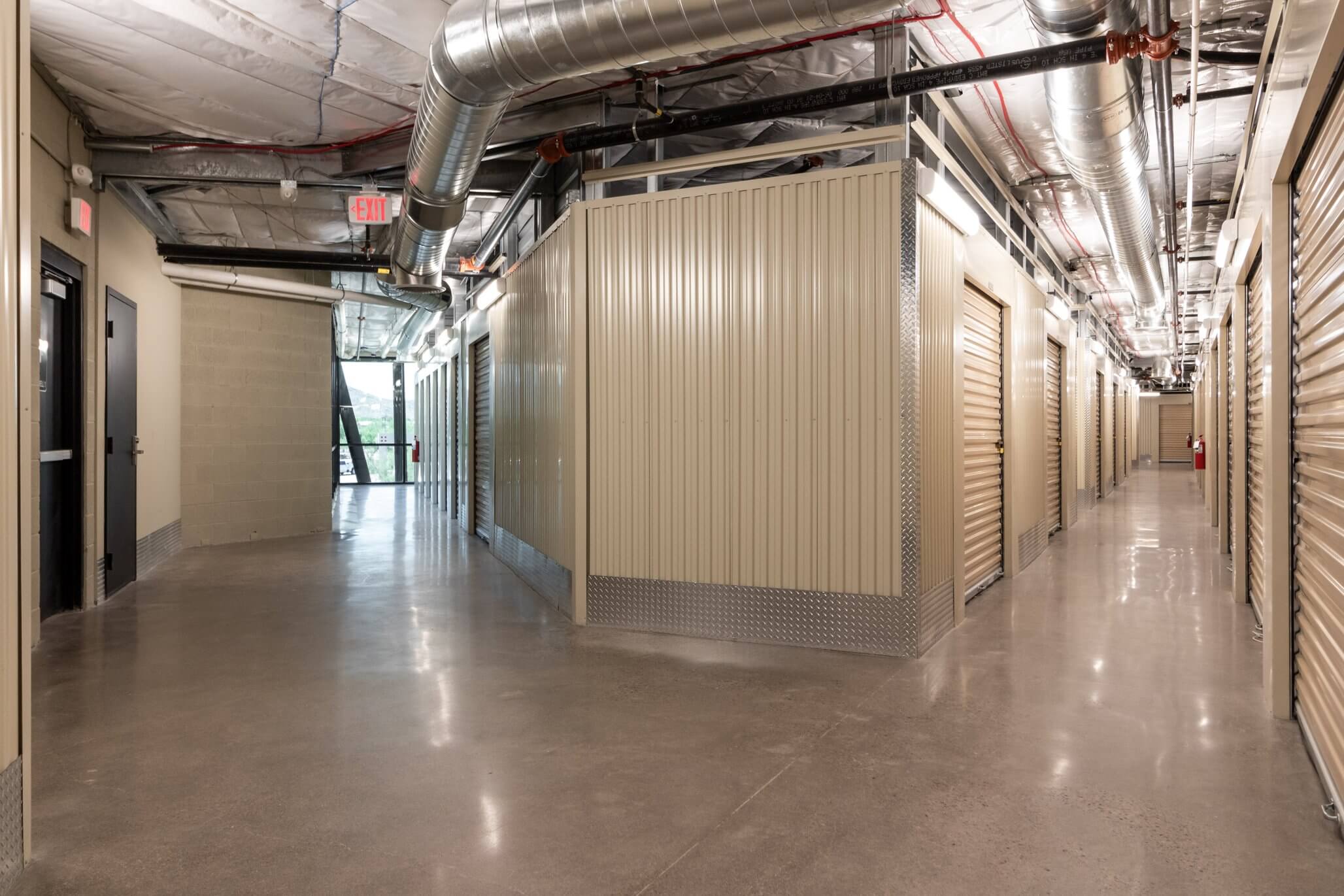
The facility helps here: McDowell Mountain Community Storage has ground-floor units, two elevators, and multiple loading docks, which makes moving heavy cases and larger instruments much easier than hauling them up stairs.
How Much Space Do Instruments Need?
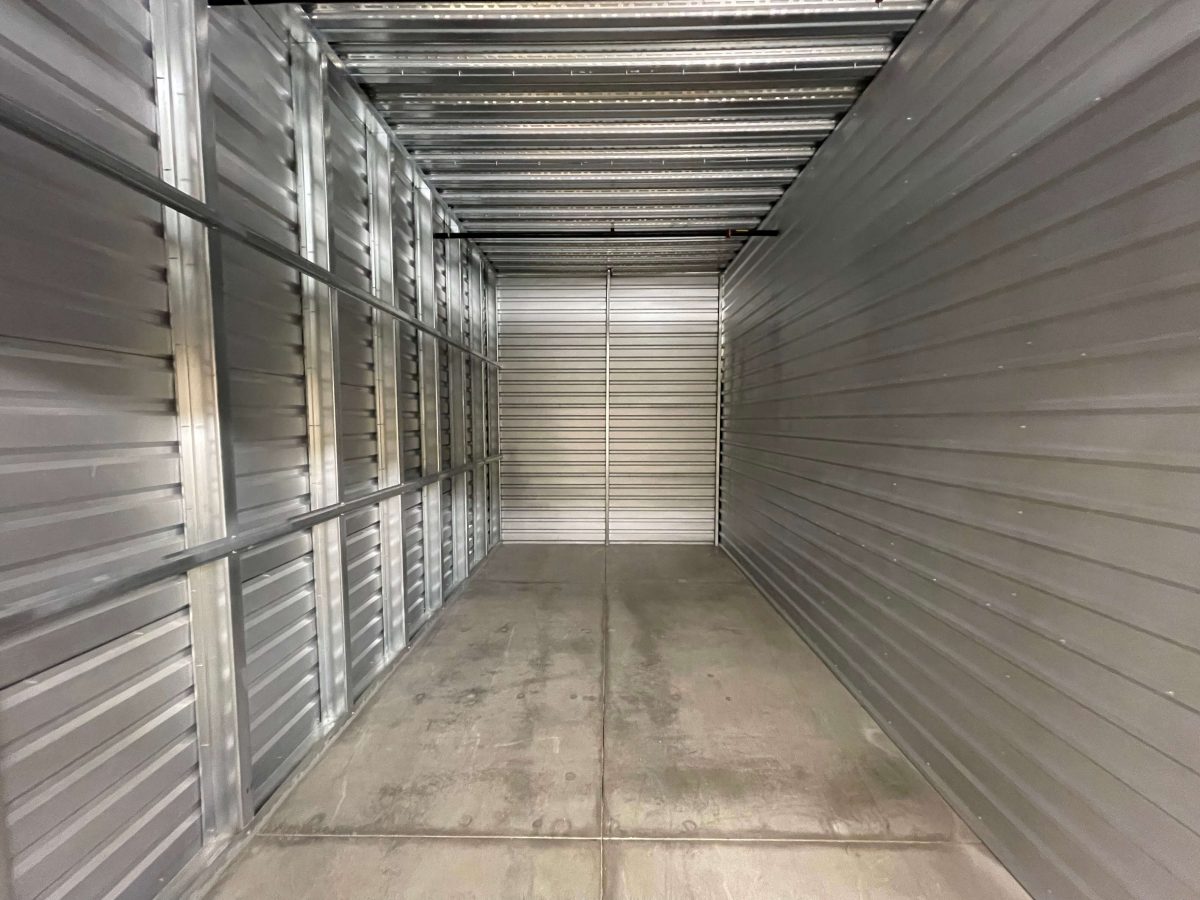
A few cases fit in a small unit with room to spare. A 5×5, about the size of a walk-in closet, usually fits several guitars or a violin, plus a few boxes of accessories with shelving. For a drum kit, amplifiers, or a piano, you will want more room. Our guides to 5×5 units and 5×10 units show what fits, and the space estimator is the quickest way to confirm before you commit.
Check-In Schedule While Your Instruments Are Stored
Visit monthly for the first few months, and look at the hygrometer, not just at the case. If the reading stays within your instrument’s preferred range, you can space visits out. Replace humidity packs when the package says to; for two-way packs, that can be every two to six months, depending on conditions. Our post on how often to check on your storage unit covers what to do if you are out of town, and our snowbird storage tips help if you are away for the season.
When You Take Instruments Back Out
- Let it adjust. Leave the case closed for a while in the room where you will play, so the instrument comes to room temperature before you open it.
- Check the humidity pack and hygrometer before you take the instrument out.
- Look it over. Check for cracks, lifted seams, loose braces, sticky valves, and sagging pads.
- Retune and test it. Expect to retune, and have a technician look at anything that sounds or feels wrong.
Mistakes That Hurt Stored Instruments
- Relying on temperature alone. A steady temperature does not guarantee safe humidity.
- Using plain desiccant on wood instruments. It dries the air further when dryness is the problem.
- Storing without a case. The case is the buffer between the instrument and the air.
- Wrapping instruments in plastic. It traps moisture.
- Leaving reeds on mouthpieces or batteries in electronics. Both lead to damage that is easy to prevent.
- Moving a piano yourself. This carries injury and damage risks, so it is worth hiring specialists.
- Never checking. A pack that ran out months ago protects nothing.
Need Indoor, Air-Conditioned Space for Your Instruments?
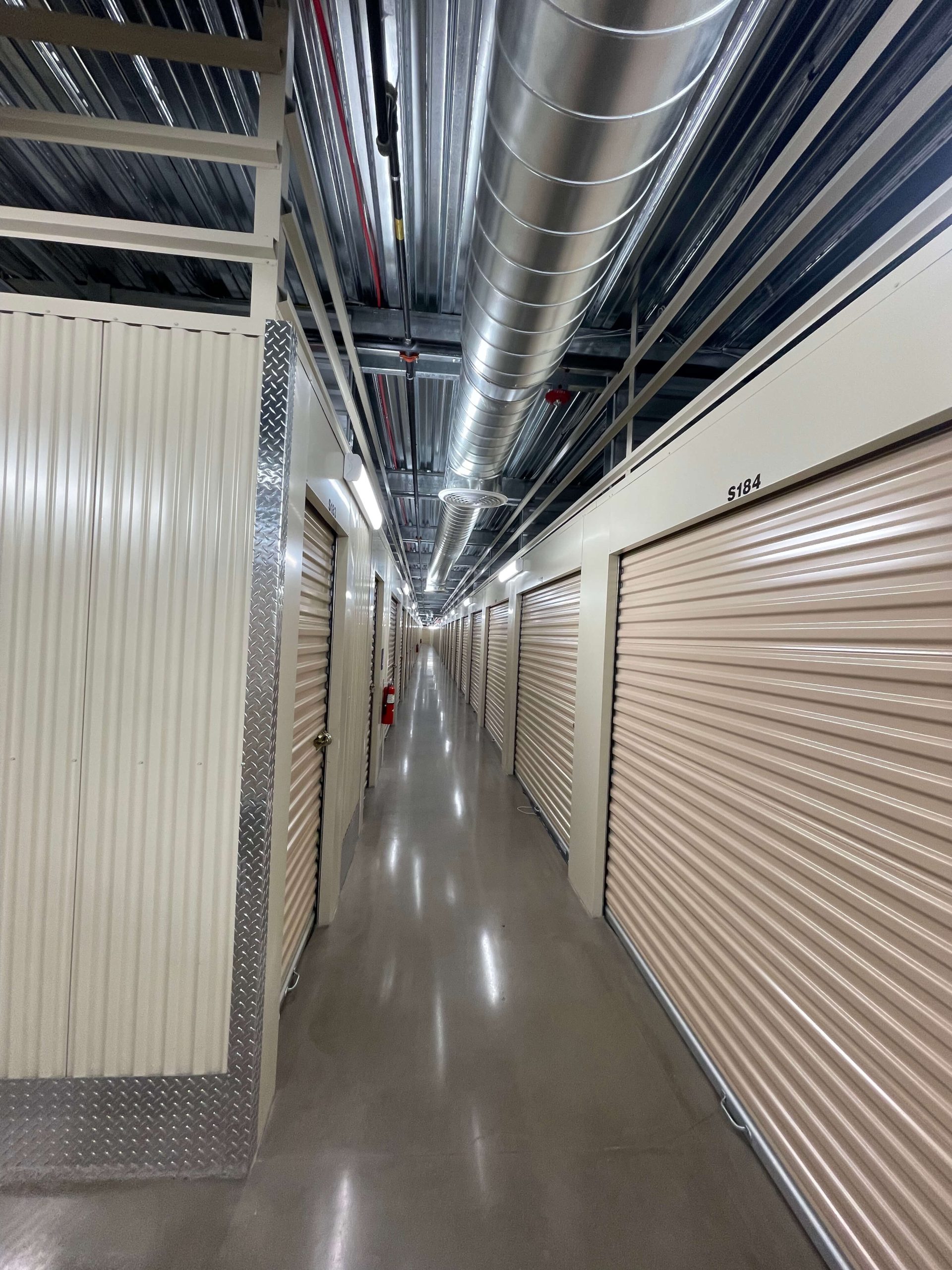
Every unit at McDowell Mountain Community Storage is indoors and air-conditioned, which keeps instruments out of the extreme heat that builds up in garages, sheds, and parked cars. Browse storage units in Scottsdale, or call (602) 899-5484 with questions about moving a piano, shelving, or anything else specific to your instruments. You can also contact us online, and the office is open seven days a week.
Frequently Asked Questions
Can you store musical instruments in a storage unit?
Yes, if you prepare them properly and choose an indoor, temperature-controlled unit. Use a hard case, control humidity for wood instruments, and keep everything off the floor.
Do musical instruments need a climate-controlled storage unit?
For most instruments, yes. Heat and big temperature swings damage wood, glue, finishes, and pads. In Arizona, a non-air-conditioned space is a poor choice for instruments. Climate control handles temperature, so add a hygrometer and humidity packs to cover humidity.
What humidity is best for storing guitars and violins?
Taylor Guitars gives 45 to 55 percent for acoustic guitars, with 40 to 60 percent generally acceptable. Violins are commonly kept in about the 40 to 60 percent range. Check your maker’s recommendation and monitor with a hygrometer.
Should I loosen the strings before storing a guitar or violin?
For a violin bow, yes, always slacken the hair. For guitars, you do not need to remove the strings, though some players ease the tension slightly for long storage. Follow your maker’s guidance.
Can you store a piano in a storage unit?
Yes, with care. Use professional piano movers, cover it with a breathable cover, keep the lid closed, avoid placing anything on top, and watch the humidity. Use the size guide to pick a unit with enough room.
How often should I check on stored instruments?
Monthly for the first few months, then every one to two months if the humidity readings stay steady. Replace humidity packs on the schedule printed on the package.